Editorial: A republic in distress
“A republic, Madam, if you can keep it.” Ben Franklin knew this would be difficult.
In his recent Perspective piece on Bullet-Proofing Democracy, Jim Porto recounts the famous tale of a woman stopping Benjamin Franklin outside the constitutional convention to ask, “Well, Doctor, what have we got, a republic or a monarchy?” Franklin replied, “A republic, Madam, if you can keep it.”
Every day, it seems, brings more reports of federal government actions that violate, challenge, or are otherwise ill-befitting our democratic republic. In this context, U.S. residents—including some in Carrboro—are contemplating what a July 4th celebration means this year, the 250th anniversary of the Declaration of Independence from Great Britain. Since this administration assumed leadership in January 2025, residents have voiced and shown displeasure with federal government actions, with the No Kings Rallies and Marches the most visible manifestation of an angry and distressed nation.
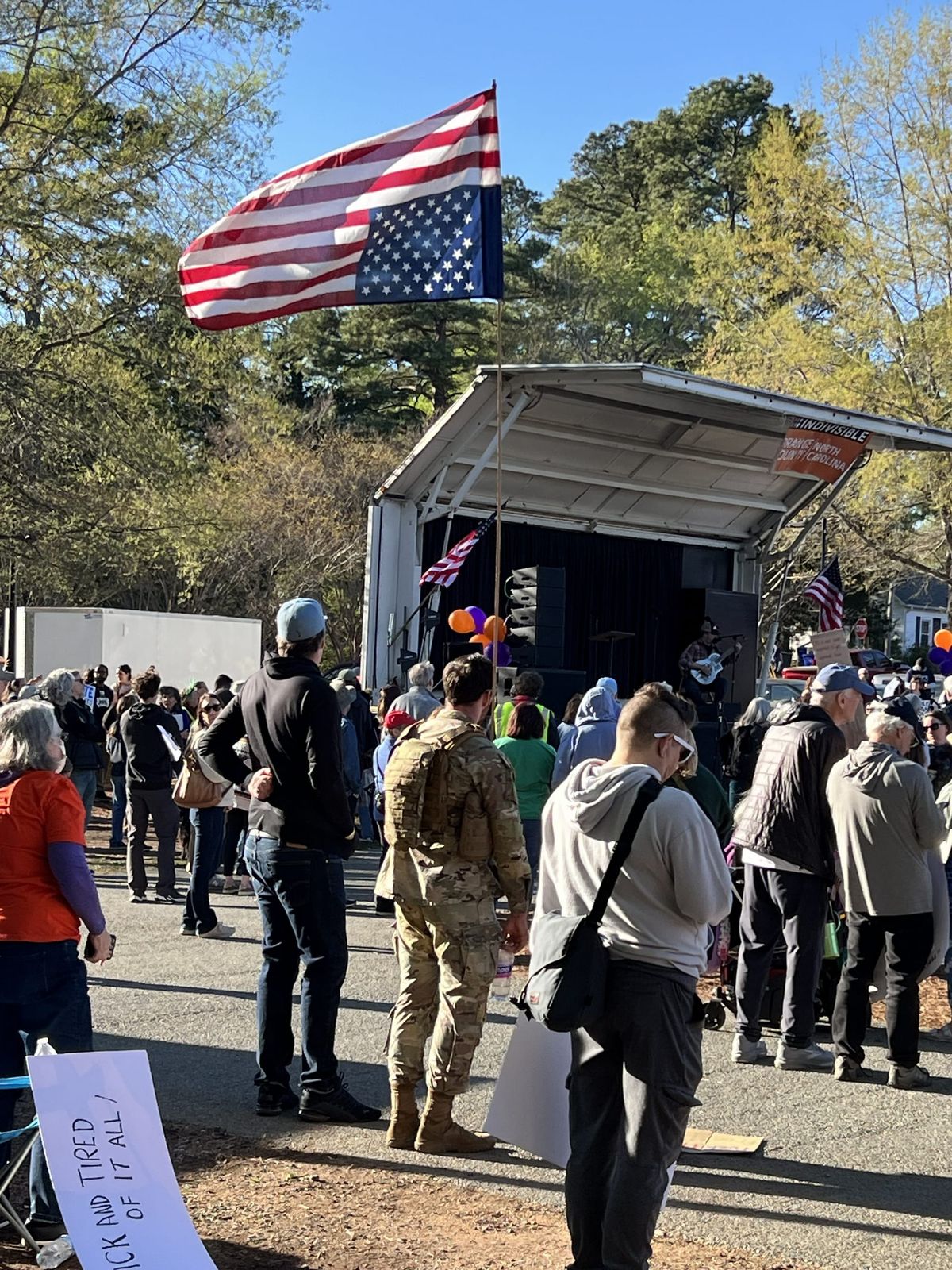
July 4 is one of several holidays when the U.S. flag is prominently displayed, including at private homes, and this year, some are flying it upside down—a historical symbol of distress.
Flying the flag upside down originated as a practical maritime signal of dire circumstances such as sinking or mutiny; it was a call for immediate help. That tradition was codified in 1923 and updated in 1942 within the U.S. Flag Code (Title 4, United States Code, Chapter 1), which sets the advisory rules for displaying and caring for the flag. Section 8(a) specifically addresses:
"The flag should never be displayed with the union down, except as a signal of dire distress in instances of extreme danger to life or property."
The Flag Code is a set of guidelines. As the maritime practice has been adopted for political protest, the First Amendment has protected civilians who violate the code in ways such as burning the flag, wearing it as clothing, or flying it upside down.
In the 1960s and 70s, protestors used an upside-down flag to signal their belief that the country was in dire distress. The gesture gained prominence during the civil rights movement and the Vietnam War protests. Similarly, in 1973, during a 71-day occupation of Wounded Knee in South Dakota, Native American activists flew the U.S. flag upside down, symbolizing broken treaties and distress in their communities.
Today, that symbolism is adopted by groups across the political spectrum to register perceived distress in our country. For example, protesters marching against gun violence, environmental activists, and those protesting election results or Supreme Court decisions have flown the flag upside down.
In all of these examples, the gesture symbolizes its original meaning—a desperate call for help—and makes a dire statement about the state of our republic.
“This year feels different,” is a common sentiment about July 4th that we’re hearing at The Carrborean. Whether it’s from watching progress in science, research, and education deliberately eroded by those tasked with safeguarding it; witnessing the base cruelty of the stalking of our neighbors for deportation; the blindingly idiotic, ongoing destruction of our planet home; and more—and unwillingly funding all of it with our tax payments—we are sickened, we are in distress. As one neighbor put it, “Flying your flag upside down is a visible symbol that we, as citizens, have had enough!!”
Tomorrow, some will fly the flag upside down in protest, in grief, as a prayer– hoping that someone will see it and rescue us. Others believe that any treatment of the flag outside of the code is “objectionable” and will instead advocate for legislative action that prevents us from experiencing this kind of distress again—which could be part of the rescue operation we need. Witnessing, protesting, redressing—all are actions partaking in this beautiful and flawed democratic republic and working to making it better.
Heather Gerken, President of the Ford Foundation, reminds us, “Ultimately, democracy is not self-executing. Each generation must choose to protect it, preserve it, and pass it forward. This is the unfinished work. This Fourth of July, let us recommit ourselves to it—and to one another.”
Amid the fireworks—or drone shows—however we gather to celebrate or commemorate, we can remember the strength of our community here and renew our commitment to each other.
Historical references researched with Gemini.