
Who manages stormwater at the University Lake dam?
A lingering question for neighborhoods concerned about future flooding disasters
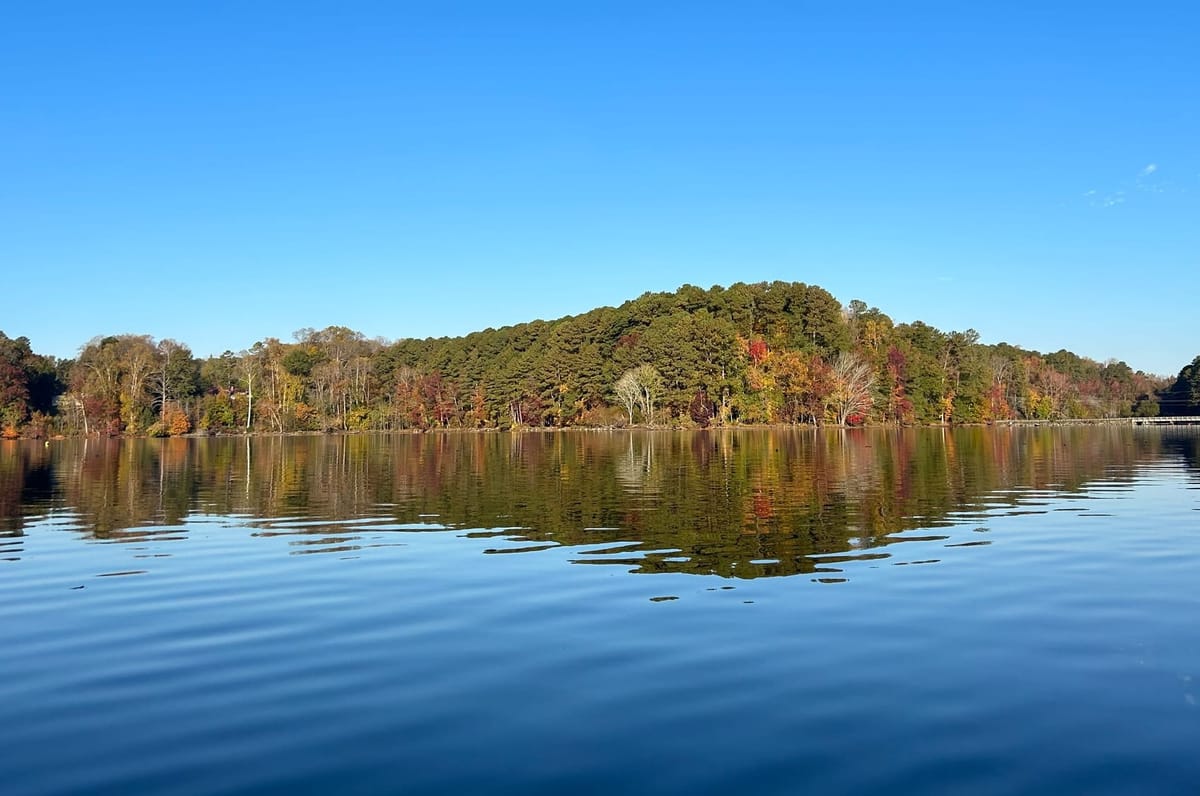
On October 31, residents of the Weatherhill Pointe and Berryhill neighborhoods received an emailed invitation from OWASA to attend a "Blue Sky Meeting." It had been almost four months since Tropical Storm Chantal dumped 10 inches of rain on Carrboro, with almost seven inches falling in one hour--between 7 - 8pm on July 6. That volume, in that period of time, brought University Lake 93 inches over its spillway, causing life-threatening flooding in Weatherhill Pointe and damage to homes in Berryhill.
The invitation posed and answered three questions, included here:
Did OWASA release water from the University Lake dam?
There are no flood gates on the University Lake dam. Once University Lake is full, the water that flows into the reservoir flows over the spillway. The primary purpose of University Lake is water supply; it is not designed nor operated for flood control.
How did OWASA communicate lake levels to emergency officials during Tropical Storm Chantal?
OWASA was in close and frequent communication with emergency responders throughout the storm regarding the rapidly rising lake levels. OWASA’s Dam Emergency Action Plan addresses dam failure risk against lake levels. It was not designed to use lake levels to predict downstream flooding.
How is OWASA preparing for the next major storm?
OWASA is supporting Orange County Emergency Services and local emergency responders in the development of a more proactive communications plan for residents that live next to waterways like Morgan Creek. We are also working with local emergency responders to develop an informed evacuation plan.
Residents were invited to join OWASA and Carrboro Fire Chief Will Potter at University Lake on November 20 to talk more about communication during emergencies, how the lake and dam are impacted by flooding events, and how OWASA and Carrboro can improve communities' preparation for extreme flooding.
Pre-meeting thoughts
In advance of that meeting, some residents of Weatherhill Pointe joined The Carrborean and Jacques Menache on WCOM 103.5 on November 18 to talk about their experiences during and after the storm, rebuilding progress in their neighborhood, and their hopes for the upcoming meeting with OWASA.
Part of the conversation focused on preparedness--having a "go" bag with documents and supplies ready and a communication system within the neighborhood. Peter Burke, and Stan and Mercedes Terrell talked about the displacement of residents on top of the shock and grief they were processing, and efforts to reunite to check on each other periodically as most homes are still being rebuilt.
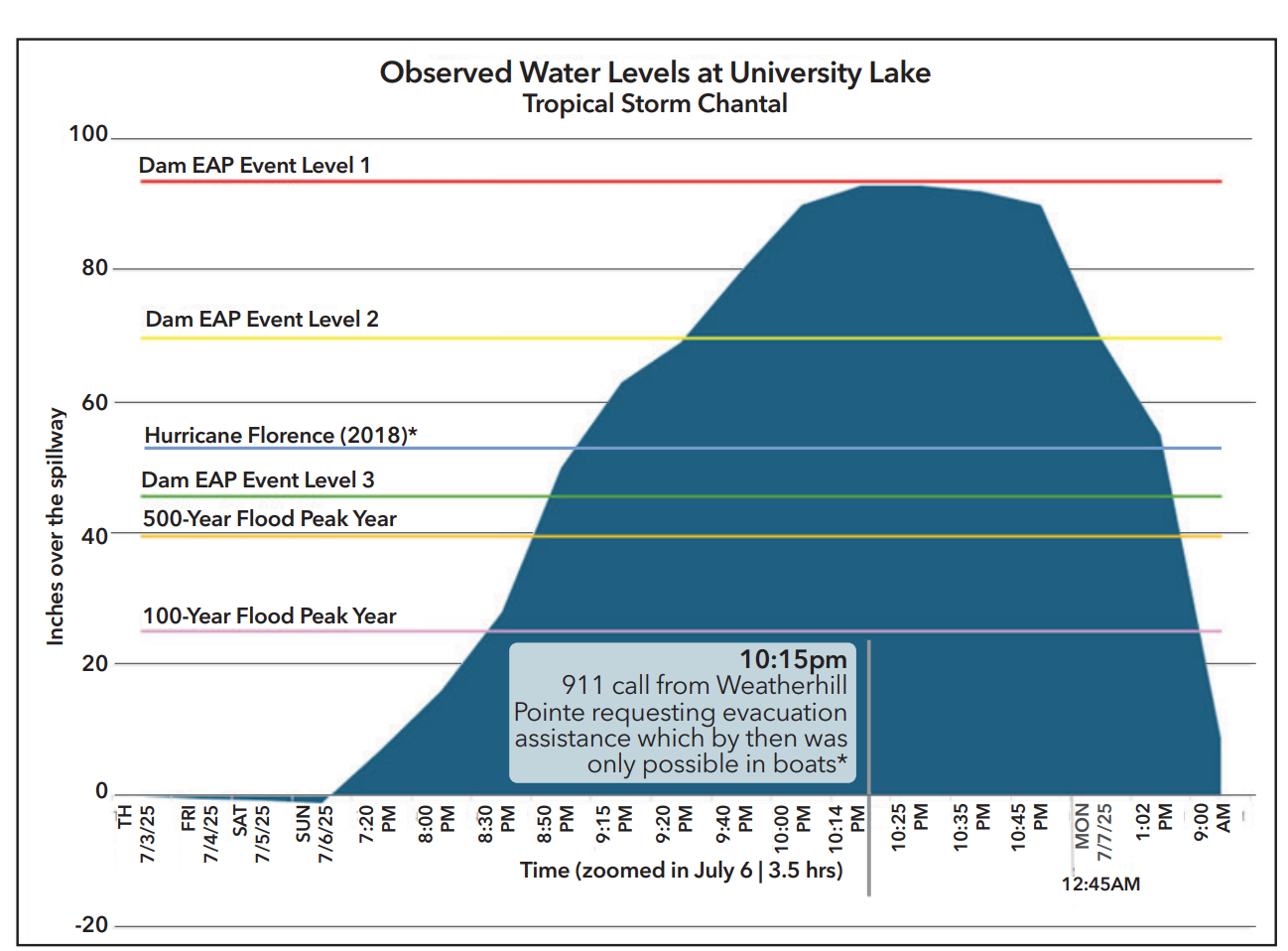
These residents wondered if there would be improved continuous monitoring of creeks running through neighborhoods and if flood warning levels would be revised. The levels used on July 6 are shown below. "Dam EAP Event Level 1" is the level that would trigger evacuations, although evacuations were needed in Weatherhill Pointe on July 6 before that level was reached.
They hoped their concerns about dam overflow would be heard, and that OWASA and other authorities treated this meeting as the beginning of a process to work through issues related to communication and overflow. And they acknowledged the complications due to many entities involved.
The meeting and next steps
On November 20, about 40 people gathered at University Lake dam for the "Blue Sky" meeting hosted by OWASA and Carrboro Fire Department. The Carrborean previously reported on the lack of clarity regarding responsibility for stormwater management at the dam, as it is leased from the University of North Carolina and managed by OWASA to provide drinking water. The lake has a Chapel Hill address and sits in Orange County which provides emergency services to residents downstream, most of whom live in Carrboro. OWASA's Executive Director, Todd Taylor, said that upgrading the dam will require extensive study beyond what OWASA can do. Jamie Smedsmo, Facilities Manager for UNC-Chapel Hill agreed to find out who, at the University, can move the discussion of dam improvements and stormwater management forward.
Following the meeting, residents regrouped to plan next steps in their advocacy strategy. Peter Burke indicates Weatherhill Pointe homeowners will work with local authorities regarding an improved warning/evacuation communication system and the adoption of new lake overflow levels to trigger warnings. There is also concern about how dam overflow can be better controlled.
Subsequent communication with Katie Hall, Public Information Officer at OWASA, indicated that Chief Potter's team is working on updating the Emergency Action Plan documents so that "evacuations will begin when water over the dam indicates level Yellow" with a warning to residents to prepare to evacuate issued at level "Green" (see chart above for levels).
On December 5, Todd Taylor sent a follow-up email to residents in the Weatherhill Pointe and Berryhill neighborhoods, thanking them for attending the meeting and acknowledging the frustration voiced there. They provided updates on plans to address concerns about flood control on Morgan Creek.
"First, we are reaching out to your state and federal elected officials to seek recommendations on agencies to contact about recovering from flood damage and future flood management, as well as any programs or funding they are already aware of for victims of flood damage.
Second, we are organizing a meeting of local leaders and managers from UNC-Chapel Hill, Orange County Emergency Management, Town of Carrboro, and OWASA. The goal of this meeting will be to determine the path forward on your concerns and define roles and responsibilities for the various partners in this effort. OWASA will also share any information we learn from state and federal elected officials at this meeting and discuss how this partnership may support the pursuit of various recommendations from their offices." OWASA anticipates completing these steps early in 2026 and promises to share more information after that.
Stan Terrell sent a reply to Mr. Taylor requesting community participation in the working group OWASA convenes and observed, "It is important to define where the buck stops in terms of developing and implementing a spillover/overflow control and flood prevention strategy." In separate communication, Mr. Terrell said that residents continue to discuss maintaining visibility of these issues: community participation in the working group and a "good faith effort...to identify and explore engineering methods to control for spillover to prevent future disasters."