
The Carrborean exchanged email with Ian Fowler, Assistant Chief of Emergency Management, to find out what Orange County Emergency Services is prioritizing this year.
The Carrborean (TC): With recent reflections on severe local flooding events like Tropical Storm Chantal, what are the key takeaways for Orange County residents on how quickly flash flooding can escalate, and what infrastructure or communication improvements has the county implemented since?
Ian Fowler (IF): Last year, Tropical Storm Chantal demonstrated how quickly flood conditions can develop. Large portions of Orange County received significant rainfall in only a few hours, causing streams and waterways to rise rapidly, roads to become impassable, and conditions in some communities to change with very little warning. A key takeaway for residents is that flash flooding can be particularly dangerous because conditions where you are may not immediately reflect what is happening upstream or elsewhere in the watershed.
Heavy rainfall several miles away can cause creeks and streams to rise quickly, even when rain at your location has slowed or stopped. That’s why it’s important to pay attention to watches and warnings for your area as hazardous conditions may already be developing before they are visible to you.
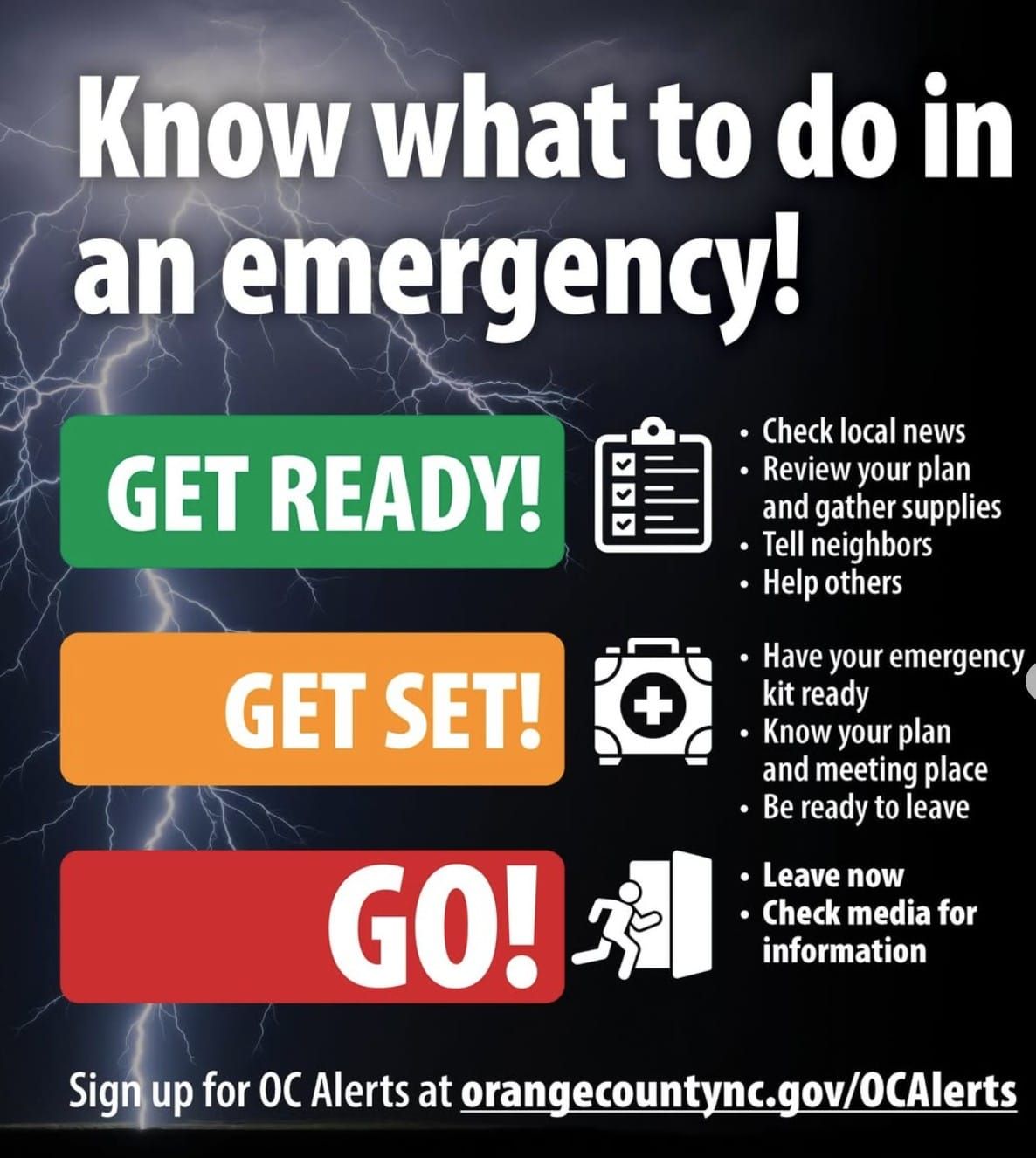
We continue to apply lessons learned from Chantal to how we prepare for and respond to future incidents. One example is the implementation of a Ready, Set, Go framework for emergency alerting. The goal is to go beyond telling residents that a hazard exists by including clear guidance on what actions they should take. Additionally we are working to implement a new flood sensor system which will be deployed strategically in areas of elevated flood risk to improve situational awareness, and our alert and warning capabilities.
TC: Beyond heavy rain and flooding, what are the primary severe weather hazards Orange County faces year-round (such as tornadoes, severe thunderstorms, or winter storms), and how should preparation change depending on the season?
IF: Orange County is truly an all-hazards environment and preparedness shouldn’t be limited to hurricane season. Severe thunderstorms can bring damaging winds, tornadoes, lightning, hail, flash flooding, and power outages. Winter storms can make travel dangerous and disrupt power and critical services for extended periods. Extreme heat or cold can pose serious risks, especially for vulnerable members of our community.
We also prepare for emergencies that aren’t weather-related, including hazardous materials incidents and widespread utility or communications outages. Seasons certainly influence the likelihood of certain hazards, but the fundamentals of preparedness are the same year-round: know how you’ll receive alerts, know where you’ll go, know how you’ll communicate with family or loved ones, keep essential supplies available, and know who around you may need assistance.
TC: You’ve often emphasized a whole-community approach to emergency management. What does that mean for an Orange County resident or neighborhood wanting to get involved?
IF: Whole-community preparedness is about building capacity at every level. The better prepared individuals, households, neighborhoods, and organizations are before an emergency, the more resilient our community will be during response and recovery.
For residents, preparedness starts with your own household and understanding the risks where you live. It also includes knowing your neighbors, specifically, who may need assistance, who has useful skills or resources, and how you can check on one another. Neighbors helping neighbors is a core element of community resilience and a key component of our Community Emergency Response Team (CERT) program.
Preparedness also means thinking about recovery before a disaster occurs. Flood insurance is a great example. National Preparedness Month is an ideal time to review your insurance policies, understand what is and isn’t covered, document your belongings, and consider whether flood insurance is right for your household. Standard homeowners and renters' insurance policies generally do not cover flood damage, and flooding can happen anywhere it.
TC: What are the components of a home emergency kit?
IF: A basic home emergency kit should include enough supplies to sustain your household for at least three days (72 hours) if normal services are disrupted. Include water and nonperishable food for each household member, necessary medications, flashlights, batteries, a first-aid kit, phone chargers or backup power, a weather radio, and copies of important documents. The most effective kit is the one tailored to your household’s needs. Consider children, older adults, pets, and the items your family relies on daily to ensure your kit is complete.
TC: During a fast-moving crisis, what are the most reliable, official communication channels for Orange County residents to monitor for real-time alerts and evacuation notices?
IF: One of the most important preparedness steps residents can take is ensuring they have a reliable way to receive emergency information. Orange County residents are encouraged to sign up for OC Alerts, the County’s public alert and warning system, and to enable Wireless Emergency Alerts on their mobile devices. We also encourage having more than one way to get information, such as monitoring official County and Town communications, the National Weather Service, and trusted local news sources.
Residents are highly encouraged to visit readyorange.org to register for OC Alerts; to learn how to make a plan, and build a preparedness kit, and to connect with Orange County Government’s social media channels to get ready! For those interested in serving their neighborhood or community during times of disaster, our fall Community Emergency Response Team (CERT) course begins Wednesday, September 2nd at 6:00 PM in Hillsborough. The class is open to Orange County residents at no cost, and seats are limited. Register at orangecountync.gov/fall.
For more information about flood risk and insurance, visit floodsmart.gov.
If you're interested in Community Emergency Response Team (CERT) program, you can read our article here and get more information from Orange County here.