
"Not the Carrboro Way"
Residents, Council Members, and Police take issue with different aspects of the proposed police services consolidation
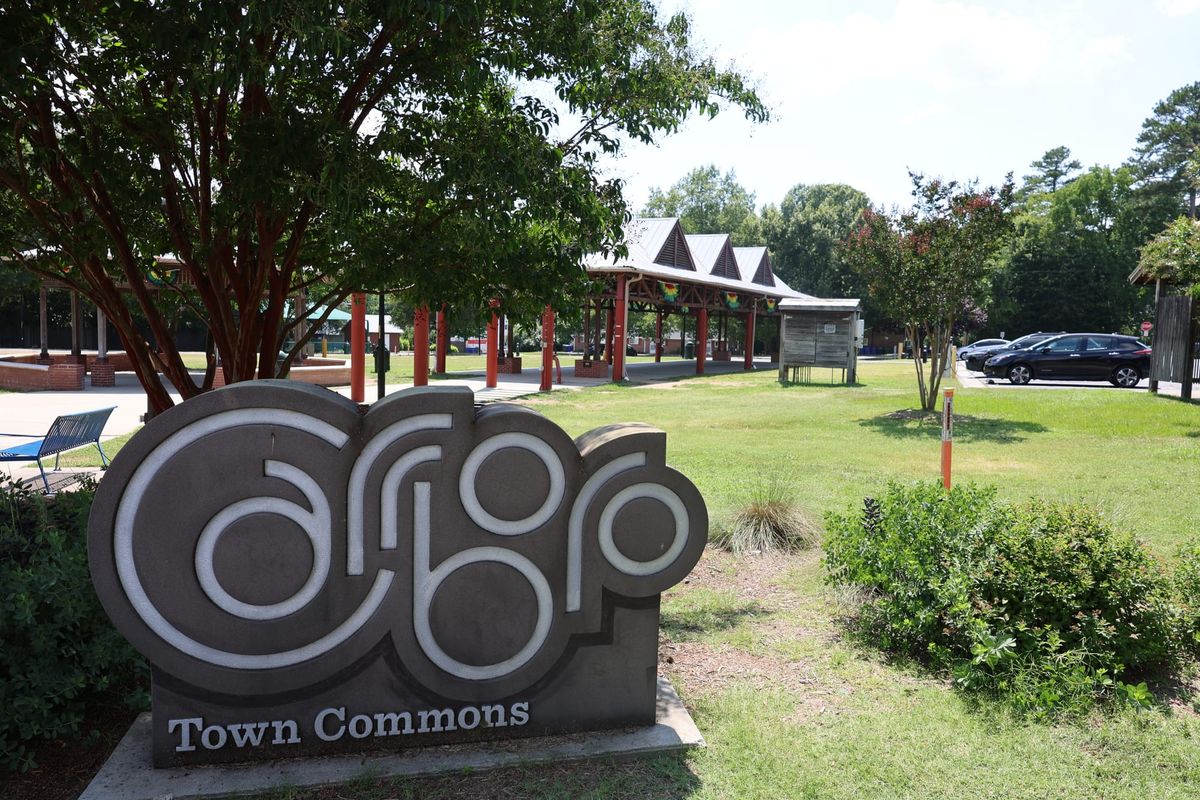
On this, everyone seems to agree--it's not "the Carrboro way." Whether speaking of the proposal, how it was communicated, or the public response to it, different stakeholders have characterized different aspects of the proposed police merger as distinctly "un-Carrboro."
On October 29, Town Manager, Patrice Toney, presented an overview of her proposed plan to consolidate Carrboro's police services with Chapel Hill's police department in a packed public meeting. Some attendees were dismayed at remarks made by some members of the audience they deemed disrespectful to Toney.
Meanwhile, some residents have expressed regret at what they perceive as disrespect shown to Carrboro's police officers through late communication and lack of consultation on the proposal. "Will they lose their pension?" some attendees wondered at the community-led information session on Saturday. In the phased plan outlined in the draft proposal, officers would need to (re)apply for their jobs if they want to work in the consolidated police department and undergo further training to align with Chapel Hill's standards.
Prior to the public meeting in October, Toney had explored the idea of consolidating the police forces and held conversations with Chapel Hill officials to assess feasibility and inform her proposal. Meanwhile, rumors circulated for much of the past year, with officers on both forces discussing what they were hearing, according to David Deshaies, a former officer who served on Carrboro's police force starting in 2009 and then intermittently until October of this year. Current police officers did not want to speak on this topic.
According to Chapel Hill Town Council Members who did not want to be named in this article, on September 25, Chapel Hill's Town Manager, Ted Voorhees, sent an email to Council members informing them that discussions were taking place and that a proposal to consolidate the police forces would be presented to both Councils.
Jason Merrill and Catherine Fray, Carrboro Town Council Members, said that Toney emailed a draft proposal to Council members October 6. By mid-October, parts of the proposal were shared on social media prompting the Town of Carrboro to schedule a public presentation.
Under a council-manager form of government, the Town Manager functions as the chief administrative officer of a municipality, as defined by North Carolina's General Assembly in G.S. 160A‑148. Carrboro's website states, "The Town Manager advises the Council on all matters related to the planning, development, and operating status of the Town departments."
While some residents believe Toney acted outside of her authority, gathering information to inform proposals for Council and the public is part of the Town Manager's role. Toney had mentioned she was looking at police consolidation among other ideas to explore efficiencies and financial savings to Council members earlier this year, according to Council Member Catherine Fray. "She's doing her job," they said. Council Members Fred Joiner, Jason Merrill, and Danny Nowell agreed. "The final consideration of any proposal rests with the Council, and it is standard practice for staff to develop programs and possibilities to a level of detail that allows us to discuss them productively," Nowell said.
In general, those Council Members and two from Chapel Hill who asked not to be named, think the proposal conveys good ideas, but they have specific concerns, including how governance will work for a consolidated police department. That concern has also been voiced by some residents, since Carrboro residents do not vote for Chapel Hill Council Members or mayor, which oversee services there.
Residents at the public meeting and some Council Members have also expressed concern about the proposed timeframe, which has the first phase of the proposal beginning in December, 2026. Merrill said he "totally understands" why the draft timeline is alarming to many residents.
While Carrboro Town Council Members generally believe that public communication about the proposal happened in a logical timeframe, the Council Members interviewed from Chapel Hill were surprised the public wasn't engaged sooner. This concern has also been voiced by some Carrboro residents, "We need to know who knew what and when," said resident and former Council Member Randee Haven-O'Donnell. Another resident, David Beck, voiced concerns about a "corruption of process" in how the proposal was developed and communicated.
Fray pointed to ongoing challenges that many local governments have with obtaining feedback equitably due to communication "channel asymmetry" in which only a few people hold "a lot of power" in engaging with and providing feedback to Town. Nowell also acknowledged, "Managing the rollout and solicitation of public input is consistently one of the most challenging things to get right in local government...." Both mentioned more resident engagement opportunities on the proposed police department merger are coming soon.
Council Members from both towns have stressed that the proposal would need to be approved by both councils before it could be implemented. Carrboro Town Council will receive a presentation on the proposed consolidation of police departments at their meeting on Tuesday, November 10 at 6pm. They will not vote at that meeting. An announcement from Town on November 9 states, "The proposal is expected to return to the Council for further consideration on Dec. 1." Chapel Hill Town Council will hear more about the proposal at their meeting on November 18 at 6pm.
At this point, "quality of services" stands out as a distinct difference in opinion between supporters and opponents of the proposal. Whereas the proposal discusses improvements to services, including community policing, some residents and business owners are afraid of losing "the Carrboro way" that the police department engages with the community with respect, compassion, and even creativity. Deshaies described Carrboro's force as "spending all of our time on prevention," an approach different from what he has seen in Chapel Hill.
Merrill acknowledged those concerns and noted that "the Carrboro way" includes "how we treat each other." After spending 25 years in this town, he believes that "we can work through challenging things together."
Correction 11/10: Chapel Hill Town Council members were notified of discussions on September 25, not August 25.