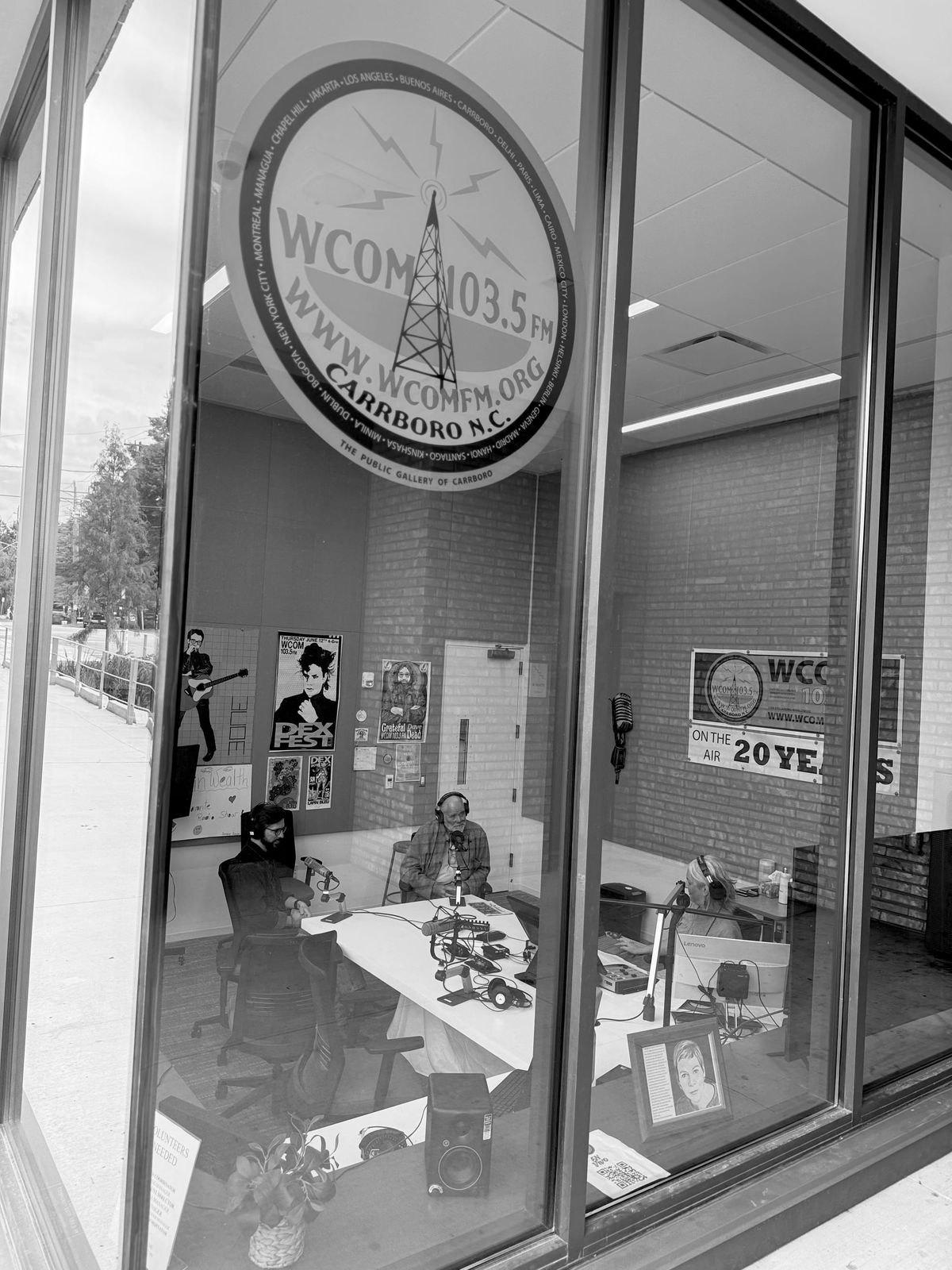
Rob Bowers, Editor and Publisher, and Derek Askey, Senior Editor at The Sun joined The Carrborean Radio Hour at WCOM on October 5.
The speakers’ responses below are paraphrased in first person for a dialogue-style summary; only text in quotation marks is presented as a direct quote.
Q: How did The Sun begin, and what was it meant to do?
Rob: The Sun began in Chapel Hill in 1974, when founder Sy Safransky wanted to move beyond conventional journalism and focus on what he called “the real news”—human, political, and social issues that matter to people. In the early days, he sold hand-bound copies on the street.
Derek: I’d add that Sy sold them shoeless. The magazine has grown a great deal since then, but its focus on the human condition has endured.
“We can recognize our lives in one another.” — Rob
Q: How does the magazine support itself and how many subscribers does it have?
Rob: We have about 40,000 paying subscribers now. We rely on them entirely, so we’re always thinking about how to serve readers and keep publishing.
Derek: We’ve been ad-free since the early-to-mid 1990s. I think readers value being able to spend time with the magazine without advertising interruptions.
“We are supported entirely by our subscribers.” — Derek
Q: How many submissions do you read?
Rob: We receive about 2,000 unsolicited manuscripts each month and we’re committed to reading every one.
Derek: I work on Readers Write, where readers respond to a topic we provide. That section has been part of the magazine since 1978, and my colleagues and I read about 600 submissions a month for it.
Q: Can you turn off your editor’s mind when you read for pleasure?
Rob: I find it hard to read much beyond what I read for work. When someone trusts us with their writing, I feel it deserves my full attention, and that can be tiring.
Derek: My recreational reading has fallen, too. When I do read for fun, I often choose something far removed from the magazine—like a book about the Beatles.
Q: What brought each of you to The Sun?
Rob: I spent much of my early career in finance and nonprofit work, then moved to North Carolina and started a farm. I’d been a Sun subscriber since 1994. After years of seeing the magazine look for the right person, my wife suggested they might be waiting for me. I applied, and eventually joined the staff.
Derek: I started out in a finance job that wasn’t right for me, then went to graduate school in Colorado. I moved to North Carolina and, within a year, The Sun was hiring. I went through a long application process and joined about 12 years ago.
“This isn’t a dress rehearsal, so let’s get on with it here.” — Rob, recalling his decision to change careers
Q: What does your work at the magazine involve?
Rob: My days vary, but there’s always the work of getting the next issue out on time. I’m also thinking ahead—how we can bring pieces together into an issue that feels compelling and cohesive.
Derek: I don’t have a typical day, but I do have a typical month. I move between editing Readers Write and working on upcoming issues—proofreading, reviewing pages, and corresponding with authors. We’ve also gotten better at planning ahead, which helps with the workload.
Q: What does it take to keep The Sun going?
Rob: Our readers have to feel that the magazine is valuable to them. We need to stay true to what we do while adapting to a media environment where everyone is competing for people’s attention.
Derek: I think one of our strengths is bringing people together through the magazine—through readers’ writing, letters, and the chance to exchange ideas openly.
“The Sun [is] a place to gather and to exchange and to be unguarded and to be human with each other.” — Derek
Q: How do you think about the magazine’s purpose and its treatment of difficult experiences?
Rob: I believe we can help readers recognize themselves in other people’s stories and feel less alone. We want to create a sense of belonging, even when someone else’s life seems very different from ours.
Derek: I wrote about serving as an alternate juror in a first-degree murder case shortly after my father died. It was a difficult experience, and writing helped me process it. Readers later told me the piece meant something to them. I don’t think The Sun is simply sad; I think it’s willing to look at sorrow alongside joy.
“What is to give light must endure burning.” — Viktor Frankl, a quote Derek recalled from the magazine
Q: What’s coming up for The Sun?
Derek: We’re planning another writing retreat at Wild Acres in spring 2027. We’re also considering more Readers Write workshops, and we expect to settle on the cities around Christmas.
Rob: We want to keep nurturing the close relationship between our readers and our editorial staff. We're also planning a spring 2027 celebration of The Sun covers at The ArtsCenter.