
Daniel DeLorenzo Trio: Hear Traditional Jazz Influences with a Contemporary Spin from Guitar-Led Group at Carrboro Music Festival
By Pamir Kiciman
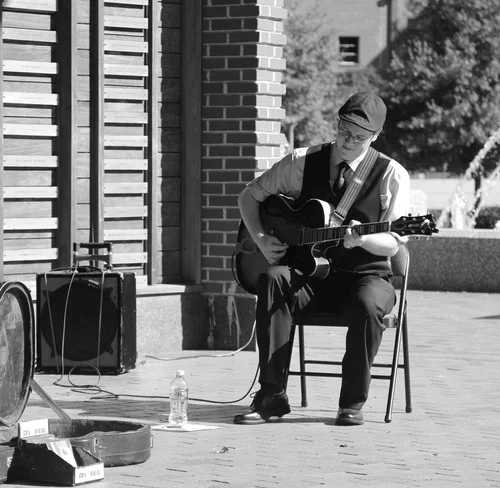
Daniel DeLorenzo grew up playing and recording music. Early on, he was introduced to the guitar through blues and rock music. “I was drawn to the improvisational nature of the blues, as I’ve never enjoyed repeating the same performance.” This approach can risk inconsistency; it also keeps the music fresh and allows perspectives to evolve. DeLorenzo gravitated to ‘performed music,’ differentiated from produced or orchestrated music. “Jazz became an exciting avenue of exploration for me, not only because of its incredible catalog of performed music and players, but also its encouraging sense of discovery.”
Band Members (live lineup for CMF): Daniel DeLorenzo, Guitar; Theous Jones, Drums Mark Dragon, Hybrid Guitar (a standard bass and guitar as one instrument).
Genre: Jazz — improvised, instrumental music.
Venue: Steel String Brewery – 1 p.m.
Links: Website / Bandcamp
DeLorenzo makes music in a classic jazz trio format. With the drums and bass being nonnegotiable, jazz trios typically include piano, and alternatively guitar or organ to complete the trio. Other than the organ, drums and bass —the piano having a place in both rhythm and melody— used to be rhythm section instruments in jazz bands and not considered solo voices that could play melodies.
Electric instruments, amplification, and visionary players contributed to liberating drums, bass, and guitar from dutiful timekeeping and harmonic accompaniment, starting in the 1920s through the 1940s.
These clues help us understand DeLorenzo's’s description of his genre of jazz: “My compositions draw from traditional pre-bop, bebop, and post-bop jazz forms and arrangements while incorporating contemporary, groove-oriented elements.”
Pre-bop is mostly the Swing Era; Bebop, born in the mid-1940s, was a revolutionary shift in jazz toward small groups, fast tempos, and heavy improvisation; Post-bop went further in the 1950s and 1960s, prioritizing open-ended structures and emotional expression.
Overall, jazz lends itself particularly well to live playing. Perhaps that’s why DeLorenzo prefers performed music, saying, “Jazz offers the freedom to grow, change, and explore something new with every performance.”
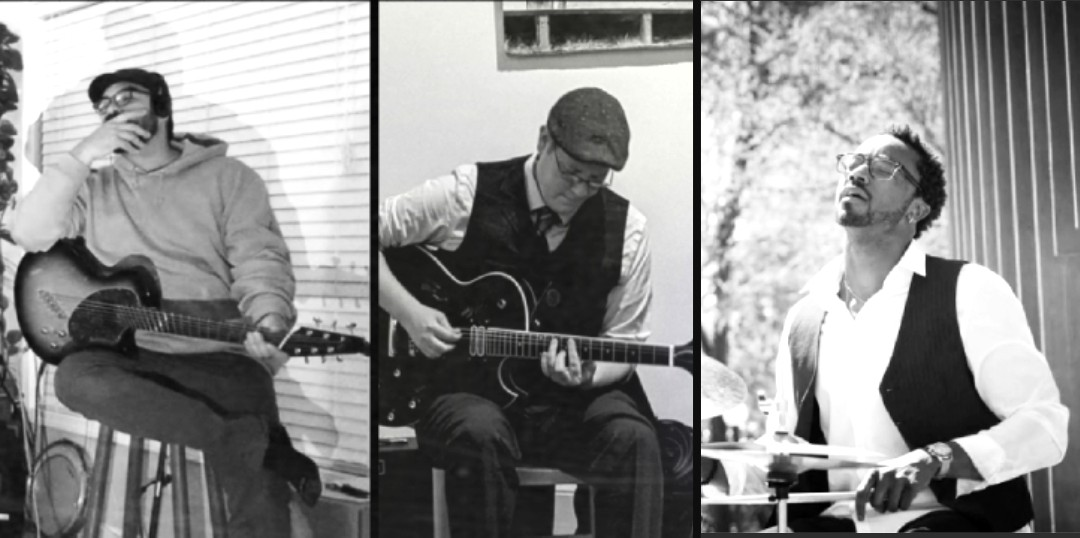
The Daniel DeLorenzo Trio plays a lot of the American Songbook and jazz standards, together with a bebop and post-bop repertoire. At its Carrboro Music Festival (CMF) set on September 27, audiences can expect mostly DeLorenzo’s original tunes, with a Thelonious Monk or Miles Davis tune mixed in.
The good melodies and chord changes resonate with him, stick around, and keep growing with him. “My compositions tend to be of the moment they were created. A culmination of where I am and what I was doing when they were conjured. My tunes are relatively simple, and I don’t do much hand wringing or analysis of what they are.”
With Mark Dragon (hybrid guitar) joining this year’s CMF lineup, there will be a focus on grooving, backbeat-centered rhythms.
DeLorenzo cites many musicians as part of his musical makeup and quickly points out that he doesn’t sound like any of them. His list of influential American jazz guitar players roughly follows the eras of jazz mentioned above, from swing to today: Charlie Christian (’30s and early ’40s); Wes Montgomery (’50s and ’60s); Jim Hall (’50s through 2000s); Grant Green (’60s); John Scofield (’70s); Bill Frisell (’80s to the present), and surprisingly, Jimi Hendrix.
Lately, he’s been listening to recordings of The Chico Hamilton Quintet from the ’50s era. And on September 1, he released his 8th album, Can You Not. The album features six original compositions, along with a reimagining of Robert Schumann’s Kinderszenen, Op. 15 (Scenes from Childhood).
Other than the above-mentioned Monk and Miles, he also noted, “I tend to embrace my own voice in interpretation, but the works of Duke Ellington, Wes Montgomery, and Sonny Rollins are regular occurrences. As well as occasional reinterpretations of compositions by Bach, Mozart, Tchaikovsky, Prokofiev, and Schumann.”