
Why Plant Natives?
By Jeanette O’Connor, Executive Director, Lands and Waters South
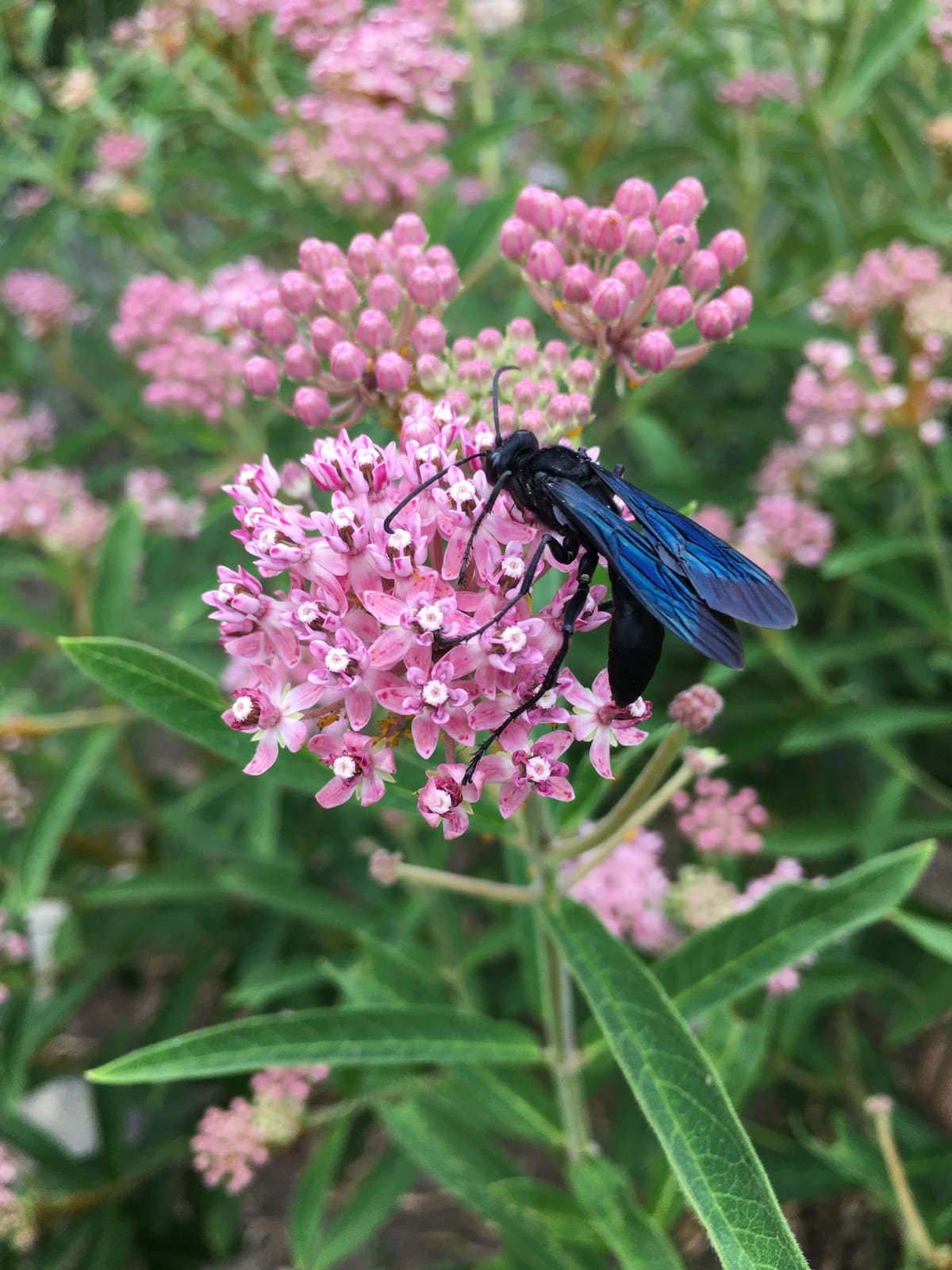
For most people, plants in our landscapes serve one purpose: beauty. But in reality, plants are critically important for food webs and life cycles. Doug Tallamy explains, “almost all North American birds other than seabirds — 96 percent — feed their young with insects.” [1] A brood of five chickadee hatchlings will consume 6,000 to 9,000 caterpillars in a season. [2] But many insects, particularly caterpillars, require host plants on which to lay their eggs, plants with which they have evolved over millennia.
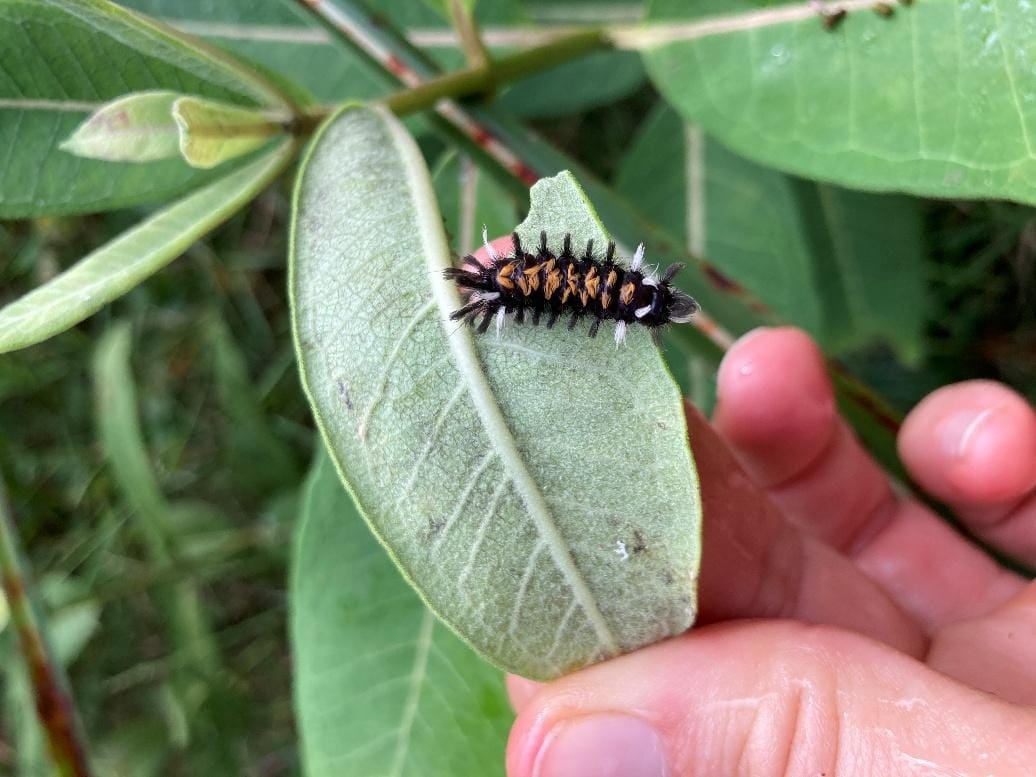
When we trade our native plants (those species that have evolved with surrounding plants and animals, each influencing the evolution of the other) for species from other places, we hinder the ability of those insects to reproduce. A clear example can be seen in a comparison of the flowering dogwood (Cornus florida), which is native to Orange County, and the kousa dogwood (Cornus kousa), which is native to Korea, China, and Japan. The flowering dogwood supports 117 species of moth and butterfly larvae, the kousa dogwood supports zero. [3]
Many people argue that they see insects on their non-native plants constantly. For instance, butterflies can often be seen drinking nectar from the flowers of the non-native butterfly bush (Buddleia davidii), leading people to assume they have chosen a helpful species for their yard. But no species of butterfly native to the US will use the butterfly bush as a host plant on which to lay its eggs. And no butterfly eggs laid means no butterfly adults the following season. In addition, butterfly bushes are listed as invasive by the NC Invasive Plant Council and considered a severe threat by the NC Native Plant Society.
Natives are also economically important. Insects pollinate many of the foods we enjoy eating. As of 2009, pollination of US crops by native insects was valued at more than $9 billion. [4] In North Carolina, 28% of native bees are pollen specialists, meaning they utilize the pollen from just a narrow range of plant species (sometimes just 1 or 2 species, as in the case of our southeastern blueberry bee!). [5] If those plant species disappear, so too do the bees who rely on them.
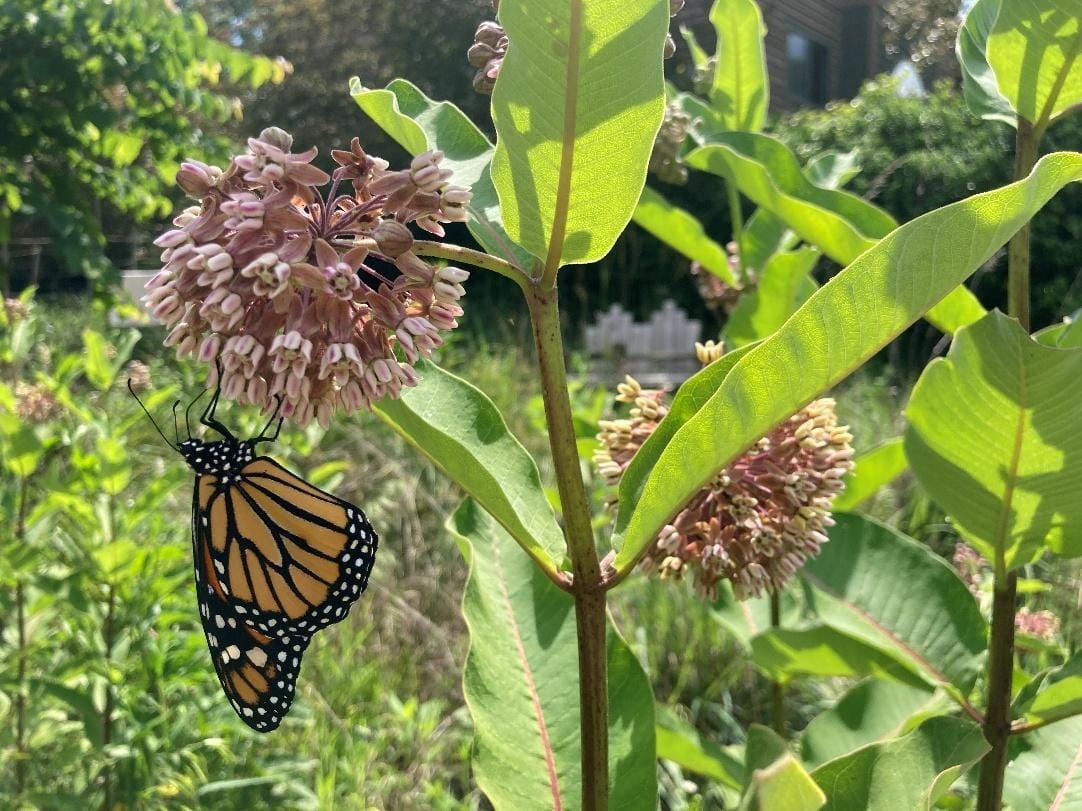
As of 2020, the world produces 3 – 5% fewer fruits, vegetables, and nuts than it would if we had healthy wild pollinator populations. [6] Some species, such as the monarch butterfly, have an estimated economic value in the billions of dollars all by themselves. These insects will cease to exist without the correct host plants on which to lay their eggs. In fact, researchers estimate that the monarch butterfly population has declined by 80% in Central Mexico and over 95% in California. [7] The decline has been attributed in large part to the disappearance of the milkweed plants on which the species relies, resulting in the US Fish and Wildlife Service considering the monarch for protection under the Endangered Species Act. [7] In 2025, Carrboro made a Monarch Pledge, encouraging residents to plant native species of milkweed and other nectar plants to provide habitat for monarchs and other pollinators. [8]
In contrast to the high economic value of natives, invasive species can be economically and environmentally devastating. Invasive species have played a key role in the extinction of more than half of recorded plant and animal extinctions worldwide. [9] Far from the economic good of natives, invasive species are estimated to cost the world at least $423 billion dollars annually. [9] It can take decades to discover that a species is invasive, and such a discovery does not necessarily lead states to ban nursery sales of the species. In 2025, Carrboro proclaimed February 24 – 28, “Invasive Species Awareness Week.” [10]
The term “invasive” is reserved for non-native species. Native species cannot be designated invasive, but they can be considered aggressive. For example, wild bergamot (Monarda fistulosum) and Canada goldenrod (Solidago canadensis) will outcompete a lot of other native species. The general theory is to plant aggressive natives with aggressive natives, such that they keep each other in check. You can have non-native species that are not invasive. A good example is lilac (Syringa), from southeastern Europe. It’s not native to the U.S. but it doesn't do any harm here. One could argue, however, that we have so little land that hasn't been concreted over that if you have space to plant you should take the opportunity to improve the health of your local ecosystem by planting native instead of using up the space with a species that won't offer anything other than beauty.
The Xerces Society explains that “Pollinators are one of the easiest groups of declining animals to support in a residential landscape, since even small spaces have the potential to meet the most basic needs of the entire insect life cycle—and even simple changes to our landscaping can make a huge difference to these animals.” [11]
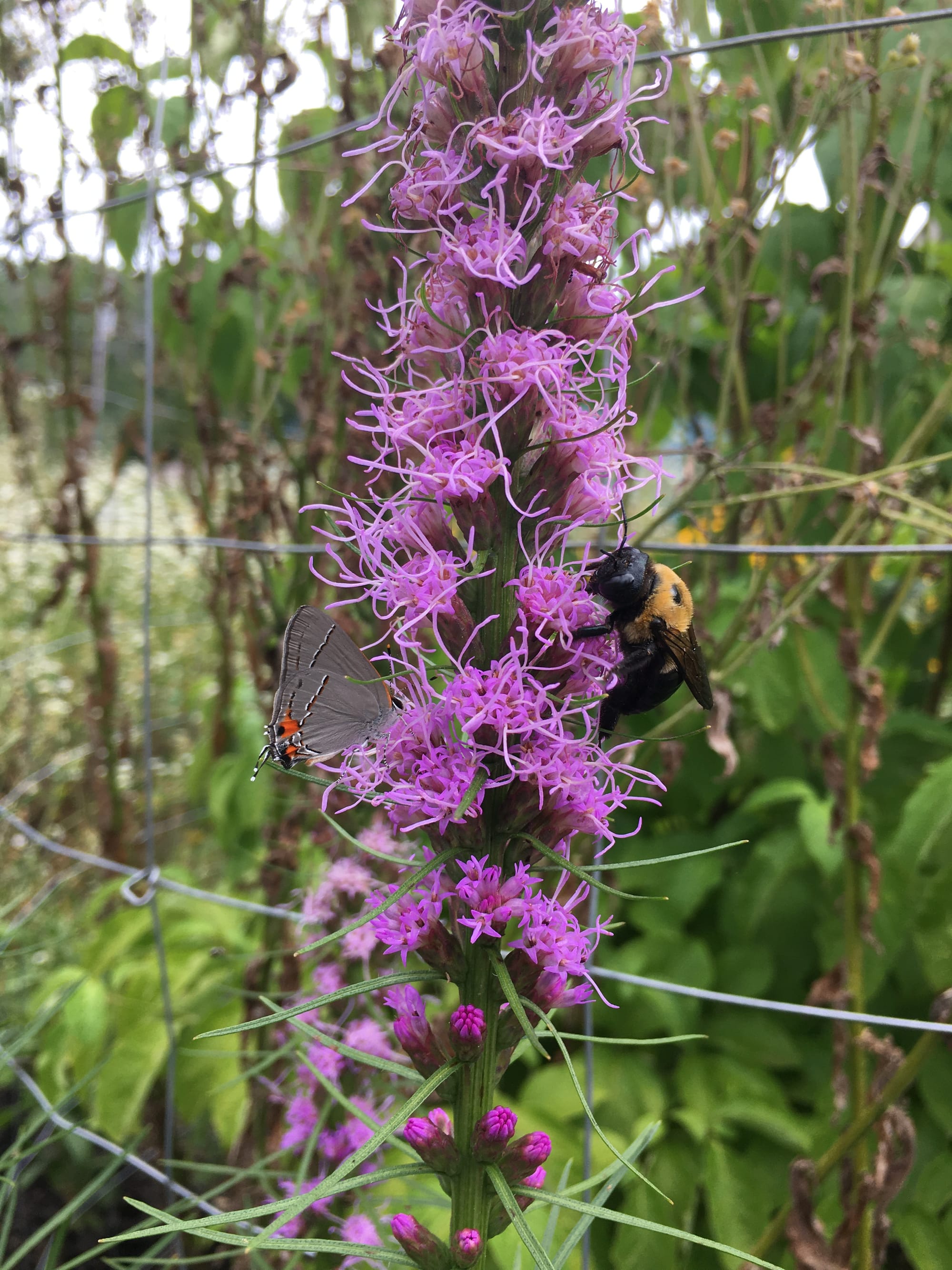
If you would like to help by planting natives but don’t know where to begin:
The NC Botanical Garden offers plant lists, classes, tours, and family and youth programs to help you grow your knowledge of natives.
You can also find plant lists and local nurseries that specialize in species native to our region through the NC Native Plant Society.
Pick up a copy of Doug Tallamy’s book, How Can I Help? and Sara Stein’s book, Noah's Garden from the library.
Volunteer with an organization that is actively working to get more natives in the ground like Lands and Waters South, Trees for the Triangle, and Project Pando, or an organization that is removing invasives from the community, like Rewild NC.
References:
- Raver, Anne. “To Feed the Birds, First Feed the Bugs.” The New York Times. 6 March 2008. Web. 20 February 2026. http://www.nytimes.com/2008/03/06/garden/06garden.html?_r=0
- Donahue, Michelle. “New Research Further Proves Native Plants Offer More Bugs for Birds.” Audubon. 27 July 2017. Web. 20 February 2026. https://www.audubon.org/news/new-research-further-proves-native-plants-offer-more-bugs-birds
- Tallamy, Doug. Bringing Nature Home. Portland: Timber Press Inc., 2010.
- “Fact Sheet: The Economic Challenge Posed by Declining Pollinator Populations.” the White House. Office of the Press Secretary, 20 June 2014. Web. 20 February 2026. https://obamawhitehouse.archives.gov/the-press-office/2014/06/20/fact-sheet-economic-challenge-posed-declining-pollinator-populations
- Talk by Heather Holm for the Pollinator Friendly Alliance Summit, “Native bee specialists, plant hosts, threats and conservation,” May 9, 2024. https://www.youtube.com/watch?v=-MDNaUJPftM&list=PLGHXSsYI7l-X3Dcb6a5ABJqMifefg5irc&index=3
- Datz, Todd. “Pollinator Populations are Falling, Here’s What that Means for Our Health and Economies. World Economic Forum. 20 December 2022. Web. 20 February 2026. https://www.weforum.org/stories/2022/12/pollinator-populations-health-economies/
- “Monarch Butterflies.” The Xerces Society for Invertebrate Conservation. The Xerces Society. Web. 18 May 2015. http://www.xerces.org/monarchs/.
- Town of Carrboro, 2025. Mayors-Monarch-Pledge-Proclamation-2025.
- Dickie, Gloria. “Invasive Species Cost the World $423 Billion Dollars Every Year.” World Economic Forum. 11 September 2023. Web. 20 February 2026. https://www.weforum.org/stories/2023/09/invasive-species-cost-global-economy-billions/.
- Town of Carrboro, 2025. Invasive-Species-Awareness-Week-2025
- Morris, Sarah and Sarah Foltz Jordan. “How to Maximize Benefits to Pollinators in Cities and Towns.” The Xerces Society for Invertebrate Conservation. 24 April 2020. Web. 27 February 2026. https://xerces.org/blog/earth-week-urban-habitat