Perspective: Now is the time to address political violence
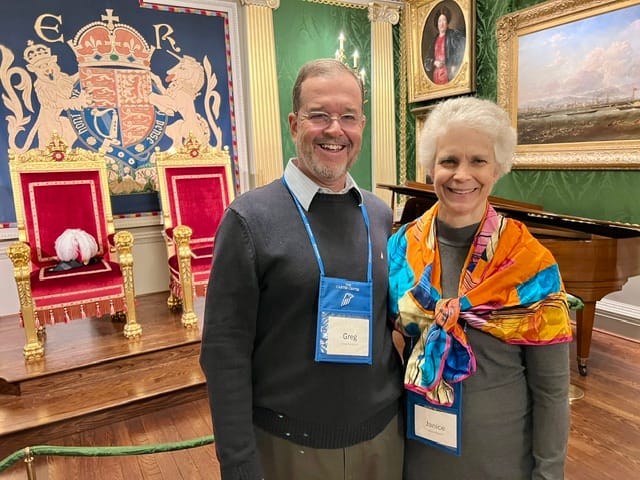
By Greg Randolph and Janice Bryant
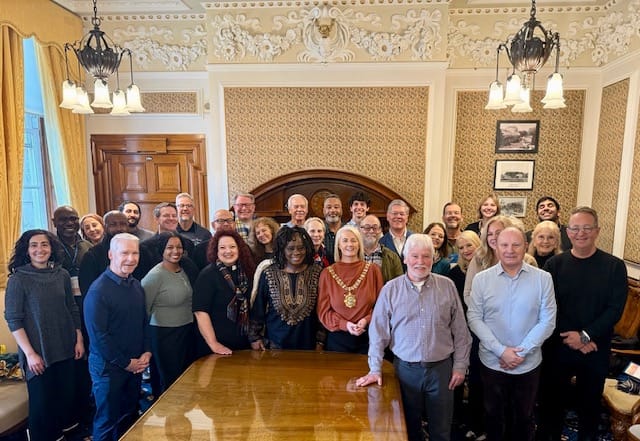
We recently traveled from Carrboro to Belfast, Northern Ireland, as part of a larger bipartisan group of faith and civic leaders from six states identified as being at the highest risk for political violence. Sadly, North Carolina is among those high-risk states. Hosted by The Carter Center and Rethinking Conflict, two groups dedicated to building peace in the United States and Northern Ireland, respectively, we went to learn from a country that has lived through 30 years of political violence.
For three decades, Northern Ireland endured “The Troubles,” a period of violent political conflict that claimed more than 3,700 lives, mostly civilians. Proportionally, that would be the equivalent of about 800,000 deaths in the United States.
We did not just study their history. We sat with it. We heard firsthand from those who lost parents, spouses, and children. We saw the physical and emotional scars that remain. And we left with a sobering conclusion: the United States is closer to this kind of conflict than most of us are willing to admit.
Ultimately, we left Belfast with three major takeaways.
First, we came away with a sense of urgency. The United States is already on a path toward its own version of The Troubles. In just the past few years, we have witnessed two assassination attempts on a presidential candidate, the assassination of a Minnesota legislator and her husband, and an attempted assassination of the governor of Pennsylvania and his family, just to name a few incidents. And, most recently, the assassination attempt on the President of the United States certainly underscores the need to reflect on our current trajectory. The threat to our nation’s wellbeing is not abstract. It is here.
At the same time, leaders across the political spectrum are increasingly using dehumanizing language to describe their opponents. As we were reminded in Belfast, linguistic violence often precedes physical violence. Words shape reality. When leaders normalize violent rhetoric, the consequences can escalate quickly.
Second, the cost of continuing down this path will be devastating. The pain we encountered in Northern Ireland was not confined to the past—it is still present, still raw, still shaping lives decades later. Survivors spoke of grief that never fades.
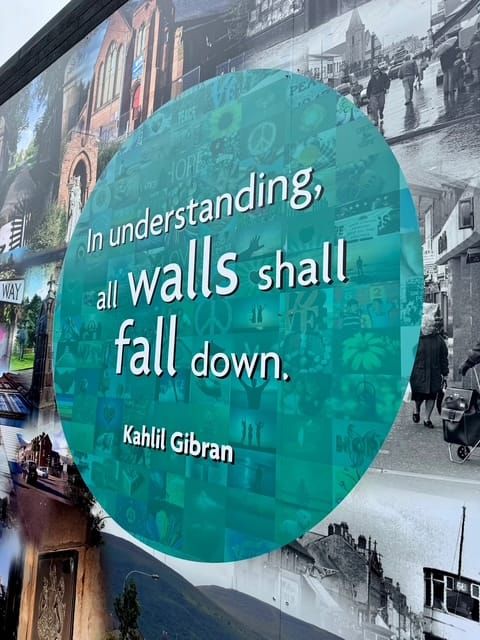
Even today, Belfast remains physically divided in many areas, with walls separating Protestant and Catholic neighborhoods. These “peace walls” stand as a stark reminder: once division hardens into violence, it does not simply disappear when the fighting stops.
For a snapshot of the pain and despair we witnessed and want to avoid, you can view this short clip from PBS.
Third, and most importantly, we left with hope as well as a sense of responsibility. A different path is still possible, but it will require action from all of us.
We learned that change must happen both from the top down and the bottom up. While leadership matters, civil society, the everyday actions of individuals and communities, may matter even more.
We also saw how, in Northern Ireland and other conflict zones, women leaders and women-led organizations have played a disproportionate role in promoting civility, dialogue, and peaceful elections.
Importantly, the public is against political violence. In North Carolina, recent polling from Catawba College-YouGov found an overwhelming rejection of political violence across fifteen scenarios. For example, 72% of respondents said violence is never justified to stop a political candidate they disagree with from being elected.
So, what can we do here locally?
We can model civility in our daily interactions and demand the same from our leaders, especially from those who share our political beliefs. If a politician from your party uses violent rhetoric or dehumanizing language, write or call them about your objections and why. We can also seek out conversations with friends, neighbors and colleagues who hold different political views, listening not to respond, but to understand. In our own time together in Belfast, those of us from across the political spectrum found far more common ground as Americans than as conservatives or liberals.
One practical approach we heard was simple but powerful: when faced with disagreement, start with “You may be right, let’s talk about it.” This kind of comment invites dialogue instead of shutting it down.
And we can choose to civically engage. Building a more peaceful, resilient democracy will not happen on its own. It will take sustained effort, humility, and courage from those of us in Carrboro and across North Carolina.
The lessons of Northern Ireland are clear. Political violence is not inevitable, but neither is peace. The difference lies in what we choose to do now.
For Carrboro residents, we hope this conversation continues in our neighborhoods, congregations, civic groups, and around our tables.
To learn more and/or get involved with efforts to reduce polarization and the risk of political violence here in North Carolina, you can subscribe to updates from The Center for North Carolina Politics and Public Service, sponsored by the Carter Center.