Perspective: Mutual Aid and The Strangers Who Saved My Son
A Carrboro father reflects on platelet donation, mutual aid, and the quiet ways care moves through our community. By John Nicholson
I didn’t have a name for it at the time.
When my son Cole was diagnosed with leukemia at 18 months old, everything narrowed to survival. My wife and I moved through long days and longer nights at the hospital in Fairfax VA, surrounded by doctors, nurses, and a steady rotation of people doing everything they could to keep him alive.
Chemotherapy was necessary—but it wiped out his immune system. That’s when the constant transfusions started.
The first time Cole received platelets, I remember looking up at the bag hanging above his bed. It was a deep, golden color—almost glowing like a halo. I asked the nurse where it came from.
She didn’t hesitate.
“Angels,” she said.
At the time, it felt like the only answer that made sense.
Over the next four years, those bags became a constant. Platelets don’t last long. They can’t be stockpiled. They have to come from someone, somewhere, willing to sit down, hold still, and give.
Strangers kept my son alive.
I didn’t know their names. I never saw their faces. But their presence was undeniable—hanging there above him, again and again, like something close to grace.
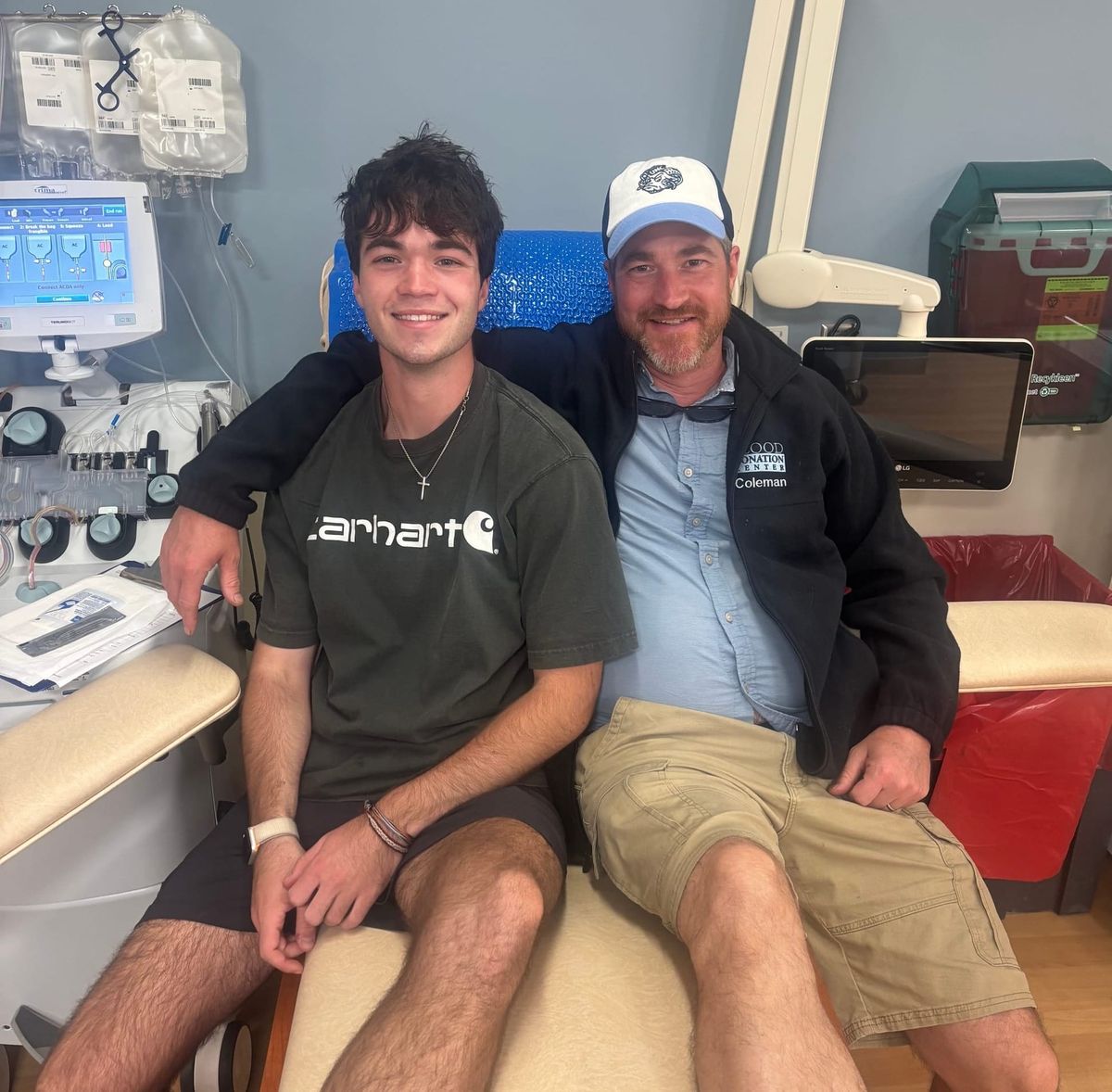
One day, after leaving Cole’s room, I walked over to the blood donation center and signed up to give blood myself.
It was the only way I knew how to say thank you.
Years later, our family moved to Chapel Hill. He completed his treatment at the UNC Cancer Hospital, just down the road from Carrboro. Today, he’s a freshman at University of North Carolina at Chapel Hill, living a life that once felt impossibly far away.
That time is a distant memory but I still donate; now platelets instead of whole blood.
At the UNC Blood Donation Center, I give two units every time—one for Cole, and one for my wife, who would if she could.
At a time that often feels heavy, it’s a simple act that reminds me there is still good in the world—quiet, steady, and real.
It wasn’t until much later that I learned there was a name for this kind of exchange.
Mutual aid.
Not charity. Not a one-way act of generosity.
But a virtuous cycle: giving what you can and taking what you need in the name of solidarity.
That’s what sustained us.
And it’s happening all around us.
In Carrboro, mutual aid doesn’t always announce itself. It looks like meals dropped on a neighbor’s porch in tough times. A text thread that mobilizes people to respond to an ICE raid in minutes. A table set up where everything is free to facilitate the exchange of abundance and need because a group of like-minded people decided it should be.
It also looks like places most of us don’t think about very often—like a blood donation center, where care moves quietly from one person to another, unseen but essential.
Over time, the donation center has become more than a place I go once a month. It’s a place where I’ve been known, looked after, and reminded of who I am.
A few months ago, the staff noticed my blood pressure was higher than it should be. They encouraged me—gently but persistently—to get it checked out. I didn’t act on it right away. They asked again the next time I came in. And the next.
Eventually, I listened.
Now I’m on treatment that may very well save my own life.
It’s a strange thing—to go somewhere to give, and realize you’re being taken care of too.
But that’s how mutual aid works.
Recently, I was laid off from a career in global health that I held for 20 years. It’s been a disorienting time—trying to figure out what comes next, and who I am without the work that defined me for so long.
Through all of that, I kept showing up to donate.
I might come in feeling depleted, but I never leave that way.
There’s something grounding about it. A reminder that even when things feel uncertain, I can still be part of something good.
If you’ve never donated platelets, I’ll be honest—it’s easier than you think.
You park for free. There’s a quick screening. Then you settle into a comfortable chair, maybe with a podcast or a book, under a heated blanket. The staff walk you through everything. The “poke” is quick. The rest is just time.
And when you leave, you know that somewhere, someone will need what you’ve given.
A child. A parent. A family sitting in a hospital room, asking the same question I once did.
Where did this come from?
I still think about that answer.
Angels.
These days, I’d put it a little differently.
It comes from us.
And if there’s one thing I’ve learned, it’s this: we are already taking care of each other, in ways big and small, visible and invisible.
We just don’t always call it by its name, mutual aid. Over the next few months I will share other examples of mutual aid right here in Carrboro that help bring our community together for each other.