More Than Free Stuff: How Carrboro’s Really, Really Free Market Reimagines Community
By John Nicholson
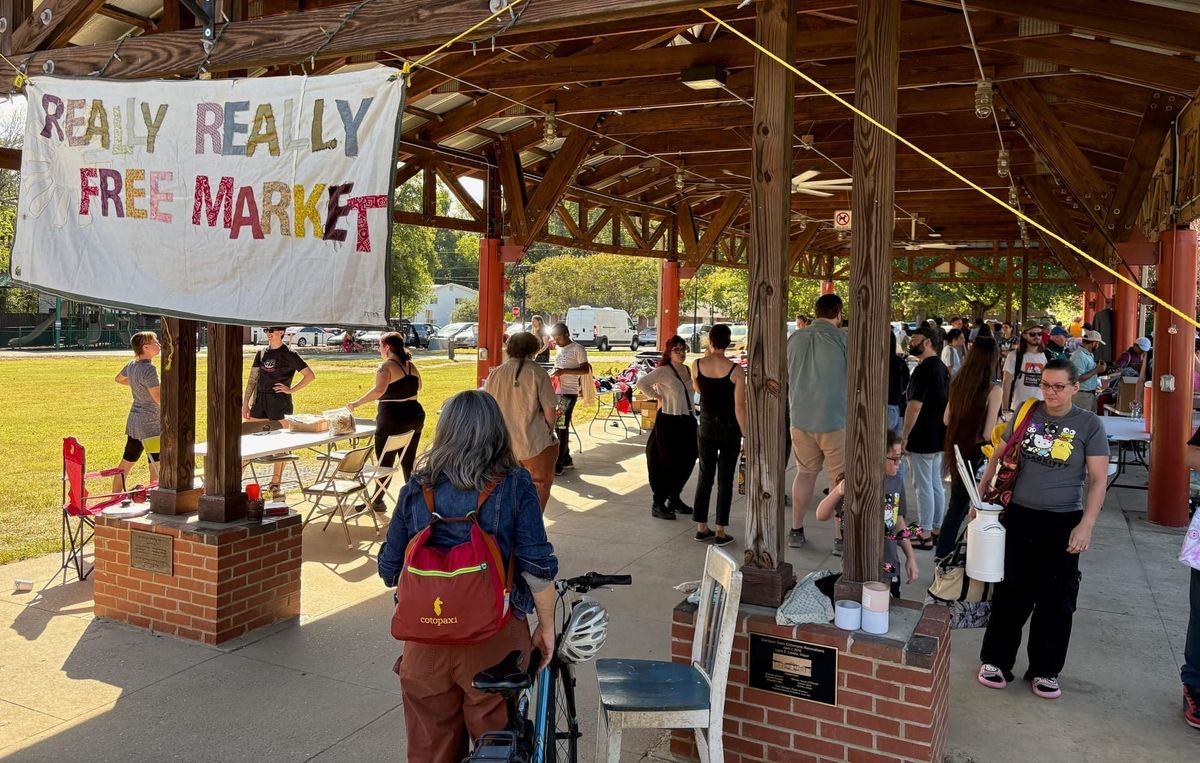
On the first Saturday of every month, rain or shine, something unusual happens in downtown Carrboro.
For these few hours, the Town Commons transforms into a place where the ordinary rules of commerce are quietly suspended. Folding tables appear where produce from the farmers market was sold just hours earlier, this time laden with clothes, furniture, books, kitchenware, toys, and electronics. Neighbors drift in carrying boxes of things they no longer need and leave with things they do. A barber offers free haircuts. Younger residents help older ones navigate their phones. Volunteers serve hot meals while local musicians play nearby.
No money changes hands.
The Really, Really Free Market is one of Carrboro’s most distinctive traditions: part give-and-take, part block party, part social experiment. For longtime participants, it is also a living expression of mutual aid—a reminder that communities can be organized around generosity and reciprocity rather than transactions.
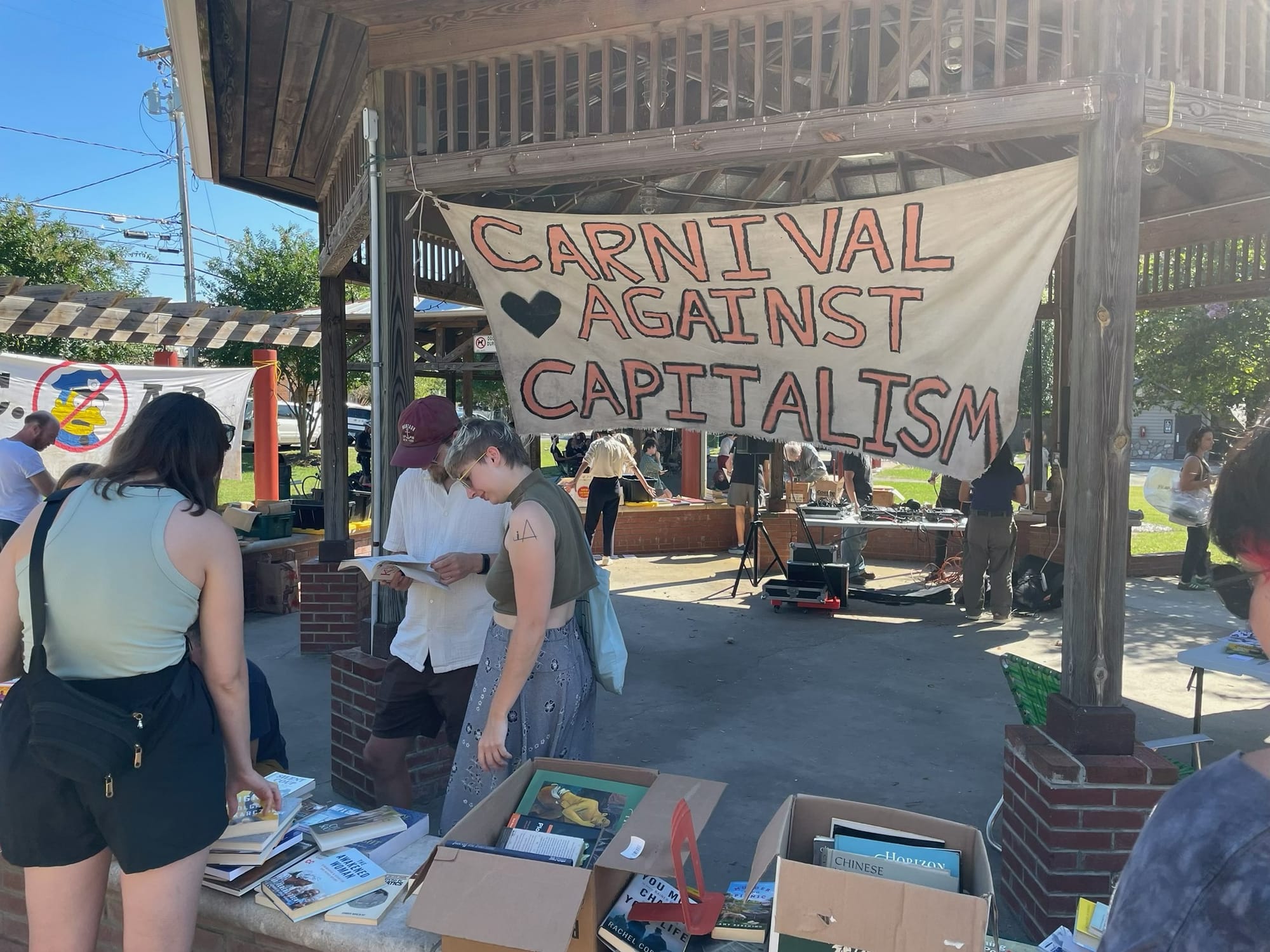
“It challenges people’s assumptions about value and scarcity,” said Brian, one of the market’s longtime participants. “This isn’t just a place to pick up free stuff. It’s one of the few spaces left where people from different generations, incomes, and backgrounds come together without the expectation that anyone is selling something.”
The market traces its roots to a broader movement that emerged in the early 2000s as a critique of consumer culture and economic inequality. Inspired by the idea that people should be free to share resources, skills, and labor outside traditional markets, Really, Really Free Markets began popping up in cities across the country.
In Carrboro, the concept found fertile ground.
Long known for its progressive politics, cooperative spirit, and vibrant arts scene, the town has cultivated institutions that prioritize community over commerce. Each month, the Really, Really Free Market transforms the Commons beside Town Hall into a space where things are not bought and sold, but simply shared. It sits comfortably alongside the town’s mutual-aid networks and organizations like Food Not Bombs, whose volunteers regularly prepare and distribute free meals at the event.
Yet the market’s appeal extends far beyond ideology.
On any given Saturday, attendees include college students furnishing their first apartments, retirees clearing out garages, young families searching for children’s clothing, and curious newcomers who happen upon the gathering while wandering around Carrboro.
For Judith, who has attended the market for years, its greatest value lies not in the items exchanged but in the relationships it creates.
“At first, I came for the exchange of things. Over time, I realized I was coming back for the people.”
The inventory and services change from month to month, but the spirit remains remarkably consistent. One table might hold winter coats and novels; another, lamps and power tools. Someone else may arrive with homemade bread, extra produce from a garden, or simply a willingness to share what they know.
That exchange of skills is part of what distinguishes the market from a yard sale or giveaway. A free haircut, help troubleshooting a smartphone, a hot meal, or an afternoon of live music all reflect the same idea: everyone has something to contribute. The line between giver and recipient quickly blurs.
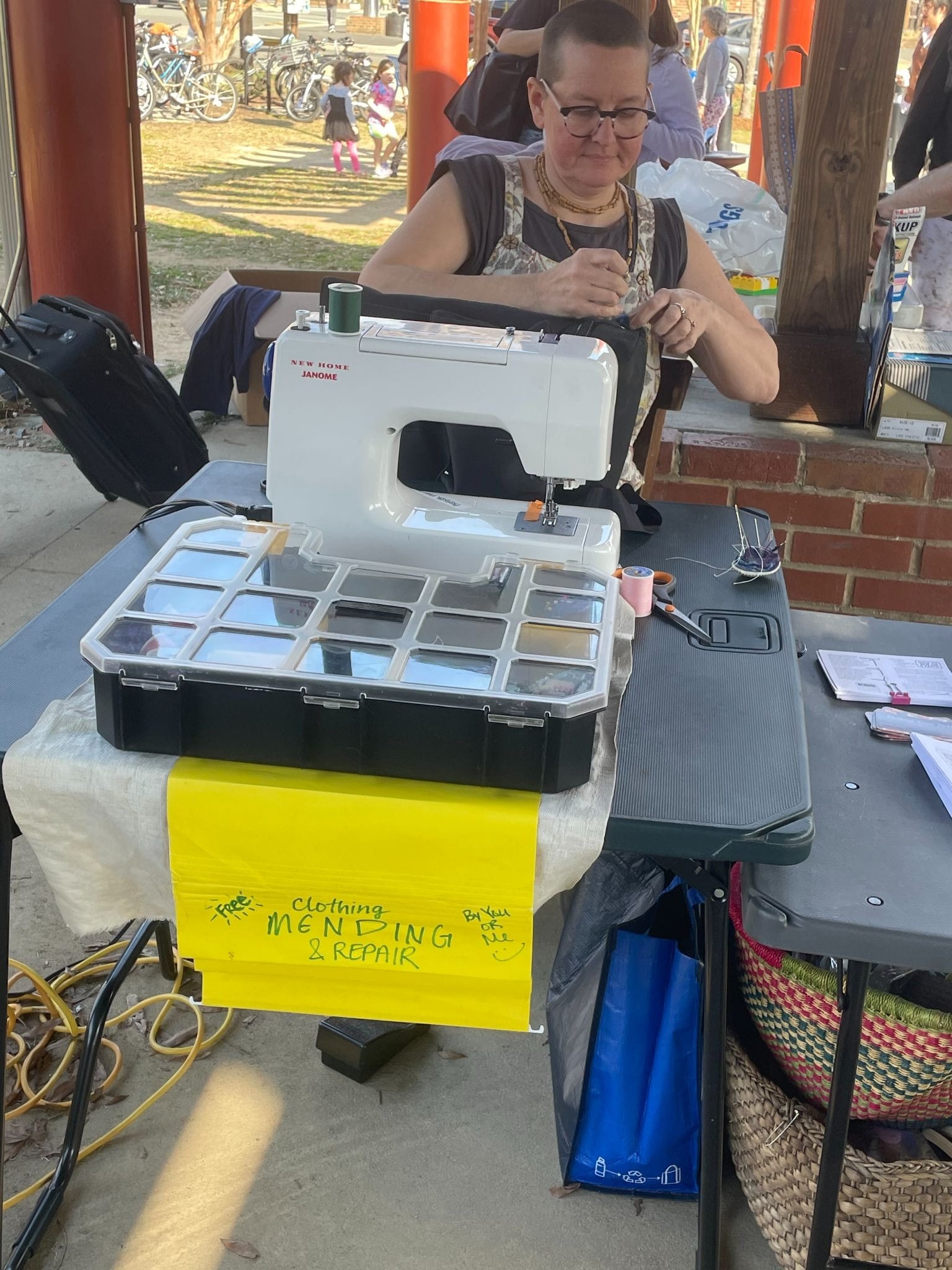
People may come because they need, or don’t need, something. They stay because they discover something less tangible: conversation, connection, and a sense of belonging.
For newcomers, that can be surprising.
Jeannie, who recently attended for the first time, admitted to arriving with some skepticism.
“I expected a pile of old clothes and leftover junk. What surprised me was how intentional it felt—people weren’t just dropping things off; they were staying, talking, sharing food.”
What she found instead was something difficult to categorize in a culture accustomed to putting a price tag on nearly everything.
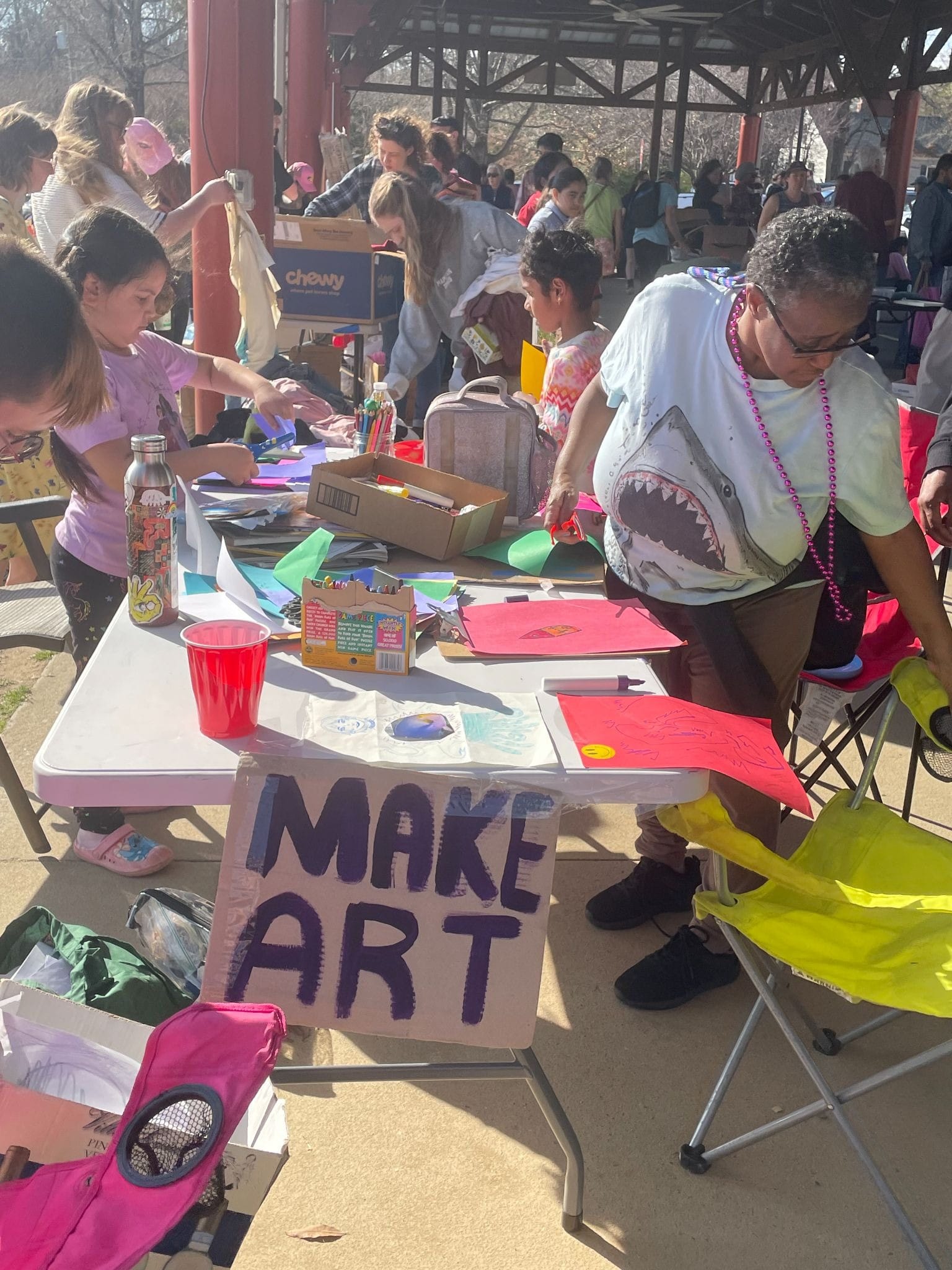
The Really, Really Free Market is not charity. There are no income requirements, no forms to fill out, and no expectation that participants prove their need. Organizers emphasize that everyone is welcome to give what they can and take what they need.
That philosophy can feel radical in an era defined by rising costs, online marketplaces, and increasingly fragmented communities. Yet for many Carrboro residents, the market’s endurance suggests a deep hunger for spaces where relationships matter more than transactions.
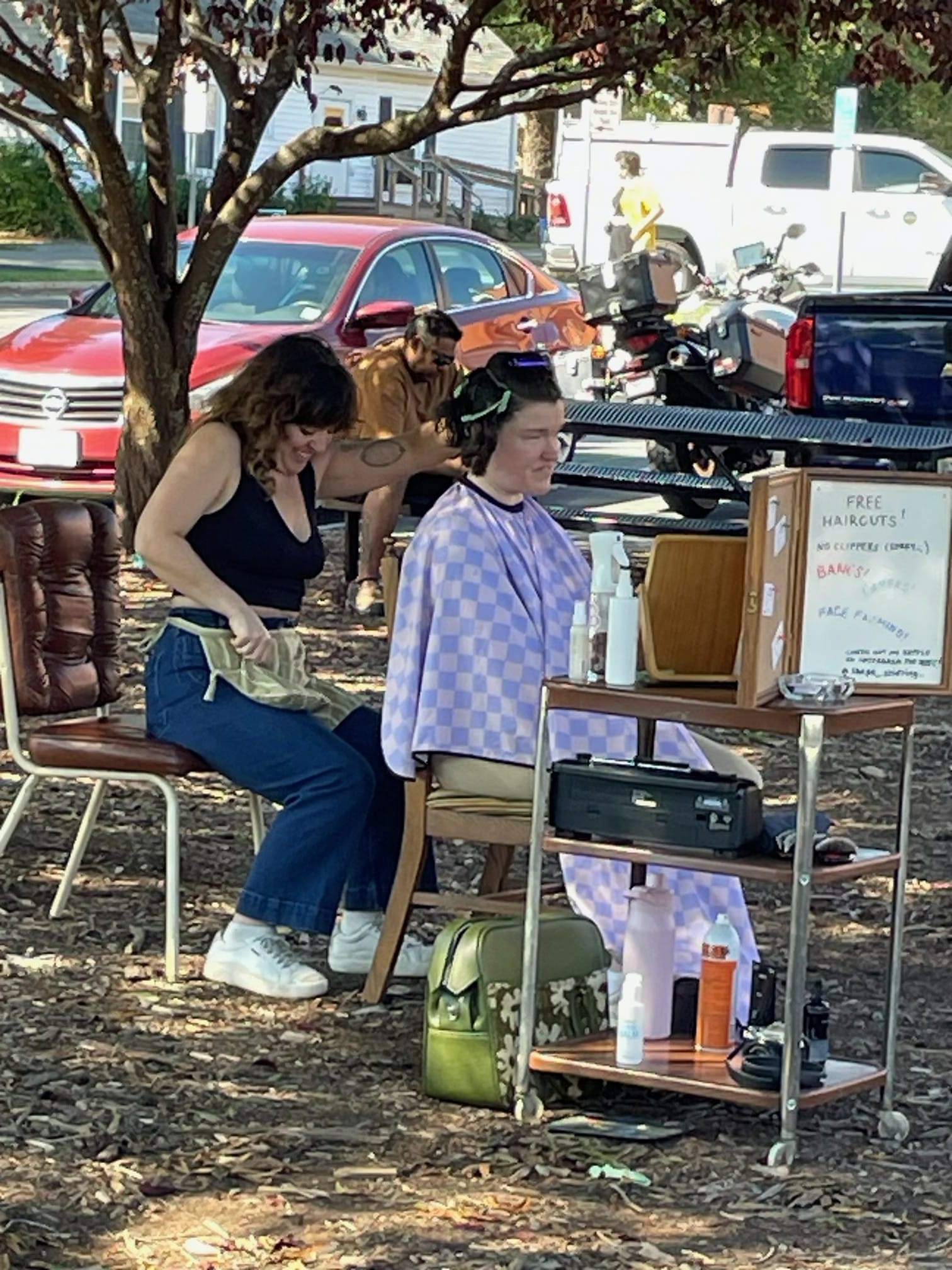
As housing costs rise and economic uncertainty grows, the market offers a practical reminder that abundance often exists alongside scarcity—not only in the clothes in our closets and the books on our shelves, but in the skills, talents, and time that neighbors are willing to share. One person’s treasured but no longer needed sweater becomes another’s prized find. A bag of children’s clothes passed along at the right moment can ease a family’s burden. A shared meal can turn strangers into neighbors.
For a few hours each month, the Town Commons becomes a place where a different set of values takes center stage—where generosity is ordinary, expertise is shared freely, and community is measured not by what people own but by what they are willing to give one another.
As always, the next Really, Really Free Market will take place from 2 - 4pm on the first Saturday of the month at Carrboro’s Town Commons. Organizers encourage residents to bring usable items, share a skill, volunteer, or simply stop by and experience one of Carrboro’s most unusual—and enduring—community traditions for themselves.