
More Than an Ambulance: The Role of South Orange Rescue Squad
By Mark Turner and Peter Yang
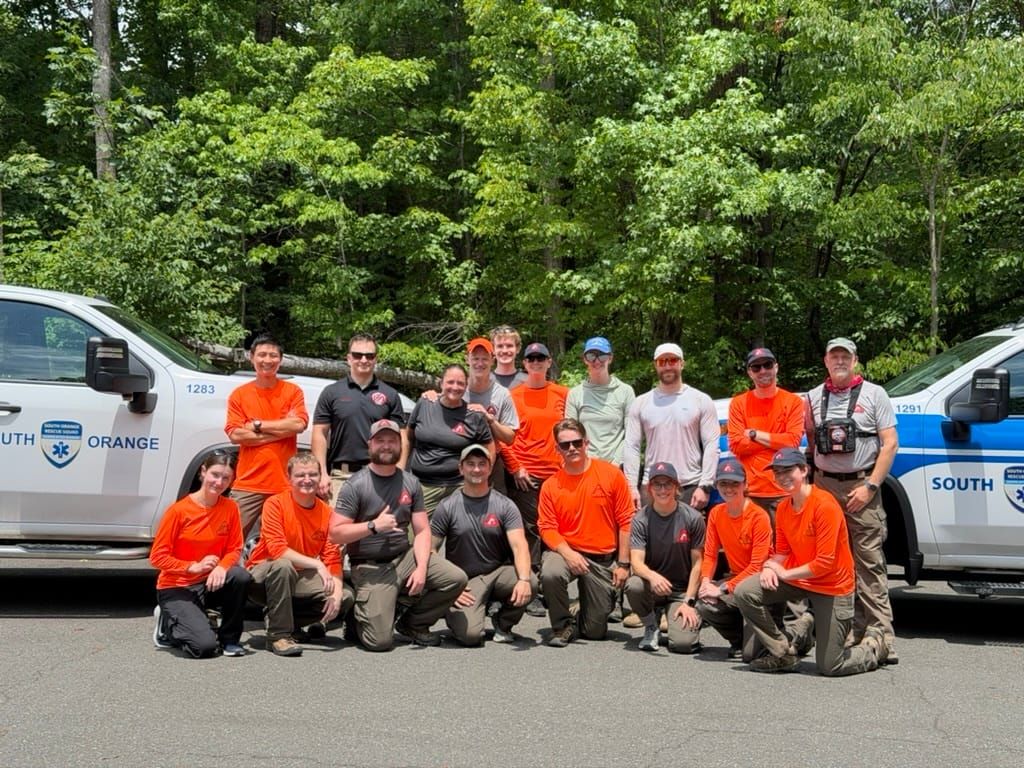
For more than half a century, a two-story brick building on Roberson Street in downtown Carrboro has been home to an organization that plays an unusual role in the emergency services network of Orange County and, increasingly, North Carolina.
South Orange Rescue Squad (SORS) is an all-volunteer nonprofit organization providing emergency medical services, technical rescue, and community emergency response education. In 2025 alone, more than 125 SORS volunteers contributed over 25,000 hours of service. Its crews responded to nearly 1,500 EMS 911 calls, provided medical coverage at 169 community and UNC events, and responded to 70 requests for mutual aid to assist partner agencies.
Those numbers are particularly striking because SORS receives no regular county funding. The organization supports its operations through ambulance transport revenue, grants, and contributions from individuals and organizations in the community.
A Carrboro institution with deep roots
South Orange Rescue Squad dates to 1971, when local firefighters and community members recognized that southern Orange County lacked adequate emergency medical transportation. This was before the modern 911 system existed. Three years later, the squad moved into its present station on Roberson Street.
SORS's Emergency Medical Services division staffs a Basic Life Support ambulance with two volunteer EMTs every night as part of the Orange County 911 system. Crews also provide additional coverage when call volume increases and support fire departments at emergency scenes and staff sporting events, festivals, and other large gatherings throughout Orange County and at UNC.
Rescue beyond the ambulance
Less visible is SORS's Technical Rescue Team (TRT), a roughly 30-member group trained for incidents that require specialized equipment and skills. TRT specializes in less traditional rescue environments, particularly wilderness, swiftwater, and high-angle rescues, including mountainous terrain and urban structures such as cranes.
The team uses rescue vehicles and boats equipped with specialized rope and swiftwater/flood rescue equipment as an Orange County resource, available for incidents locally and across the state. To effectively utilize these skills and tools in unpredictable environments, TRT trains with agencies across North Carolina, including in a recent waterfall rescue exercise in Pisgah Forest.
This is where SORS's role in the emergency services infrastructure becomes particularly important. Technical rescues rarely belong neatly to a single jurisdiction or agency. A search for a missing person may involve rescue squads, fire departments, law enforcement and emergency management. A major flood may require teams and equipment from several counties. TRT offers unique expertise and skills that can both support and enhance rescue operations based on the environment and circumstances.
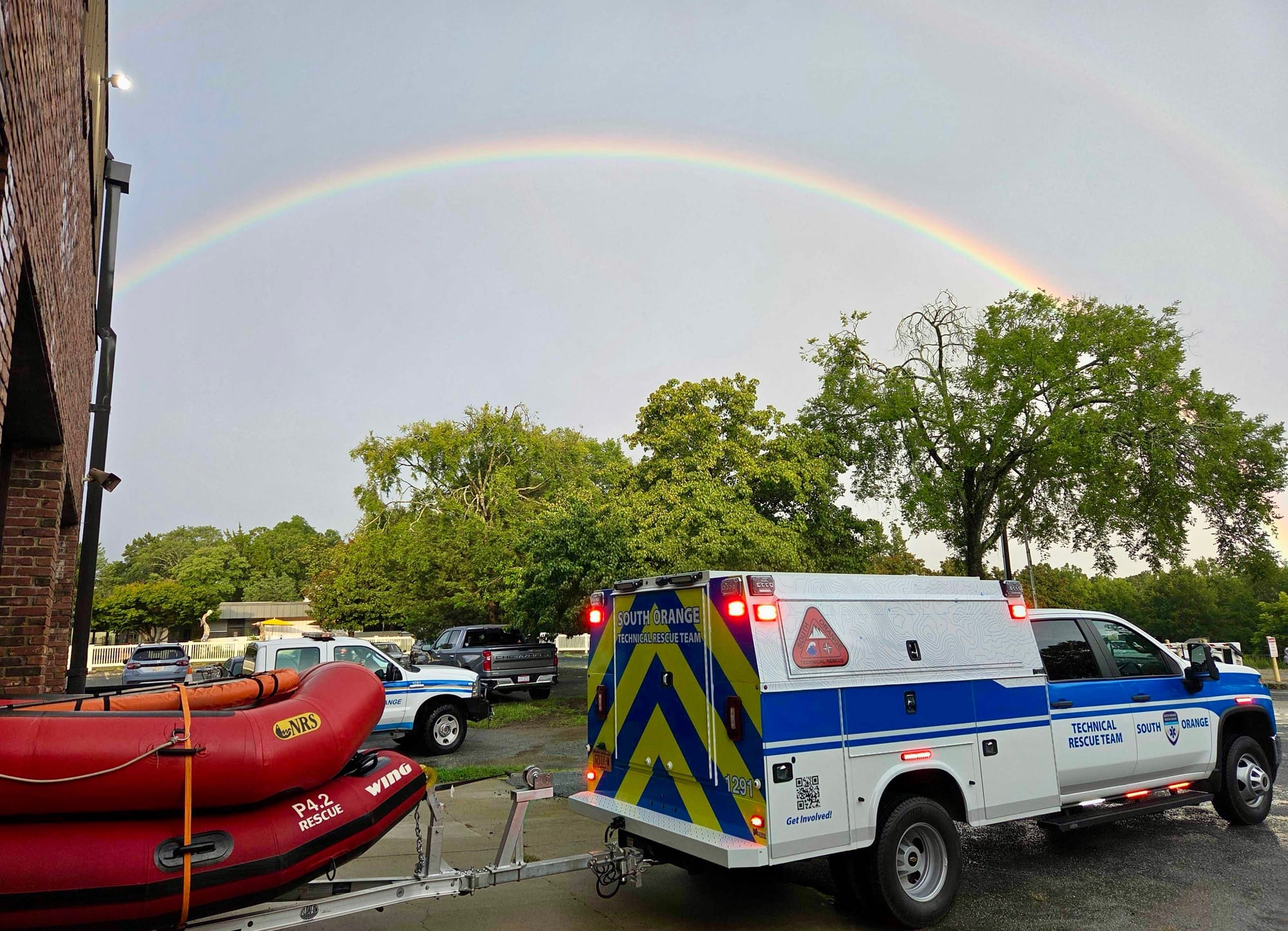
When Tropical Storm Chantal brought historic, life-threatening flooding to Orange County in July 2025, TRT was dispatched to Camelot Village in Chapel Hill, where rapidly rising floodwaters trapped residents in their homes. As part of the multi-agency emergency response, TRT crews used both motorized and non-motorized boats to rescue residents from the flooded complex and the nearby Eastgate and University Mall areas.
Immediately after performing flood rescues all night, TRT was dispatched at 5 a.m. to support our Durham rescue partners at the flooded Eno River. The Chantal response culminated in TRT coordinating a multi-agency wilderness search and rescue later that evening in northern Orange County for a woman swept away by a flash flood.
Building the next generation of responders
The squad has long served as an entry point into emergency medicine and public safety for UNC students, other young adults, and community members. Volunteers gain extensive practical experience while working alongside experienced emergency services professionals.
The training commitment is substantial. New EMS members already must hold EMT certification and then complete 4 - 6 months of additional cadet training. Technical Rescue Team members may spend years completing state and specialty certifications in subjects ranging from rope rescue and wilderness search to swiftwater/flood boat operations.
Preparing the community before an emergency happens
Through its CPR and Community Education program, volunteer instructors teach CPR/AED use, first aid, and Stop the Bleed techniques to residents, businesses, schools, and community organizations. In 2025, 995 people participated in these programs and SORS offers regular public classes open to everyone at its Carrboro station.
The idea is simple: Emergency response works better when lifesaving skills are not limited to professional responders. Teaching residents what to do during the first few minutes of a medical emergency extends emergency preparedness beyond fire stations, ambulances and rescue squads and into the community itself.
A community resource sustained by the community
Ambulances must be equipped and maintained. Boats, ropes, personal protective equipment and medical supplies must be replaced. Volunteers need continuing education and specialized rescue training. Maintaining the rescue station which has stood on Roberson Street since 1974 has become a high priority.
Those costs are supported in part by the community itself. Donations help SORS purchase medical and rescue equipment, maintain its vehicles and station, provide training for volunteers, and keep community education programs accessible.
For an organization whose motto is “Semper Aptus Muneris”—“Always Prepared to Serve,” preparedness is ultimately a collective undertaking.
Most people served by SORS will never know how much training, equipment, and cooperation were required to make that response possible. That is exactly how a good emergency services system should work. And for more than 55 years, SORS has quietly helped make that system stronger.
You can make a donation to SORS or sign up for a class here.