
Club Nova Tenants Association Frustrated by CASA’s Slow Response to Demands
By Elaine Ellis
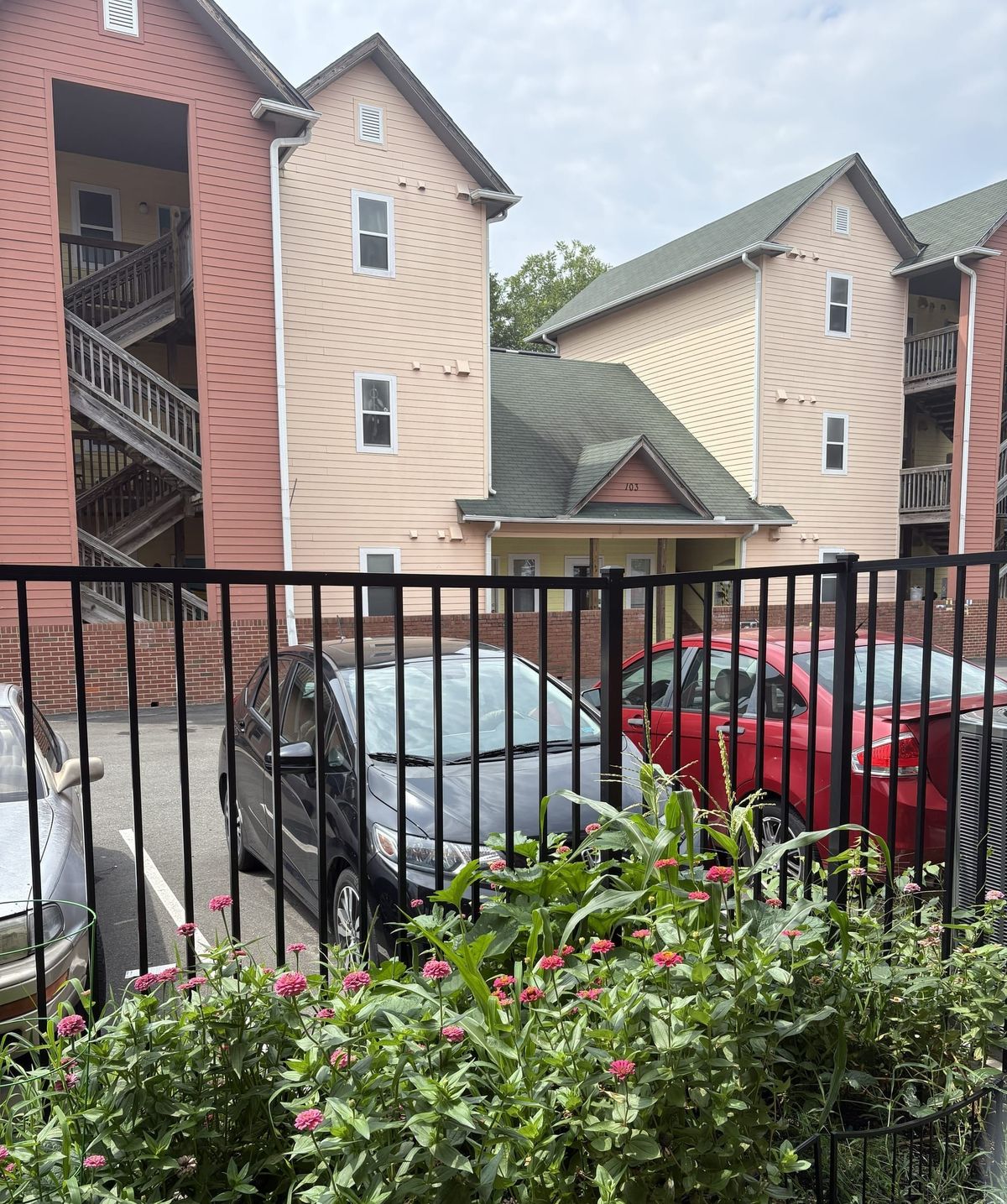
The newly formed Club Nova Tenants Association met Tuesday, July 28, with Community Alternatives for Supportive Abodes (CASA), the nonprofit organization that owns and manages the Club Nova apartments at 103 W. Main Street in Carrboro. Tenants had hoped CASA would set deadlines and act on longstanding grievances, including neglected maintenance, remediation of three condemned units, and what they see as an intimidating management culture, but they left the meeting frustrated.
“It was disappointing,” said David Hamnet, a Club Nova resident for 20 years and one of a core group of tenants who attended the meeting with CASA Interim CEO Dana Mangum. “She said she had an interest in accountability, but it felt more like lip service than anything else.”
For her part, Mangum characterized the meeting as “constructive.” In an email response to The Carrborean, she wrote: “CASA had a constructive meeting with the residents to continue listening to their concerns and take more feedback about our internal operating procedures. With that input in mind, we are developing a work plan for both short- and long-term work that will be shared with residents as we seek to keep this important line of communication open.”
Residents are dubious, having met earlier in the year with previous CASA leadership and still not seeing progress on repairs or changes in procedures.
At Tuesday’s meeting, tenants, with the help of the Triangle Tenants Union, asked CASA to fix the building’s mailboxes by July 31 and repair the laundry facilities by the end of August. For months, residents have been collecting their mail at the post office, over a mile away, and doing laundry at the closest laundromat, also a mile away.
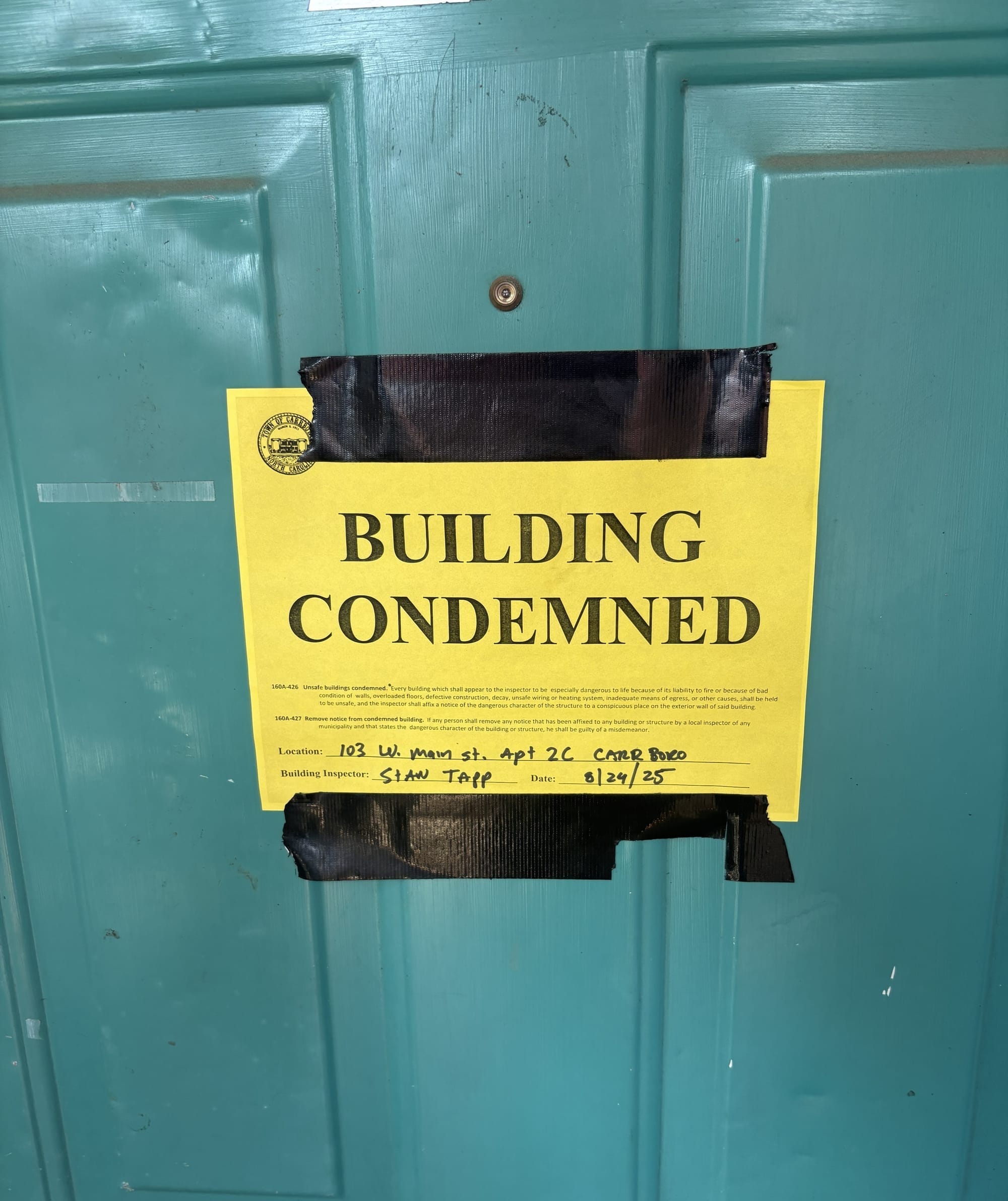
Other tenant demands included timelines for when three apartments, condemned nearly a year ago due to water damage and mold, will once again be habitable, and when three long-vacant units will be rented.
“There is a long line of people in Orange County who are in need of subsidized housing,” said CR Clark of the Triangle Tenants Union, who began helping Club Nova tenants advocate for themselves last year.
At this week’s meeting, CASA could not offer a firm timeline for any of the tenants’ requests, nor did they sign a Memorandum of Agreement (MOA) drawn up by the Triangle Tenants Union pledging to a “good-faith negotiation of CASA-wide non-retaliation, communication and transparency agreement within two months.”
Tenants at the meeting said Mangum told them she would present the MOA to CASA’s Board and general counsel and get back to them on whether CASA would sign on.
In her emailed statement, Mangum wrote: “We received and are reviewing requests from the tenants for certain commitments from CASA. This is a challenging moment for affordable housing, but we remain committed to the communities we serve and making progress for these residents.”
Another issue tenants would like addressed is what they have called, “threatening communications” and “eviction notices over recertification.” This administrative paperwork is necessary in order for tenants to continue to receive federal housing subsidies. Tenants say they have received bright red eviction notices even after submitting the necessary documentation, causing them needless distress and administrative burden.
Tenant Heather Nash says CASA has repeatedly lost her rent payment money orders, and charged her late fees, requiring her to present receipts to prove she had paid. Tenants say CASA’s payment portal, which would make mailing rent payments unnecessary, is not functional.
“It’s like they’re trying to keep us struggling, which makes no sense because they’re supposed to be working with [us],” Nash said.
The 24-unit, 3-story Club Nova apartments opened in 2004, and are separate from the Club Nova Clubhouse next door. Carrboro’s Club Nova Clubhouse, which started in 1987, is part of a global network of intentional communities supporting seriously mentally ill people in finding housing, employment, and a sense of community.
Karen Dunn, Club Nova Executive Director, helped advocate for and shepherd the construction of the apartments as a place where eligible Club members could live independently with their community Clubhouse close at hand. The Clubhouse and the apartments are separate entities, although some Clubhouse members live in the apartments.
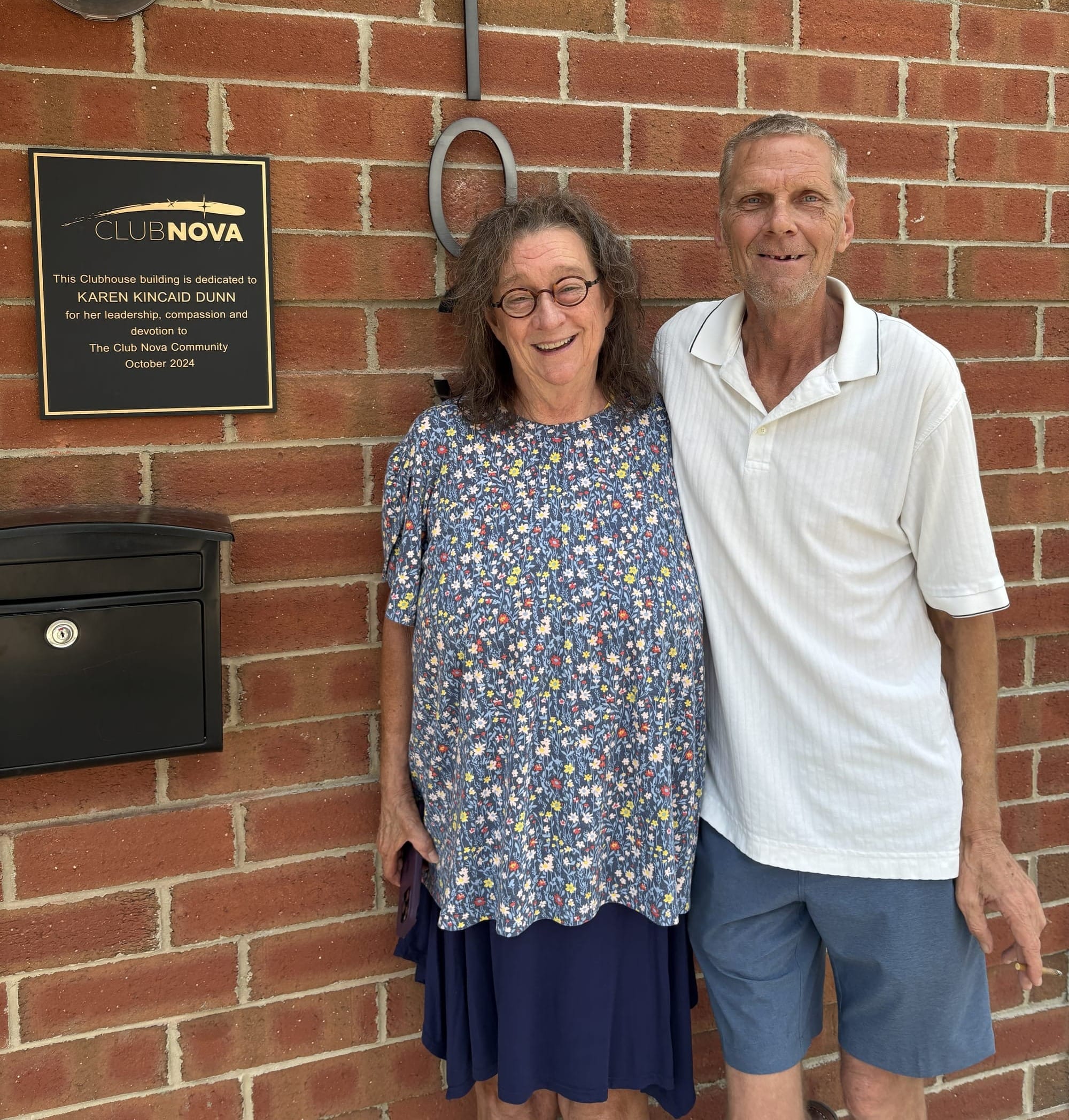
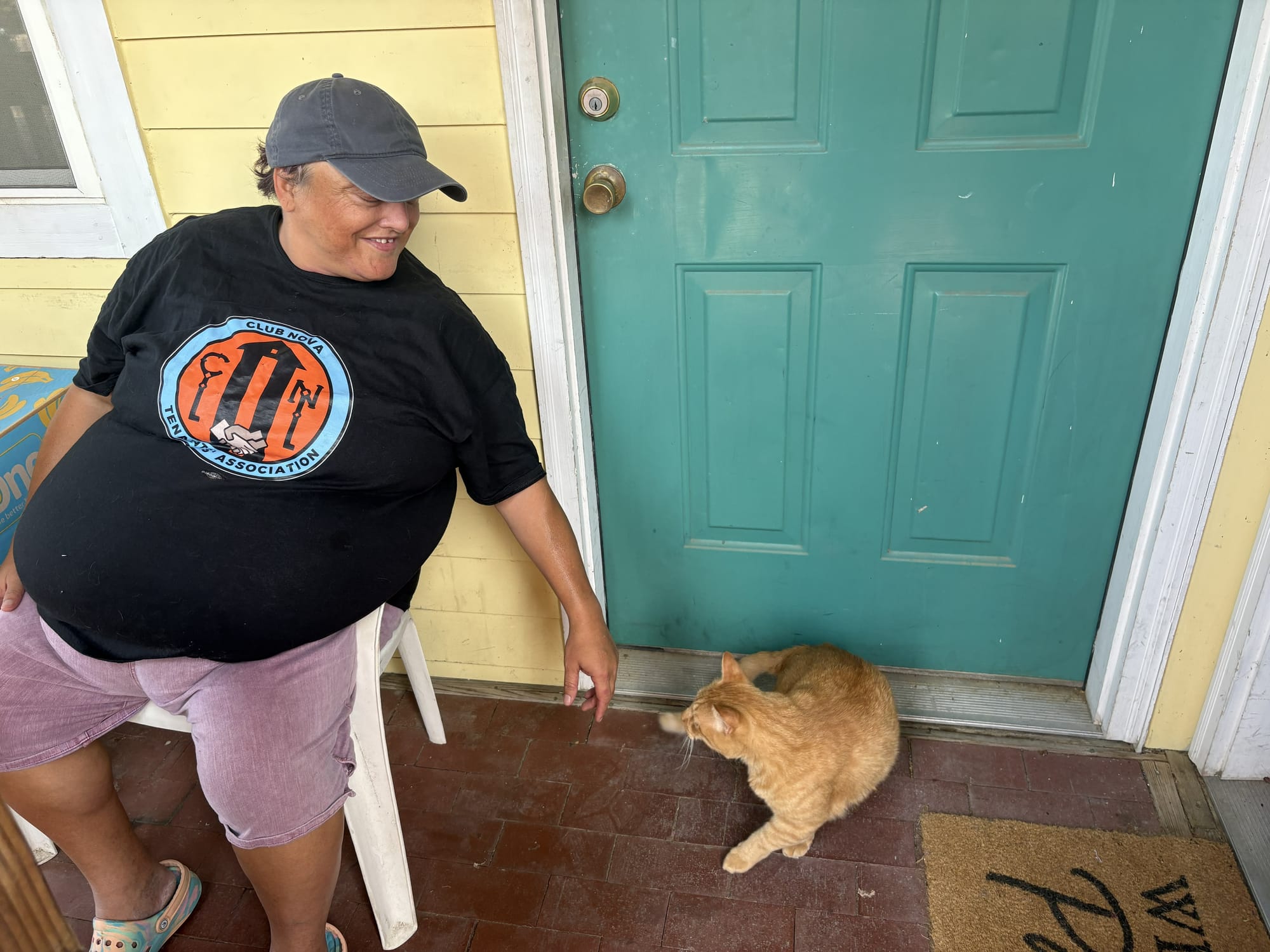
Longtime tenants like Hamnet and Nash, as well as Dunn, all say that when CASA took ownership of the apartments in 2011, the organization managed the complex well. Over the past three years, however, it has deteriorated. Late last year, Nash and other tenants had become so frustrated with CASA’s poor maintenance and communication, they circulated a petition signed by the majority of their neighbors calling on CASA to promptly respond to maintenance requests, successfully repair the problems, re-house those dislocated from the condemned units, stop sending unnerving and unnecessary recertification notices, and fix the payment portal.
When CASA did not respond to the petition, tenants journeyed to CASA’s headquarters in Raleigh in January, which prompted a subsequent Zoom meeting with CASA’s then CEO Everett McElveen. While CASA promised they would address the issues, tenants say little was done. This month, residents decided to create a formal tenants association with the Triangle Tenants Union.
“We were hoping the [tenants association] would be recognized and we’d finally get our demands met,” Nash said.
Dunn credits the formation of the association with “help[ing] make it possible to come to the table” with CASA. She met with CASA interim CEO Dana Mangum and other CASA staff to discuss the problems raised by the tenants on Friday, July 24. “They were open and affirming. There was no defensiveness,” Dunn said, adding that she “remains hopeful” after the tenants meeting on July 28. “At least there was a first meeting,” she said.
While the tenants brace themselves for more “broken promises,” Hamnet says they will bide their time in hopes CASA will finally make the necessary repairs, reopen the condemned and vacant apartments, and upgrade their operations. In the meantime, the association is taking their story to the larger community.
“Even though the language [in the meeting] was much sweeter, the actions are much the same [as they have been],” said Clark of the Triangle Tenants Union, who was at Tuesday’s meeting and had hoped to leave with a legally binding written commitment from CASA to negotiate and address tenants’ concerns in good faith. He hopes public scrutiny will help push CASA to action.
“We’re a very vulnerable population,” Hamnet said. “A lot of us are one step away from homelessness. So, literally, it’s my apartment here or the streets.”
A Tour of the Club Nova Clubhouse
Isaac Woolsey proudly shows off the bright, airy Club Nova Clubhouse, designed by Carrboro architect Jack Haggerty and officially opened in 2024. He points to the signs listing the donors who made the building at 103 W. Main possible. The Clubhouse and the Club Nova apartments behind it are separate entities, although some clubhouse members do live in the apartments.
“There was no debt for the $5 million to build the clubhouse,” Woolsey said. “The donors are great people. They are trying to help out the seriously mentally ill community.”
As Woolsey explains on his tour, Club Nova is one of 370 clubhouses around the world that offers any member “a place to come; a place to work; a place for meaningful relationships; and a place to return.” This model of rehabilitation, started in 1947 in New York, aims to keep those with serious mental illness out of hospitals while helping them achieve their social, financial, educational, and vocational goals. It is not a clinical treatment program, but a supportive community.
Anyone over the age of 18 with a diagnosis of a major depressive disorder, schizophrenia, or bipolar disorder may become a member if they so choose.
Woolsey has been a Club Nova Clubhouse member for two-and-a-half years, and lends his skills in finance, bookkeeping, and data analytics to the Clubhouse, which is entirely run by members and staff.
“It is a helpful community and generally a force for good in the area,” Woolsey said. “We do our best with what we can.”
A disability rights activist, Woolsey, who ran for Carrboro Town Council in 2024 and garnered 2,000 votes, says his particular interest is in public mass transit, which he often depends on. He hasn’t ruled out running for public office again.
Clubhouse members receive assistance in accessing housing, psychiatric and medical care, education and training, and help finding employment in the larger community. A new 15-seat mini-bus made possible through the North Carolina Department of Health and Human Services along with two smaller vans transport members to and from medical appointments or their homes. Staff or members skilled in administrative tasks may help members with the bureaucratic paperwork that comes with public assistance programs for healthcare and housing.
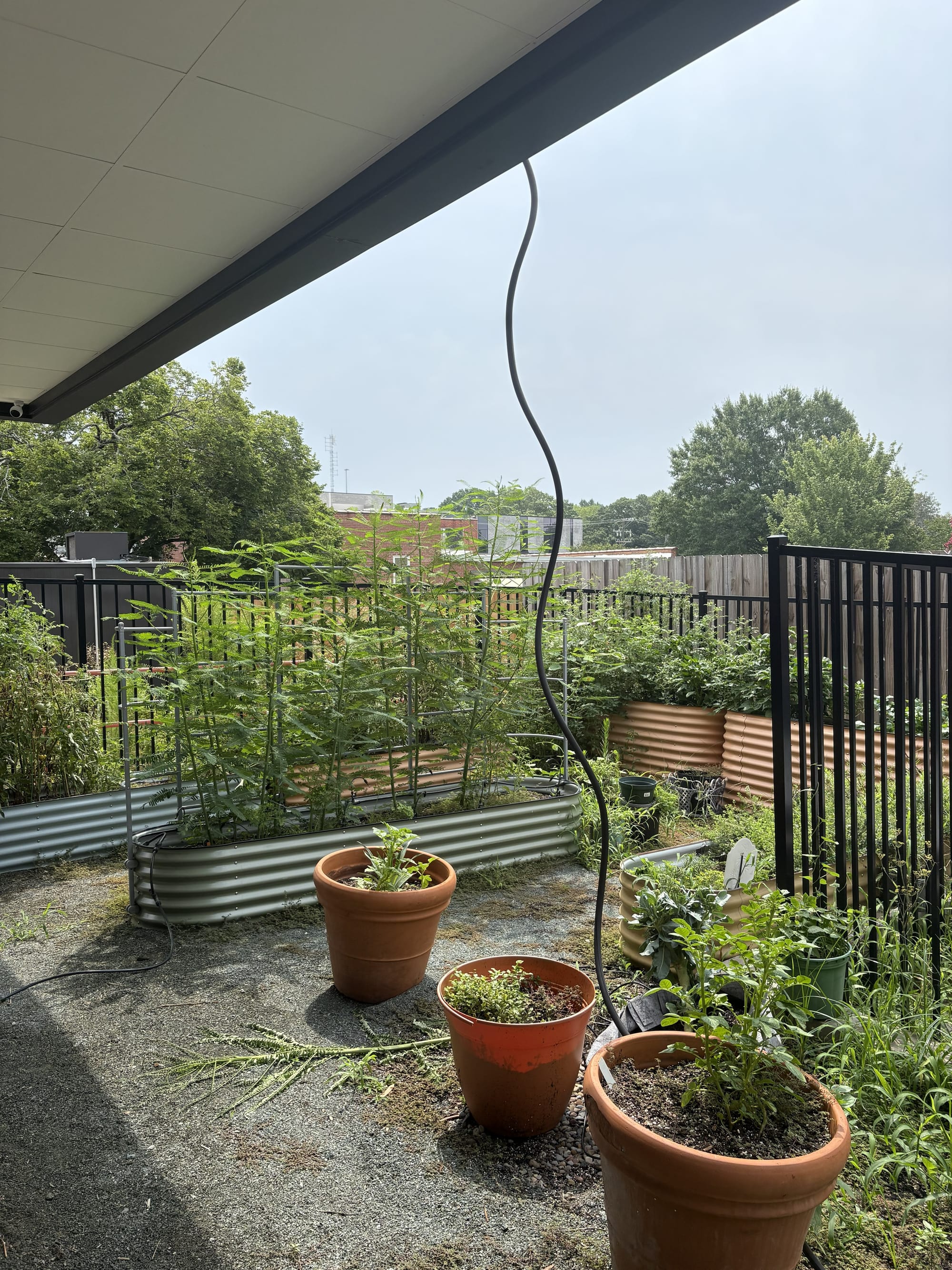
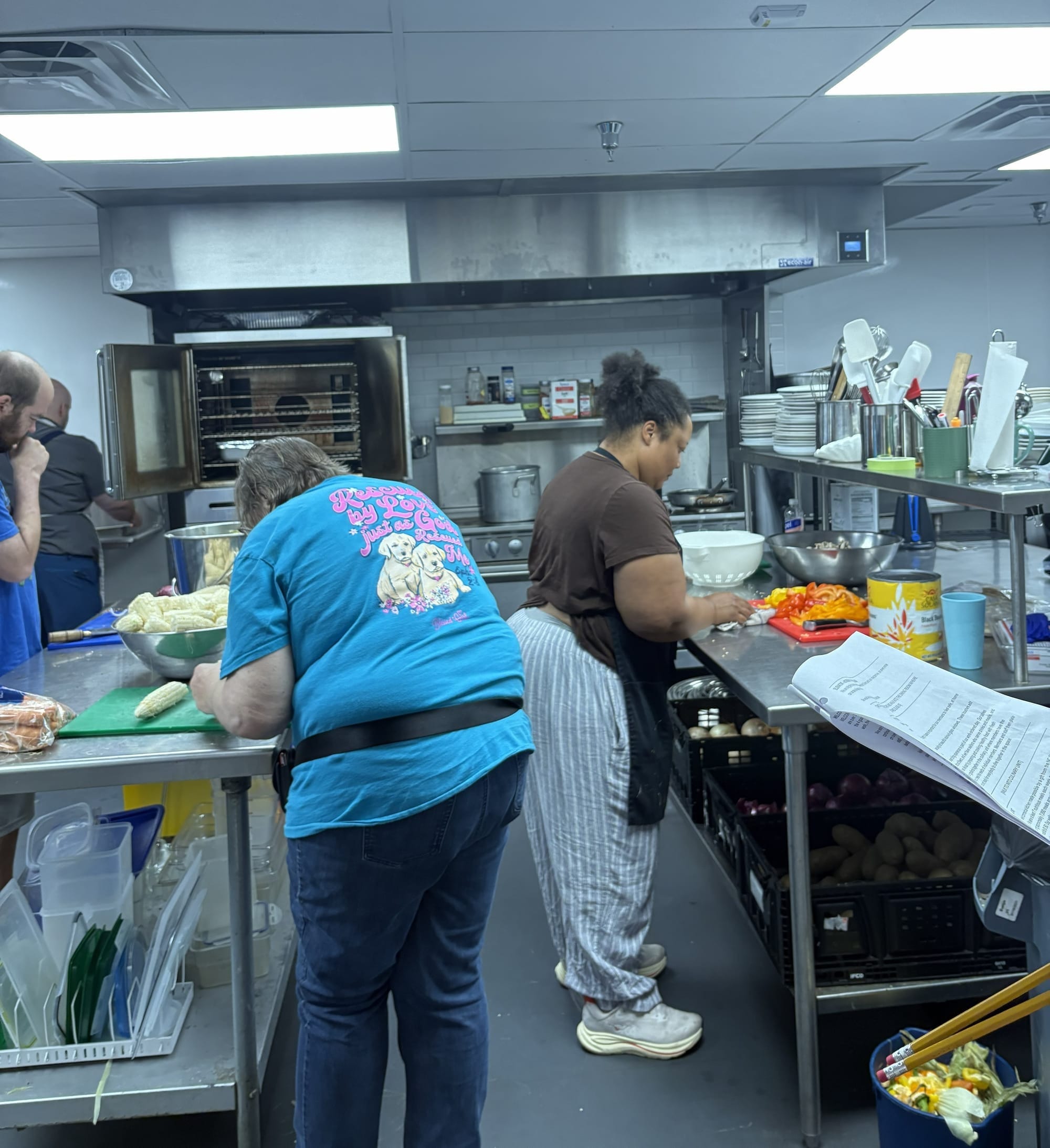
In the Clubhouse’s professional kitchen, members prepare a healthy lunch daily for fellow members and staff with food donated by the Carrboro’s Farmers’ Market and other area providers and from the Clubhouse’s own garden.
Woolsey speaks about “dignity of space” as he surveys the dining room, which boasts large windows and a terrace, with fresh flowers on each dining table. “It’s a pleasant dining experience,” he noted.
While there are 100 current active members, Woolsey said, a core contingent of about 40 members work regularly at the Clubhouse and he estimated there's an additional roster of about 200 inactive members.
Community being a crucial aspect of the Clubhouse’s mission, members regularly reach out to each other through texts, cards, and emails, as well as staff visits if they suspect a member may be in crisis.
“We all need someone to talk to,” Woolsey said.
All photos by Elaine Ellis.