Lukera Energy, a Carrboro-based clean energy startup with lab space in town, has developed a pioneering way to turn methane — a potent greenhouse gas (which can trap over 80x more heat than CO2) emitted from fossil fuel extraction, agriculture and livestock, and landfills — into methanol.
The company operates out of a shared lab facility off Jones Ferry Road, where founder Brian Wilfork and his team work day to day.
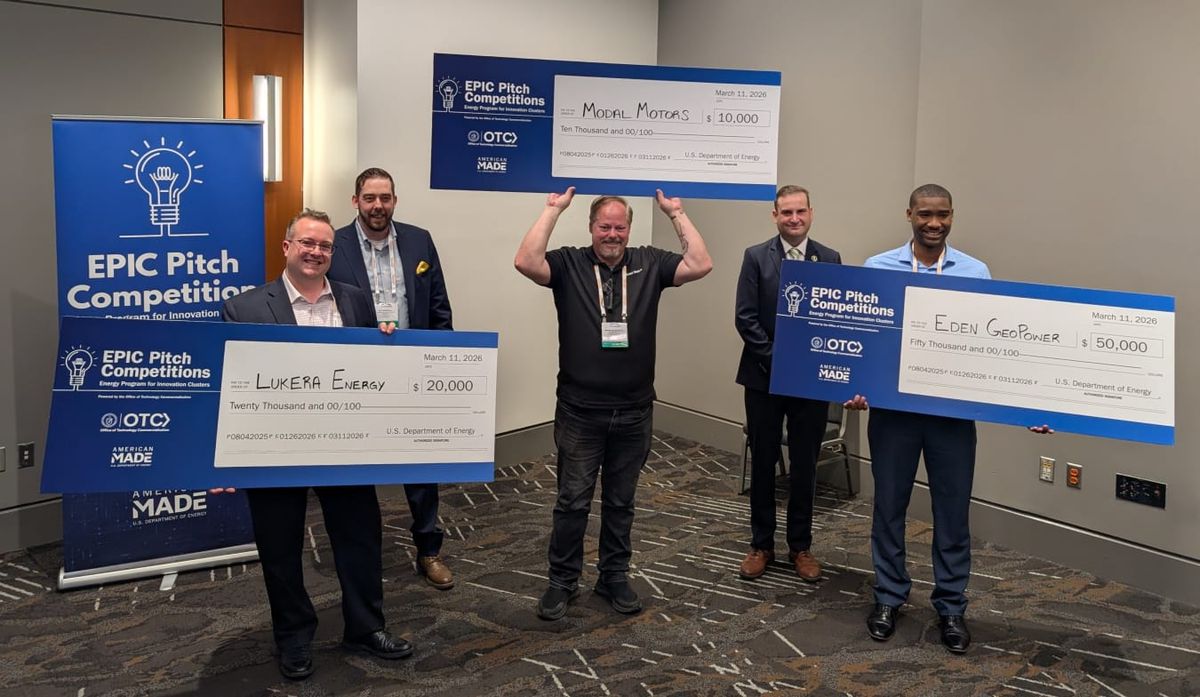
In March, Lukera placed second at the EPIC TechConnect World Pitch Competition in Raleigh, earning a $20,000 award through the U.S. Department of Energy-backed Energy Program for Innovation Clusters. The competition highlights early-stage energy startups working to commercialize new technologies.
“The Department of Energy's prize programs provide startups with momentum to expand and scale their operations, while connecting them with valuable commercial partners,” said DOE Chief Commercialization Officer Anthony Pugliese. “We are proud to partner with innovative startups to develop critical technologies.”
The Beginning
Lukera’s origin story hits close to home. While visiting family in the Triangle, Wilfork’s young daughter became seriously ill with RSV and was hospitalized for nearly a week. She has since developed ongoing breathing challenges, including asthma, which he believes are connected to that illness.
Brian has worked across the renewable energy industry, but the experience with his daughter pushed him to take an entrepreneurial approach to making our air more breathable.
“I just had this drive that there was more that I could do as a scientist or entrepreneur to help combat these challenges. And when I got the urge to go start a company, I had this personal motivation,” Wilfork said. “How can I make the air healthier and cleaner to breathe?”
So, What Do They Actually Do?
Essentially, Lukera Energy is focused on capturing methane that is often vented or flared as waste from industrial processes and converting it into methanol, a usable fuel and industrial chemical that can be sold back into the same industries producing the emissions. Rather than allowing methane to escape into the atmosphere or be burned off, the company’s model is to turn it into something of value.
Lukera’s process is adapted from a process at Stanford University, which uses an electrochemical approach that requires significantly less energy than traditional methods. At a high level, Lukera uses microscale bubbles to activate methane, facilitating its conversion into methanol through an electrochemical pathway without the need for the extreme heat and pressure required in conventional processes.
The company initially wanted to convert landfill methane into marine fuels, with methanol emerging as a lower-emission option for shipping. But that effort ran into regulatory delays.
“Over the last year or so, there's been complications with regulations being held up,” Wilfork said.
Lukera has since pivoted toward the oil and gas sector, which already emits methane into the atmosphere due to a lack of pipeline infrastructure. In regions like North Dakota and West Texas, that excess gas can even carry negative value as companies pay to dispose of it.
Lukera’s approach is to co-locate its systems at these sites, using both methane and other byproducts, such as salt water, as inputs. “What we're doing is activating both those feed stocks and giving them the methanol that they're buying from the Gulf Coast anyways,” Wilfork said.
By producing methanol on-site, the company aims to replace fuel that would otherwise be transported long distances while reducing emissions from wasted gas. That model is now being tested through a paid pilot with a Fortune 500 partner, where Lukera is working to convert waste streams into usable fuels and chemicals directly at the source.
To Stay, or Not to Stay
As Lukera works to grow beyond its early pilot stage, Wilfork said the broader startup ecosystem in North Carolina could shape whether companies like his stay and scale locally.
Wilfork said the Triangle has the talent and research base to support companies like Lukera, but lacks early-stage support compared to other regions. Cities and states across the country are offering grants, lab space and pilot opportunities to attract startups, he said, making it harder for young companies like his to stay in North Carolina. While the state has succeeded in attracting large, established firms, he said there is a gap in supporting companies in their earliest stages.
“I think the government can definitely play a role in order to initiate and to get some momentum going here in this space,” Wilfork said. “I've really enjoyed being here. I think there's some opportunities to make this ecosystem better.”