
This is an edited summary of an interview that aired live on WCOM 103.5 on June 29. You can listen to the recording here.
1. Tell us about the work of EMPOWERment?
Delores Bailey (DB): Empowerment’s mission is to empower individuals and communities through affordable housing, economic development, and community engagement.
- We started in 1996 by buying, renovating, and selling homes to low- and moderate-income families, often using public subsidies.
- In 2005, we shifted toward rental housing. We began with 12 rentals and now have 76 units.
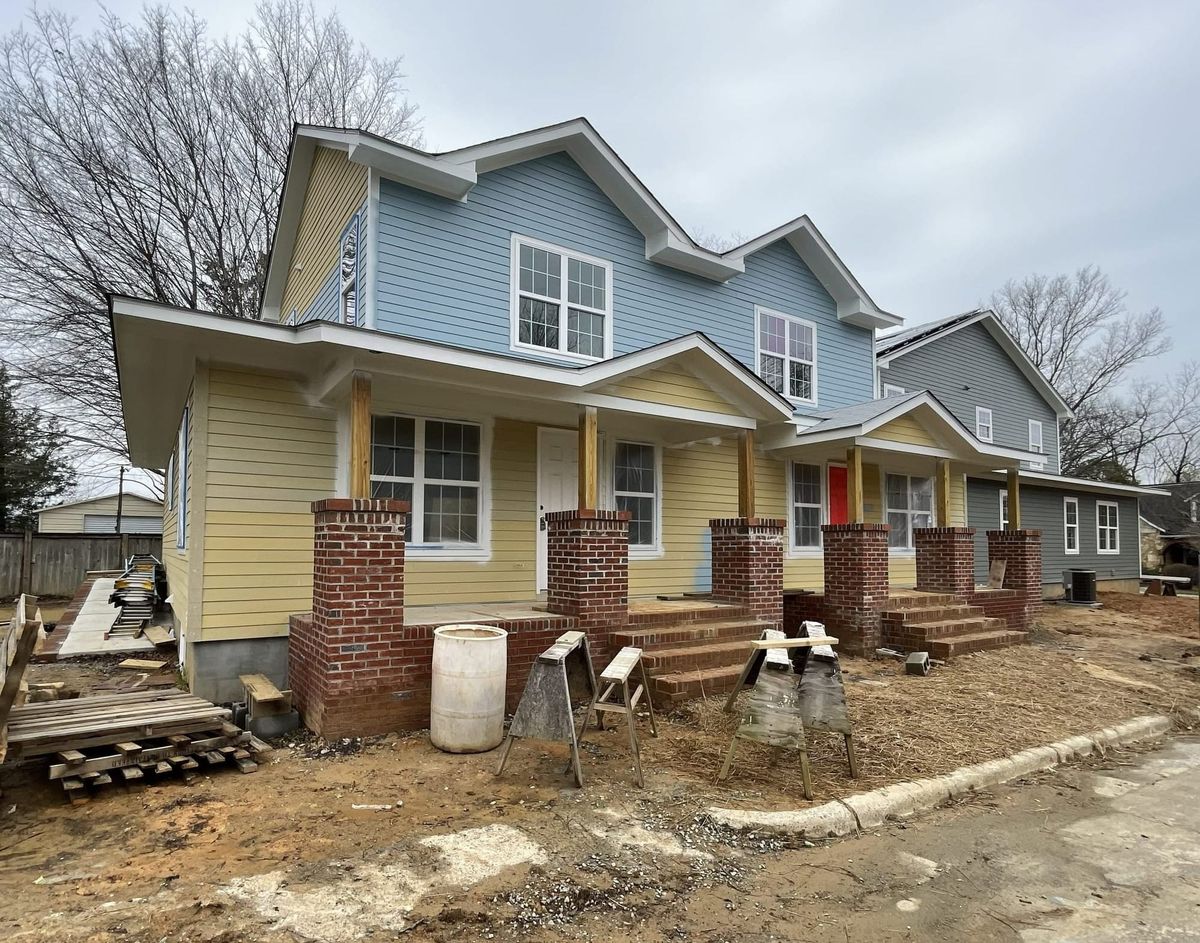
- Our newest project is the Peach Apartments in the Pine Knolls neighborhood: 10 deeply affordable units for households at 30% of Area Median Income (AMI).
- We’re also a HUD-certified housing counseling agency, offering free homebuyer classes and foreclosure-prevention counseling.
2. How is Self-Help Credit Union involved in affordable housing?
Dan Levine (DL): Self-Help is a Durham-based nonprofit financial institution that’s been active in Orange County for decades. We focus on:
- Home mortgages, especially for first-time homebuyers, to help them build wealth and put down roots.
- Neighborhood partnerships in places like Northside with Empowerment, the Marian Cheek Jackson Center, Habitat for Humanity, Community Home Trust, and others.
- Development and financing, including:
- Homestead Gardens in Chapel Hill: a collaborative affordable rental and homeownership community on former town-owned land.
- An affordable housing loan fund that supports nonprofits and mission-driven developers who are building or preserving affordable homes.
3. Do we have enough affordable housing in Orange County?
DL: We don’t. Orange County is a growing, high-opportunity community, but many bus drivers, healthcare workers, teacher assistants, and even some professors can’t afford to live here.
We also can’t simply say, “People can live in Durham or Alamance and commute” anymore—those markets are expensive too. There’s a moral imperative (people should be able to live where they work and have family ties) and a practical one (our schools, hospitals, and services depend on these workers).
DB: Many families earning $50,000 or less are struggling. Orange County is one of the richest counties in North Carolina and also one of the poorest, with a poverty rate close to the national average. Without more affordable rentals and ownership opportunities, people who grew up and work here are being pushed out of their own communities.
4. What is “naturally occurring affordable housing” (NOAH)?
DB: NOAH is housing that is already relatively affordable—older rentals, modest homes, or small apartment buildings—that we work to preserve as affordable rather than lose to rising prices.
A typical NOAH strategy:
- A nonprofit or public partner buys existing units that house lower-income residents.
- We rehab the homes, place them under long-term affordability restrictions, and—crucially—avoid displacing current tenants.
We did this in Carrboro with a long-time family home: EMPOWERment, with support from Self-Help and the Marian Cheek Jackson Center, bought and renovated the house so the remaining son could stay in his neighborhood as a tenant instead of being forced out when the property was sold.
DL: NOAH can be a single house, a backyard accessory dwelling unit (ADU), or a 200‑unit complex. With construction costs so high, it’s often cheaper and faster to buy and repair existing buildings and keep them affordable than to build everything new.
5. How do we protect the affordable homes we already have?
DB: Preservation starts with letting people stay where they are.
In Carrboro, homeowners can partner with nonprofits and apply to the town’s affordable housing program for repair funding. EMPOWERment helped one HOA where residents couldn’t afford a major HVAC replacement, securing town funds for lower-income owners.
We also focus heavily on education—helping people:
- Apply for property tax relief
- Appeal assessments
- Navigate foreclosure notices
Our counselor, Sharon Reed, has worked with us for 15 years and has a 100% success rate helping clients avoid foreclosure.
DL: Chapel Hill has similar repair and assistance programs, often through partners like Habitat for Humanity. There are also state property tax reductions for low-income seniors and people with disabilities.
The barrier is often navigation, not eligibility. Preserving affordable housing means making sure people know what help exists and can access it.
6. Why is there stigma around affordable housing, and what’s the reality?
DB: There’s a strong stigma around both affordable housing and housing vouchers, including for veterans. Many imagine affordable housing as something “for other people,” or tie it to negative stereotypes.
In reality, affordable housing serves:
- Households at 80% and 60% of AMI
- Seniors on fixed incomes
- People with disabilities
- Veterans
- Longtime local workers and families who keep this community running
We need to rethink our assumptions. Affordable housing is for everybody—it just looks different depending on your income and situation.
DL: We also tend to forget that many homeowners live in subsidized housing too—through the mortgage interest tax deduction, one of the largest federal housing subsidies.
Once you see that, it’s harder to look down on neighbors who receive help through vouchers or income-restricted units. We all benefit from policy choices and support systems; they just don’t look the same for everyone.
7. What can local residents do to help?
DL: There are many ways to plug in:
- Donate to local housing nonprofits like EMPOWERment, Habitat, Community Home Trust, CASA, Hope Renovations, Housing for New Hope, and others.
- Volunteer—you can swing a hammer with Habitat or help seniors with home repairs through groups like Hope Renovations; no advanced skills required.
- If you own property, consider building an ADU to create another rental home in your own backyard.
- Learn about the housing landscape and share what you learn in your neighborhood, workplace, or faith community.
- Pay attention to local decisions on zoning, land use, and budgets; these shape what can be built, where, and for whom.
DB: We need your time and your voice as much as your money. Come learn about housing so you can help neighbors, seniors, veterans, and families navigate options before they’re in crisis.
Stable housing is the foundation for health, education, and economic security. If we say we care about this community, we have to care about who gets to live here—and who gets pushed out.
Resources
Orange County Affordable Housing Coalition
and recommended books: The Color of Law by Richard Rothstein and Homelessness is a Housing Problem by Gregg Colburn and Clayton Page Aldern.