
A conversation with David LaBarre, candidate for Orange County Sheriff
John Rees of The Triangle Blog Blog joined us to talk about the role of Sheriff, working with ICE, common sense gun laws, and more.
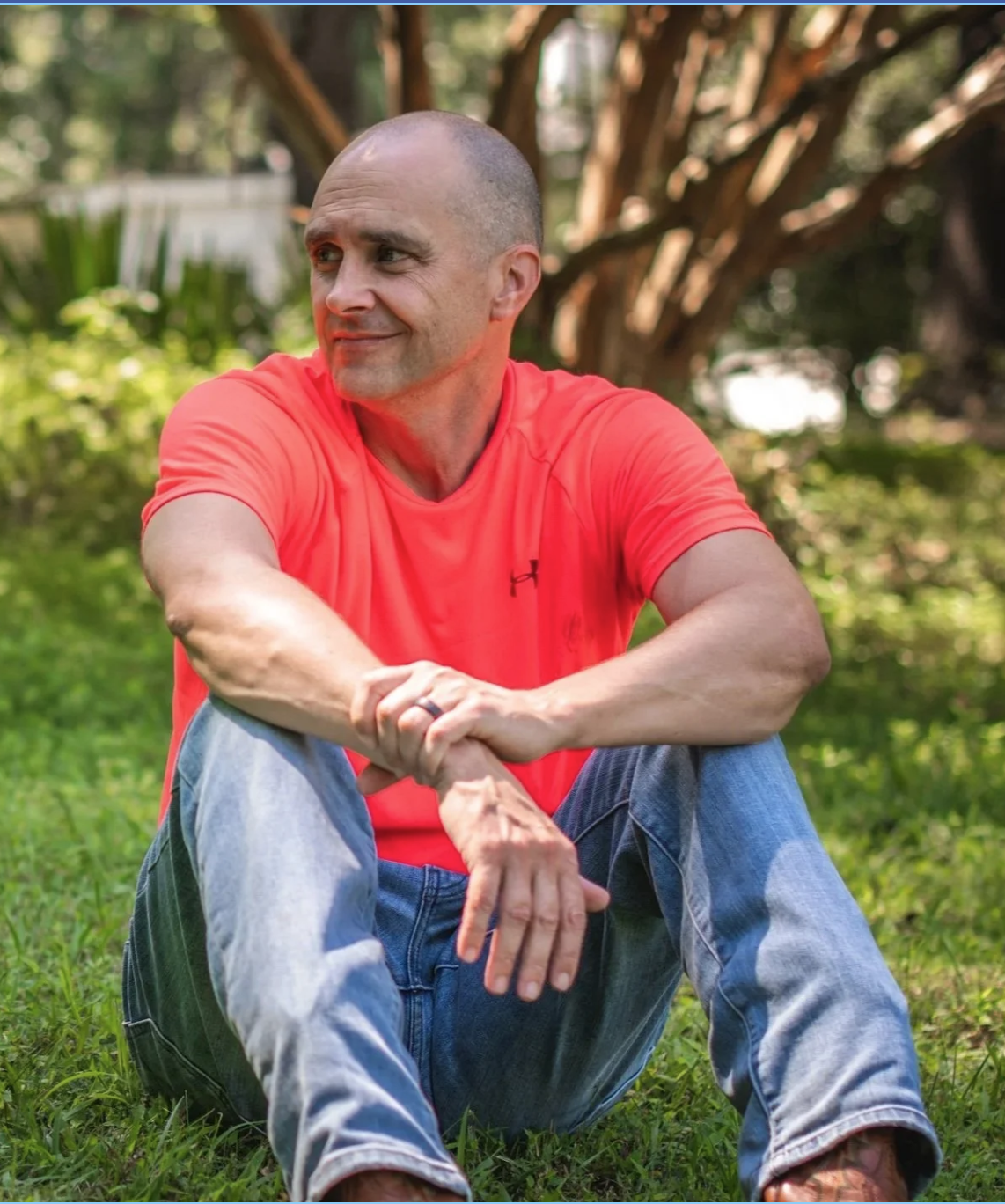
This summarized narrative was generated by AI from the transcript of the interview that aired on The Carrborean Radio Hour on WCOM 103.5 (wcomfm.org) February 20.
Tell us about your background and how your past experiences have prepared you to be sheriff of Orange County.
David LaBarre explained that he has been in law enforcement for over 22 years and has lived in Orange County for about the same amount of time. He studied criminal justice at East Carolina University with the original intention of going to law school, but after 9/11/2001 during his senior year, he felt a strong sense of patriotism and chose to go directly into law enforcement instead. He was hired by the Durham County Sheriff’s Office in 2003 and spent his early years making arrests, eventually realizing he was repeatedly arresting the same people in the same places for the same offenses. This led him to see that he was only treating symptoms of deeper systemic problems. He joined the FBI Safe Streets Task Force, working on complex investigations such as murder-for-hire, bank robberies, and transnational drug trafficking, as well as dignitary protection. These experiences taught him that investigations need to be focused and strategic rather than relying on unfocused, street-level enforcement.
In 2016, he suffered a tree-cutting accident that reduced his vision, prompting him to move from frontline work to an administrative role. He is now Director of Planning and Development in the Orange County Sheriff's Office, where he manages budgets, capital projects, legislative documents, and a large multidisciplinary division that includes civil and criminal process, the sex offender unit, domestic violence protective orders, and gun permits. He has also helped implement jail-based mental health and medicated assisted treatment programs, which he sees as major accomplishments other jurisdictions have since followed.
Why do you want to be Sheriff of Orange County?
He acknowledged that being sheriff is a demanding job with significant scrutiny, especially around responsibility for the jail and the liability that comes with it. Despite this, he feels called to serve in this role. Orange County has supported him and his family through good and bad times, and he notes that his family’s roots in the area go back to the Revolutionary War. His children attend Orange County public schools and play local sports, tying his family’s daily life to the community. He believes his broad and complex experience—spanning patrol, investigations, interagency task forces, and high-level administration—uniquely prepares him to lead the sheriff’s office effectively. For him, running for sheriff is not just a career move but a way to give back to a community that has sustained his family.
How does the Sheriff’s office operate in Carrboro now and how would you work with the Carrboro Police Department?
He is not entirely certain how the Sheriff’s office is currently working with the Carrboro Police Department in detail, but he views the relationship as a partnership grounded in shared values between the town council, county commissioners, and law enforcement: namely, prevention, diversion, and intervention. He envisions leveraging both personnel and equipment across agencies, especially during natural and man-made disasters, to respond effectively to emergencies. The Sheriff’s office would continue handling functions like serving civil papers within Carrboro. He also wants to build on the CARE program—a community-driven evolution of crisis intervention started in Chapel Hill and adopted by Carrboro—which pairs behavioral health professionals with responders. His goal is to see a version of that program adopted county-wide as a comprehensive, standardized crisis response.
Many Carrboro residents are concerned about ICE and immigration enforcement. If you were Sheriff, how would you work with ICE, and how would you protect residents in Carrboro and Orange County?
He emphasized that as a local sheriff, he cannot enforce federal law, and he does not intend to do so. At the same time, he does not plan to actively obstruct federal officers. However, if he sees individuals operating in plain clothes, in unmarked vehicles, wearing masks and without clear insignia, he believes he has a responsibility as sheriff to determine who they are and why they are there. He describes this as a “slippery slope” between protecting residents’ civil and constitutional rights and not resisting or obstructing federal officers performing their duties. He draws a clear line on use of force and care: if there is evidence of excessive force, especially deadly force, or a lack of medical care, he says his deputies would be required to intervene without delay in order to reduce harm, extend care, and identify those involved, including leadership, to hold them accountable. He underlined his view that “you can’t break the law to enforce the law.” On the specific question of warrants, he noted that expecting the public to distinguish between administrative ICE requests and true warrants is unrealistic, as the paperwork is complex and hard to interpret. He advises residents who encounter ICE to call local authorities so those documents can be properly interpreted and stresses that a person’s home is their last refuge; simply retreating inside should not be viewed as noncompliance, but as an act of self-protection.
How do you think about the Sheriff’s office’s use of technology—such as drones and license plate readers—versus protecting residents’ privacy? What’s your framework for deciding when surveillance tools are appropriate?
Reflecting on his journey from detective to administrator, he said that as a detective he was excited about any technology that helped “get the bad guys” and deliver justice, but his administrative experience has made him more cautious. He argued that each technology must be evaluated case by case, starting with clear identification of the problem it is supposed to solve and asking whether the technology can truly address it. He also stressed the importance of determining who has access to any data collected. He sees a legitimate role for license plate readers, noting that they can help reduce the impact of implicit bias—because a stolen car detected by an automated system triggers a response without an officer picking targets based on personal perception. However, he warned about broader surveillance, citing Hillsborough’s use of Flock cameras. He recounts how cameras were installed, only for the public to later discover contract terms allowing data sharing with the federal government. That led to a breach of contract and removal of the cameras after substantial time and resources had already been spent. He said he is wary of moving forward with similar plans when they conflict with what residents have clearly said they do not want.
Do you support expanding co-responder models, like the CARE program where social workers pair with deputies? How would you fund and prioritize these programs?
He said he “100%” supports expanding co-responder models. He acknowledged concerns he has heard about hiring and retaining professionals for these roles but points out that Chapel Hill has already demonstrated it can build such a workforce and that Carrboro has successfully adopted the model. Feedback he has received from both Chiefs and rank-and-file officers has been positive: officers appreciate the ability to focus on enforcing the law and investigating violent crime while trained behavioral health professionals handle crises. He argues that law enforcement training does not adequately prepare officers to solve complex mental health situations; at best, officers are often just transporting people to the nearest available resource, if any exist. If elected, he says, he wants every member of the Sheriff’s office—whether new academy graduates or lateral hires—to receive Crisis Intervention Team (CIT) training and Mental Health First Aid from day one. He gave simple environmental adjustments (like lowering loud music or dimming bright lights when responding to a crisis) as examples of small actions that can dramatically change outcomes. Noting that about 70% of detainees in jails have mental illness and more than half also have co-occurring substance use disorders, he argued strongly for decriminalizing mental illness and diverting people away from jail whenever possible.
How would you work with the District Attorney’s office on diversion so that jail isn’t used as a de facto mental health facility or debtor’s prison?
He said significant work on diversion is already underway and that his goal is to build on that foundation. He contrasts the daily cost of keeping someone in jail—estimated between $118 and $130 per person per day—with the cost of participation in a Law Enforcement Assisted Diversion (LEAD) program, which he cited as around $23 per day. That lower cost covers transportation (such as Uber), housing vouchers, food, medicated assisted treatment, and legal aid. He argues that residents who object to “paying for” such services are already paying more to warehouse people in jail without any treatment. In his view, investing in diversion and supportive services changes behavior, improves outcomes, and reduces recidivism. He also brought up “Irina’s Law,” passed after the killing of a Ukrainian immigrant on the light rail in Charlotte. While he supports parts of the law—such as keeping genuinely violent repeat offenders off the street and ensuring people receive mental health assessments pretrial—he criticized other aspects: the removal of judicial discretion on pretrial release, the encouragement or requirement of assessments as a barrier to release, and the reinstatement of cash bail in certain cases, which he says “criminalizes poverty” by keeping people in jail simply because they cannot afford bond. He opposes the death penalty component of the law as well.
What are your views on transparency and oversight of jail conditions? Do you support regular independent audits and public reporting of their results?
He stated that he absolutely supports transparency around jail conditions and regular audits, including making results accessible to the public. He is candid that he has not been a sheriff or detention chief and therefore has not always had direct access to detailed information about the Orange County jail; his role has largely been to secure funding once others identify needs. As Sheriff, he says he would be open about audit findings and any corrective actions taken, seeking additional funding from the Board of County Commissioners when necessary and working to build community support. He adds that he is willing to share information as long as it does not compromise ongoing investigations or violate legal constraints. Overall, he sees transparency about conditions and remediation steps as essential to public trust.
What would your use-of-force and duty-to-intervene policies look like, and how would they compare to current practice?
He says that if elected, one of his first priorities would be a thorough review of existing policies, including use of force and duty to intervene, followed by amendments where needed. He wants this to be a collaborative process that actively involves community members at the table, not just law enforcement. He talked about the difference between intention and impact: even well-intentioned policies can cause harm, and he wants a broader group of stakeholders—armed with “equally weighted votes”—to examine who benefits from policies, who does not, what they cost, and how they function in practice. Even without full access to current Orange County policies, he stated his standard plainly: if there is excessive force, deputies must intervene without delay to reduce harm and extend care. He also applies accountability to discriminatory comments, whether they are made formally, informally, or on social media. Such behavior must be confronted and addressed, including exploring whether it reflects deeper implicit biases. He reiterates the fundamental principle that officers are only authorized to use the minimum force necessary to effect an arrest, and once the threat has ended or the arrest is complete, the use of force must stop.
You mentioned reentry and medicated assisted treatment. What is your vision for handling reentry for people leaving jail, especially those with substance use disorders?
He sees reentry as a comprehensive process that starts with identifying both a person’s needs and the available community resources. He uses medicated assisted treatment—specifically Suboxone—as an example to explain the challenges and his preferred approach. Tablets that provide 24 milligrams of Suboxone cost around $240 a month, and in many jails, these can be diverted: detainees sell or trade them inside, and money changes hands outside between friends and family, creating a criminal enterprise within the jail. As an alternative, he advocates for long-acting injectable forms of medicated assisted treatment, which may cost around $1,200 per shot but cannot be diverted because the medication is administered directly into the body. A monthly shot given shortly before release can provide weeks of coverage while a person is back in the community, giving them time to secure housing, apply for jobs, coordinate with probation officers, and connect with ongoing treatment. He acknowledges that an injectable can feel more invasive and that not everyone will welcome it, but he argues for following best practices and being honest about the presence of illicit drug markets inside correctional facilities. Alongside medication, he says, there must be programs that address behavioral change and support long-term recovery.
Where do you stand on “common sense gun laws,” and what can you realistically do about guns as sheriff?
He and his family are gun owners who shoot recreationally and hunt, and he stresses that he is not “coming to take your guns.” Instead, he wants people to be trained, careful, and to store firearms safely. He criticizes the North Carolina General Assembly’s decision in March 2023 to eliminate the pistol purchase permit requirement, a responsibility his division managed in Durham until it was removed. While concealed carry permits still require a process, the removal of purchase permits shifts responsibility onto gun dealers to decide whether to complete a sale, even when they stand to lose money by denying it, which he sees as a built-in conflict of interest.
He pointed out there is no automatic linkage to court systems (the Administrative Office of the Courts), meaning that someone charged with a serious offense like armed robbery could bond out and immediately buy guns from a dealer while awaiting trial. To address this in Durham, his team implemented a policy using a web-based investigative platform called CJLEADS to run continuous, 24/7 criminal history checks on permit holders. If someone is charged with a disqualifying offense, staff are alerted and an administrative probable cause hearing is held to decide whether to revoke the permit pretrial. In the first six months, they revoked 81 permits from people involved in violent crime who otherwise would have kept their permits until case disposition. He calls this “low-hanging fruit” that he would implement in Orange County in his first week, subject to assessing staffing and workloads. He also voiced strong concerns about Senate Bill 50, which would lower the concealed-carry age from 21 to 18 and remove requirements for background checks, mental health checks, and training, warning that it amounts to “arming our community” and putting guns in the hands of people who pose a threat. As Sheriff, he would stand “lockstep” with state legislators and senators who support common sense gun reforms and would show up to actively advocate, not just pose for occasional photos.
As an elected official, would you face any ethical or legal constraints on advocating for changes to state gun laws?
He is not aware of any formal constraints that would prevent a sheriff from lobbying or advocating with state legislators on gun policy. He acknowledged that taking pro–gun regulation positions could create political pushback, especially from more conservative, law-and-order supporters who view such efforts as infringing on Second Amendment rights. He noted that some people he encounters even argue that those convicted of felonies should still have access to firearms, a position he firmly rejects. He pointed to sheriffs like Clarence Birkhead in Durham as examples of law enforcement leaders who regularly and publicly advocate for common sense gun laws while in office. LaBarre said he intends to do the same if elected.
Regarding his experience in Orange County--
Despite claims he “grew up in Durham” and lives on the edge of the county, he has in fact been an Orange County resident for more than 20 years, and this should not disqualify him or suggest he lacks insight into local needs. He reiterated that his experience is both vast and complex, covering frontline law enforcement, high-level investigations, administrative leadership, grant-funded initiatives, and community-based reforms. He believes Orange County is at a pivotal moment where further evolution in justice and public safety policy is needed, and he sees community engagement as central to that work. To illustrate his perspective, he noted that he has occupied many different roles that often clash: he has served on protest arrest teams since the days following Eric Garner’s death, worked as an FBI task force officer, and also served as a human relations commissioner engaged in DEI issues. He now finds himself protesting in places like Chapel Hill and Carrboro against concentrated power (“No Kings”), which he says reflects where his values lie—bridging abolitionist critiques of policing with traditional law-and-order views, and trying to move both sides toward constructive change.
What do you enjoy about Carrboro, and how do you and your family spend time here?
He spoke warmly about Carrboro, saying that every time he visits he sees people out exercising and walking their dogs, which to him reflects a strong sense of community engagement and mutual care. He loves that town council meetings begin with poetry readings, calling it a “really cool” way to set the tone and something he wants to talk about in other jurisdictions. He described Carrboro as a place where people can be who they are without judgment or having to justify their identity or beliefs, and that sense of acceptance resonates with him. He and his wife are “foodies” and coffee lovers whose biggest meal of the day is breakfast, so they have enjoyed coming into town to eat at local spots like Grata (before it closed). More recently, much of his family time in Carrboro has involved taking his son to the pump track at MLK Park to ride bikes. He appears on a skateboard in campaign videos and joked he may advocate for a skateboard pump track in the future. He looks forward to spending more time in town as the weather warms.