A Community-Based Program to Combat Food Waste
By Tom Smith, Program Director, Fork to Farm and Katie Morris
According to the FDA, up to 40% of all food produced in the U.S. is wasted. Food waste leads to significant impacts on fuel, water, and energy consumption and results in an average financial loss of $1,600 per family. It’s contributing greatly to climate chaos. Carrboro’s Fork to Farm Project is actively addressing this issue. And you can be a part of our effort.
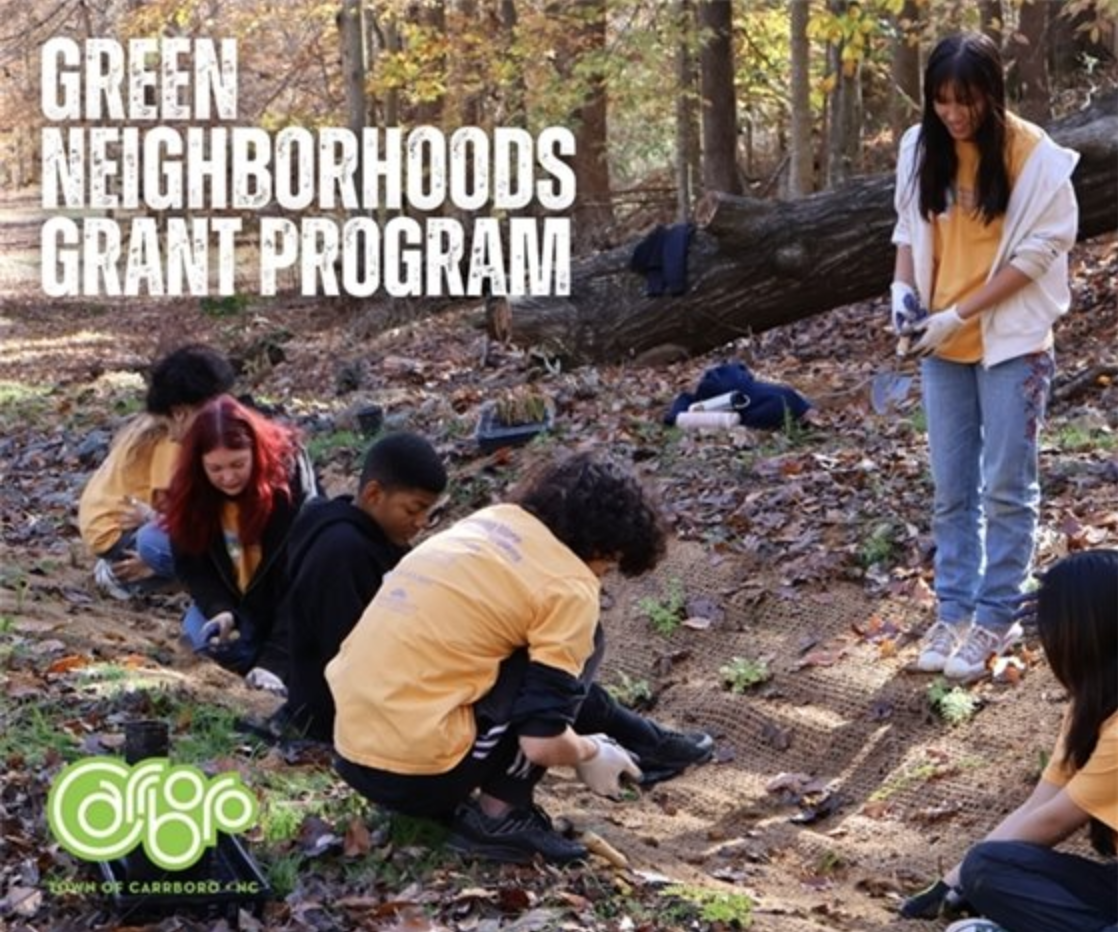
Fork to Farm started as the Carrboro Vermicomposting Project in 2023. It is led by a group of Pacifica Cohousing residents with initial funding by the Carrboro Green Neighborhoods Grant Program. The initiative promotes vermicomposting to mitigate methane emissions generated from kitchen scraps.
Vermicomposting is the biological process of using red wiggler worms to convert kitchen scraps into the world’s best soil amendment. The process produces worm castings (worm manure), the basis of vermicompost. Vermicomposting requires less space and labor compared to traditional composting methods. The product is far superior to conventional compost. And it’s more fun.
Although vermicomposting has advantages, many residents are still hesitant to begin. The primary barriers are a lack of space, perceived complexity, difficulty maintaining the correct conditions for the worms and for some, a yuck factor. In 2024, to address these challenges, the Fork to Farm project was created to introduce the bokashi method.
The bokashi method employs lactobacillus and other beneficial bacteria to ferment kitchen scraps, similar to the processes used for yogurt or pickles. A liquid culture is mixed with wheat bran and dried, then applied to each 3-4” layer of food scraps in an airtight container. The Fork to Farm program supplies user-friendly five-gallon buckets, drains for excess liquid and secure lids to preserve nutrients. This approach produces only a slight vinegar-like odor and is stable for months. Bokashi compost is a high-quality material suitable for soil enrichment.
By adding bokashi to the Fork to Farm program, the Carrboro project created an accessible entry point for residents who are hesitant to manage a vermicomposting system but still want to contribute to sustainable waste reduction. Gardeners can incorporate bokashi into soil, while non-gardeners can share their buckets with neighbors, local farmers, or community gardens. In a closed-loop food system CSA participants can exchange full bokashi buckets for empty ones during produce deliveries with no added fossil fuel use. This is especially good for farmers who can’t afford commercial compost and don’t have a source of nitrogen-rich components, e.g. livestock manures.
Also in 2024, we recognized that vermicomposting and bokashi only addressed inedible food waste, leaving much of the issue unresolved. Much food waste can be avoided if addressed before it reaches the point of spoilage. To address this, we added a new educational component to our program dealing with subjects such as interpreting food labels, dealing with mold and freezing wisely. We greatly boosted our educational display, and we now offer a 45-minute slide presentation on preventing food waste. Titled “Selected Food Issues and Climate Change,” it informs and engages community groups, schools, and faith-based organizations about the connections between food choices and climate change.
The Fork to Farm project integrates education, outreach, and strategic partnerships to create sustainable habits. With 12 years of experience in neighborhood vermicomposting and 3 years with bokashi, we provide training workshops, materials, outreach and continuing consultation.
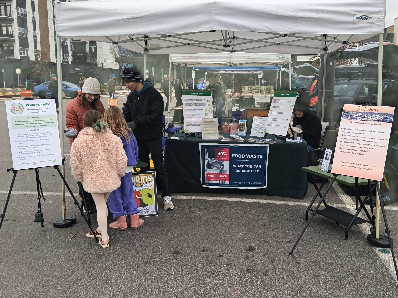
The team hosts demonstrations at farmers' markets, community events, and festivals, featuring our interactive worm farm to engage younger audiences. Collaborations with student organizations at UNC engage young people in firsthand sustainability efforts. Community-based interventions can have incredible environmental and cultural impacts and demonstrate the profound environmental and societal benefits of community-driven solutions.
Our long-term goal is to establish Fork to Farm as a nonprofit educational institution, beginning with our three present educational projects. Core activities will include vermicomposting, bokashi, edible food waste reduction, and regenerative agriculture education, with plans for future expansion. Funding sources could comprise donations, grants, and sales of composting supplies. Our mission is to address climate change, reduce food insecurity, and improve soil health by returning nutrients to the soil and promoting sustainable practices through community engagement.
You can get involved by trying vermicomposting or bokashi at home, or bringing Fork to Farm to your neighborhood, apartment building, school, community garden or faith community. We are seeking dedicated volunteers, particularly an administrative director to coordinate activities and steering committee members who can guide us toward becoming a nonprofit.
For further information or to express interest in volunteering, please contact us at: wormsdothework@gmail.com.
What is your neighborhood up to? Tell us: info@thecarrborean.com