
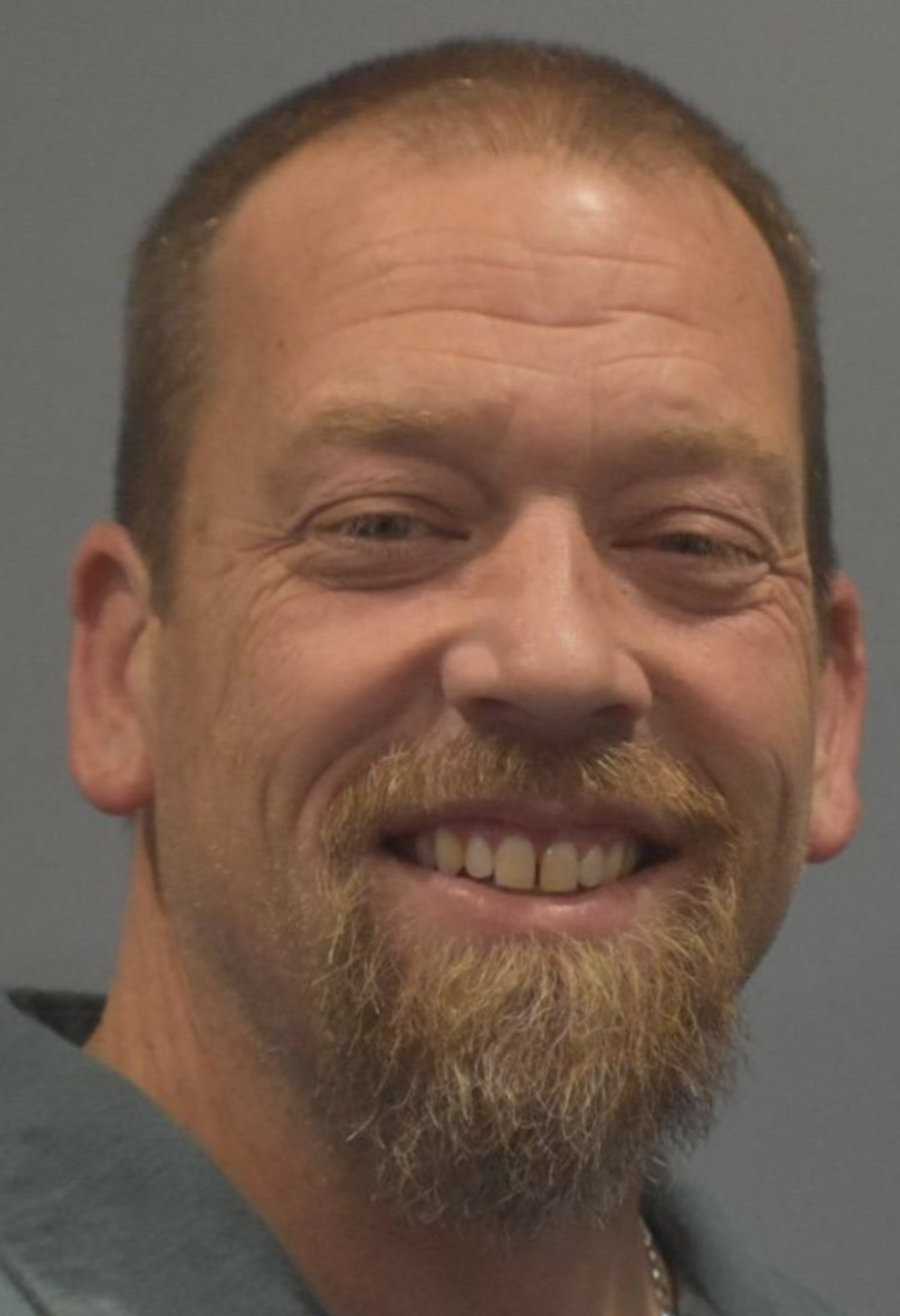
Adam Beeman, at-large candidate for Orange County Commissioner
John Rees of The Triangle Blog Blog joined us to talk about his candidacy, the role of County Commissioner, commercial development, CTE in OC, and more.
This summarized narrative was generated by AI from the transcript of the interview that aired on The Carrborean Radio Hour on WCOM 103.5 (wcomfm.org) February 19.
Why are you running for the Orange County Board of Commissioners?
He served on the Orange County Planning Board for eight years and became frustrated with the limits of advisory bodies. The planning board would spend hours taking public input, deliberating, and making recommendations, but the Board of Commissioners frequently voted the opposite way, whether the planning board recommended approval or denial. He felt there was a disconnect between the two bodies and that advisory work alone was not leading to change. As an electrician and electrical contractor working across the county, he sees firsthand what is working and what is not. He wants Orange County to thrive for everyone, not just for some residents, and concluded that to effect real change he needed to serve on the Board of Commissioners itself.
What is your position on commercial growth?
He was a proponent of Buc-ee’s. He believes the project would have brought substantial sales tax revenue and high-paying jobs to Orange County, which he saw as a missed opportunity when the project did not move forward. He links this to a broader push for commercial growth, arguing that without more commercial tax base and business development, property tax burdens will continue to fall heavily on homeowners. He stresses that relying primarily on homeowners to fund county needs through property taxes is unsustainable.
How do county commissioners affect the daily lives of Carrboro residents?
County commissioners have a direct impact on residents’ lives in areas that may not always be visible at the municipal level. They set the property tax rate, determine how much funding schools receive, shape health policy, and guide growth through zoning, planning, and land use decisions, including the rural buffer. He notes that these decisions affect the cost of housing, the cost and availability of transportation, and the county’s environmental sustainability. Even if Carrboro has its own local government to deal with daily issues, residents still live within a county system whose policies and priorities strongly influence their everyday experience.
What did you learn about the relationship between the Planning Board and the Board of Commissioners, and how would you change that?
He initially assumed that the planning board’s careful work and recommendations would align with commissioners’ decisions most of the time. In practice, he found that was not the case. Projects the planning board approved were sometimes denied by the commissioners, and projects the planning board denied were sometimes approved. To him, it felt as if the volunteer planning board was doing extensive due diligence without meaningful follow-through. As a commissioner, he would want a more cooperative and consistent relationship, while stopping short of saying commissioners must always follow advisory recommendations. He also notes that many members of the public do not understand the constraints of state law on local decision-makers, which can lead to suspicion and accusations of improper motives. He would prioritize better public education and communication about what boards are legally allowed to do and what rules guide their decisions.
How would you improve public outreach and communication from the county?
He acknowledged that the county website has improved and now offers more information than in the past. Still, he sees outreach as a chronic challenge, citing limited engagement during the 2050 land use plan process despite flyers and community meetings. He proposes using the property tax bill as a communication vehicle: adding inserts or information such as QR codes that would allow residents to easily subscribe to county news and updates. His goal is to reach people through something everyone already opens, rather than relying solely on flyers or events that draw small turnouts. More broadly, he wants to find mechanisms that inform residents without requiring extensive one-on-one outreach efforts that are hard to sustain.
How has your work as an electrician shaped your perspective on county processes, particularly permitting?
He has seen county government from both sides of the counter: as a decision-maker on the planning board and as a contractor and permit applicant. He described significant delays and friction in the permitting process, sharing his current experience of waiting five months for a building permit for a simple pole barn. He argues that such delays drive up costs for builders, developers, and homeowners, and contribute to public anxiety and resentment around permits. He notes that when he tells customers they need a permit—for example, to install an EV charger—many immediately tense up and ask if they really have to get one. He wants to streamline permitting and reduce that sense of dread so that homeowners are more willing to follow the rules and pull permits, rather than feeling the county is making compliance as difficult as possible.
Why should Carrboro residents care about the rural buffer?
He supported the concept of a rural buffer as a tool to prevent haphazard, uncontrolled sprawl. He said that without a clear, enforced boundary, growth could “explode” in a disorganized way, undermining the rural character and farmland that many residents value. He thinks the buffer may need targeted adjustments but insists there must be a firm line somewhere that cannot simply be pushed outward. At the same time, he advocates focusing growth—especially denser, multi-story development—within and around municipalities such as Carrboro and Chapel Hill, rather than spreading out into rural areas reliant on septic systems and more expensive infrastructure. In his view, concentrating density near existing services is both more environmentally sustainable and a better way to address housing costs.
What are your concerns about the Buckhorn area, Medline, and jurisdiction over water and sewer?
He expressed frustration that Orange County essentially ceded control over part of the Buckhorn area to the Town of Mebane in order to extend water and sewer to a major industrial user, Medline, near the I‑40/85 corridor. He explained that to get utilities to Medline, Mebane annexed that property and now has the authority to make decisions—such as approving a large Sheetz at the Buckhorn exit—without Orange County having a direct say. He finds it ironic that the county balked at a large Buc-ee’s project, yet allowed another jurisdiction to make major commercial decisions in a key gateway area. He believes the county should invest in its own utility capacity and infrastructure so that it can keep control of its boundaries and economic development choices, rather than outsourcing those decisions to neighboring municipalities.
How do you view the current Orange County property tax assessment process?
He criticized the recent reassessment process as unfair and flawed. He mentions that he has been briefed on a report showing that lower-income Black and Brown neighborhoods were disproportionately assessed at higher rates, which he says must be addressed. Drawing on his experiences working in homes across the county, he argues that assessment values often do not match reality. For example, he finds it illogical that an older, smaller home from the 1960s can end up with a similar assessed value as a newer, larger home on a comparable lot, absent major renovations. He also points to comparisons such as Chapel Hill Country Club land being valued similarly to a largely undeveloped property elsewhere, which he finds hard to justify. As a commissioner, he would want the tax office to walk him through the methodology in detail, ensure valuations are realistic and equitable, and reduce reliance on broad neighborhood comparisons that can unfairly inflate values for older or lower-income properties. He suggested that actual appraisals from mortgage refinances or property sales could be used more directly, reasoning that if a homeowner has financed a property at a certain value, they should expect to pay taxes based on that documented value—provided the overall system is fair.
What are your views on school funding and the recent bond?
He described school funding as a “touchy” but urgent issue. He noted that voters approved a $300 million school bond, but the identified needs are around $500 million, leaving a $200 million gap with no clear plan to fill it. He believes both Orange County Schools and Chapel Hill–Carrboro City Schools face serious problems and simply adding more money or hiring consultants to study the issues is not a sufficient response. He advocates for tightening budgets and reconsidering how many school buildings are being operated, particularly those running below capacity. Operating under-enrolled schools creates redundancy in fixed costs—buildings, principals, office staff, utilities, maintenance—that, in his view, reduces the share of funding that reaches students directly. He proposes looking seriously at consolidation to reduce overhead, acknowledging that this would be an unpopular but necessary conversation.
As a county commissioner, how would you approach decisions about school funding and oversight?
He clarified that the county commissioners set the overall level of funding for the school districts, but it is the elected school boards that decide how to spend that money. He believes commissioners must have candid, coordinated conversations with the school boards to ensure spending is aligned with clear priorities and not just increasing budgets without structural changes. He is skeptical of spending large sums on consultants to tell the county how to allocate money, saying that those funds should go directly to addressing problems. He likened the situation to managing a household budget: you cannot run a deficit year after year without making hard choices. He believes the county and school systems must be willing to “stop the bleeding,” eliminate waste, and reorient spending so that more dollars go into the classroom and student outcomes.
He noted that both his children have attended Orange County Schools, with his son already graduated from Orange High and his daughter currently enrolled there. He said this gives him firsthand perspective on school conditions and challenges. On facilities, he urges a long-term, pragmatic view: renovating older, underutilized buildings may not make sense if the buildings are far below capacity and costly to maintain. In those cases, he favors consolidating students into fewer, more efficient schools. He mentioned interest in ideas such as a larger K–8 model that could reduce transportation complexity by having buses run to a single campus rather than multiple scattered schools, potentially helping address bus driver shortages as well.
What do you think about the school bus system and the challenge of recruiting bus drivers?
He acknowledged that school bus operations and driver recruitment are difficult issues across districts. He pointed out that bus drivers must obtain a commercial driver’s license, which allows them to earn significantly higher wages driving other commercial vehicles, such as cement trucks, compared to school bus pay. This wage differential makes recruitment and retention difficult, particularly for younger workers. He noted that many current drivers are older individuals who love the kids and are motivated by service rather than pay, citing his own children’s former bus driver who continued into his seventies. He believes the county must rethink how bussing works and consider alternative models, such as contracting with private bus companies as some other regions do, if that would prove more cost-effective or sustainable; however, he acknowledges that there is no easy solution. Consolidating schools, he suggested, might simplify certain routes, but overall bus demand and driver shortages remain structural challenges that will require creative approaches.
What should Carrboro voters prioritize when choosing a commissioner for the at-large seat?
He argued that voters should look for someone willing to make tough, sometimes unpopular decisions about spending, programs, and growth. He says the county has a long list of desirable programs and initiatives, but not the resources to fund everything indefinitely. In his view, responsible leadership means being the “adult in the room,” willing to say no, pause or scale back some programs, and carefully scrutinize the budget for waste and redundancy. He described his philosophy as finding a balanced compromise: if neither side gets everything they want, but both give a little, that likely indicates a fair outcome. He emphasized that tax rates are set by commissioners, so voters who are concerned about ever-rising taxes should select someone committed to going through the budget with a “fine-tooth comb,” working closely with county employees who understand where waste occurs, and cutting or consolidating where appropriate.
How do you think about growth, especially housing and commercial space, and its impact on costs?
Adam connects housing and commercial development to broader affordability issues. He supports higher-density development in specific corridors, envisioning four- and five-story buildings with street-level commercial and upper-story residential units, similar to patterns already seen in Chapel Hill. He believes this form of growth can expand both housing supply and commercial space, helping alleviate upward pressure on rents and property values. He also brings up his own experience trying to start a golf simulator business, only to encounter very high commercial rents, such as an $8,000 per month space in the northern county. Limited commercial inventory, he says, drives up rents for businesses, which in turn must pass those costs on to customers. To him, increasing both residential and commercial supply in targeted, well-planned locations is necessary to ease cost burdens on residents and entrepreneurs.
What do you enjoy doing in Carrboro?
Although he lives in rural Cedar Grove in the northern part of the county, he visits Carrboro regularly. He often comes to shop at Fifth Season for garden supplies, especially as planting season approaches, and he visits Fitch Lumber as well. He says he enjoys Carrboro’s robust arts and music scene and sees the town as a regional hub for entertainment, food, and culture, describing it as having an “outsized” arts and dining presence relative to its size. He contrasts this with the more limited options in the northern county, noting that venues like Eno River Brewery in Hillsborough are starting to bring more activity and show that the north is slowly gaining similar amenities.
What are your priorities regarding Career and Technical Education (CTE) and the skilled trades?
Near the end of the interview, he highlighted CTE as one of his biggest priorities, lamenting what he sees as a drift away from robust vocational education in high schools. For older generations, he notes, this would have been called “vocational ed.” He argued that Orange County—and the broader economy—has an acute shortage of skilled tradespeople, including electricians, plumbers, and industrial technicians. He cited a recent investment by Siemens announced by the governor to support an electrical apprenticeship program as evidence that leaders are recognizing the importance of trades. His vision is for a full-time CTE high school in Orange County offering a wide range of programs: construction trades, electrical, plumbing, automotive, auto body, culinary arts, graphic design, and other career pathways. He offers an example from his own hometown, where a high school ran a public-facing restaurant staffed by students in the culinary program. He believes such models could be replicated locally.
He proposed a structure where students alternate between academic and shop weeks, for example spending one week in traditional classes at a home high school and the next week in hands-on labs at a CTE campus. In the near term, he suggests leveraging facilities at Durham Tech, which is building a new lab, by sending high school students there during the day, not just at night. He notes that current construction-trades offerings through Durham Tech are not available during school hours, which makes them difficult for teens to access. He believes the timing and logistics must be rethought to serve high school students effectively. On funding and capacity, he argues that the growing statewide recognition of CTE’s importance could help Orange County secure state support, and he says he would be proactive in working with state officials rather than maintaining an adversarial relationship. Additionally, he sees opportunities to collaborate with local employers—such as large automotive and body shops and utilities like OWASA—to donate equipment, tools, materials, and even real-world training sites. He imagines trade students doing supervised repair work on low-income homes, leveraging existing county repair funds while giving students hands-on experience and saving taxpayer dollars. He also notes that one barrier to CTE growth is the shortage of certified instructors. He proposes developing pathways for older tradespeople, many of whom would welcome work that does not require climbing ladders all day, to become state-certified teachers or lab instructors. With focused effort and partnerships, he believes Orange County can build a strong CTE ecosystem that prepares students for well-paid, in-demand careers while addressing local workforce shortages.
Final thoughts
He returned repeatedly to themes of practicality, stewardship, and willingness to confront uncomfortable realities. He framed his candidacy as that of a working tradesman and small business owner who manages tight budgets and cannot simply increase costs and hope customers will accept them. He wants to bring that mindset to county government: fix processes that are not working, reduce waste, communicate clearly with the public, and make structural investments—such as in CTE and thoughtful growth—that will pay off over time. He expressed appreciation for the chance to share his perspective with southern Orange County residents and hopes that voters who share his concerns about taxes, growth management, school facilities, and workforce development will see him as someone ready to make the hard decisions the county needs.