
A conversation with Penny Rich, candidate for Orange County Register of Deeds
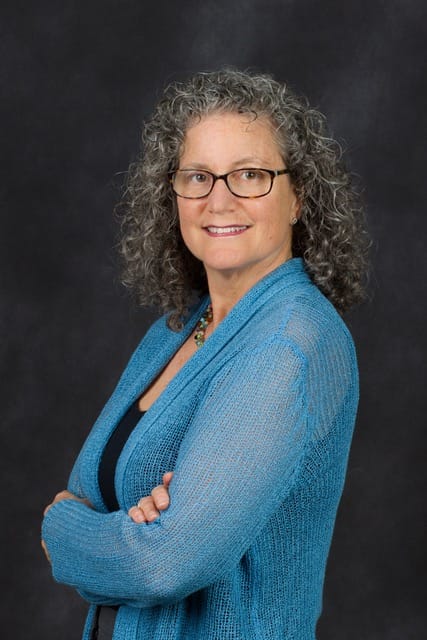
John Rees of The Triangle Blog Blog joined us to talk with Penny Rich about her candidacy, the role of Register of Deeds, how accessibility can be improved, and more.
This summarized narrative was generated by AI from the transcript of the interview that aired on The Carrborean Radio Hour on WCOM 103.5 (wcomfm.org) February 12.
What is the Register of Deeds and why is it an elected position?
The Register of Deeds is the official record keeper for the county. The office dates back to the 1600s in North Carolina, when it was created to track land grants, deeds, and conveyances so people’s land wouldn’t be stolen. It became an elected office in 1868 so residents could choose who they trusted to protect their property. Today, every one of North Carolina’s 100 counties follows the same state laws and statutes. The office records and maintains:
- Real estate documents: deeds, deeds of trust, powers of attorney, plats/maps
- Vital records: birth, death, and marriage certificates
- Military discharges
- Some business registrations, like assumed names for small businesses
It’s all about protecting land and legal rights, and that’s why voting for this office still matters.
How has your experience prepared you to lead this office?
I’ve been an elected official in Orange County for about two and a half decades in different leadership roles:
- OWASA Board – 6 years
- Chapel Hill Town Council – 4 years
- Orange County Board of Commissioners – 8 years, including 2 years as chair during the pandemic, when I was the chief elected official for the county
I’ve received a Chamber Leadership Award, the Orange County Emergency Services Response Award, and the Old North State Award from Governor Cooper. I’ve also been a small business owner and a mentor with the Hodges Scholars program at UNC’s Kenan-Flagler Business School.
Right now, I’m an Assistant Clerk of Superior Court and Judge of Probate in Orange County. I work every day with:
- Estates (wills, heirs, land transfers)
- Vital records and land records
- The Tax Office
The Estates Division and the Register of Deeds office are tightly connected, because so much land passes through spouses and heirs. I’m constantly helping residents track down deeds, death certificates, and tax values so they can settle estates and protect property.
You used the word “deputies.” Are Register of Deeds staff actually deputized?
Yes. Staff are sworn in as deputies, similar to the Clerk of Court’s office. When there’s a new Register of Deeds or Clerk, the staff are sworn in again. There are deputies and assistant deputies—I’m currently an assistant deputy in the Superior Court.
Can you give a concrete example of when someone really needs the Register of Deeds?
A simple one: you cannot open an estate file without a death certificate. People can’t just come in and say, “My relative died.” We need actual proof, and that comes through the Register of Deeds, usually via the funeral home or hospital.
Another common case is when someone wants to buy a house and check that the title is clean. They or their attorney might use Orange County’s GIS/ARIES system, search by the Parcel Identification Number (PIN), and review prior deeds recorded in the Register of Deeds office.
You’ve mentioned heirs’ property and the Black community. How does that influence why you’re running?
When I was a County Commissioner, I saw how Black and African American families especially were losing heirs’ property—homes that had been in families for up to 200 years—through revaluations and partition actions. If several heirs own a house and one wants to sell while others don’t, a partition case can end with everyone losing the house.
I felt the General Assembly wasn’t doing enough to protect heirs’ property. That’s one reason I ran four years ago and again now: I want to be a strong voice in statewide conversations about property rights.
Another moment that pushed me to run was when the legislature was debating child marriage laws. The age used to be 14 in North Carolina. It’s now 18, but with exceptions: minors can marry with family permission, as long as the partner isn’t more than four years older, and there’s a troubling exception for pregnant girls, who can be signed off to marry the person who impregnated them. Other Registers of Deeds went to Raleigh to speak up; ours did not. I thought that was a missed opportunity to advocate for vulnerable young people.
Where is the Register of Deeds office, and do you think there should be more than one location?
The office is in Hillsborough, the county seat, above Weaver Street Market—you park in back and go up. Unlike the courts, which have locations in Hillsborough and Chapel Hill, there’s only one Register of Deeds office.
I like the idea of exploring a satellite office in the southern part of the county, closer to Chapel Hill and Carrboro, so people don’t always have to drive to Hillsborough. But that would need to go through the Board of County Commissioners because of budget implications.
You had to manage a serious data breach as a county leader. How does that shape your approach to cybersecurity and fraud?
When I was Chair of the County Commissioners, we had a ransomware attack. The county was effectively down for about a week and a half. We brought in the FBI and ultimately identified who did it. It was eye-opening—and it’s clear these threats aren’t going away.
The Register of Deeds office must work closely with county IT and security. One of my priorities is to end the siloing of the Register of Deeds; we should be fully integrated into broader county cybersecurity planning.
On top of that, AI is making fraudulent documents much harder to spot. Fake deeds and signatures are getting better and better. That’s why I want ongoing training for staff and for myself, and to tap into state resources—like the School of Government—for classes on security and fraud detection.
What protections already exist here against property title fraud?
Orange County participates in a fraud alert system that homeowners can sign up for online. When a document like a deed or mortgage is recorded in your name, you get an email notification asking if it was really you—similar to a security alert on your phone.
About 95 counties in North Carolina now use this system, and Orange joined within the last few years. I think every homeowner here should be enrolled. It was inspired, in part, by a case where someone nearly had a $2.3 million house sold out from under her. A diligent Register of Deeds in another county caught it, and the scammers were prosecuted.
Let’s talk about access—especially for non-English speakers.
In the courthouse, we have a state-funded interpreter line we can call when someone doesn’t speak English. It’s been crucial.
For the Register of Deeds, I would push to have at least one Spanish-speaking staff member on deck at all times. In my current job, I plan appointments around when Spanish-speaking colleagues are available, because language can’t be a barrier when people are trying to:
- File an estate
- Get married legally
- Access a deceased person’s bank account to support their family
The goal is for the office to feel safe, not intimidating—especially for immigrants and non-English speakers.
You’ve been pretty candid about the website. What’s wrong with it, and what would you change?
The Register of Deeds website is not user-friendly. The layout is clunky, some information is years out of date, and important tools—like the fraud alert sign-up—are hard to find. Sometimes if you search for “fraud alert” from that page, you’re kicked out to Google, not guided through a clear county process.
People often call my office because they can’t navigate the site. I log in and help them click through, and usually I can find what they need—but it shouldn’t be that hard.
As Register of Deeds, I’d work closely with the county webmaster to:
- Redesign the site for clarity and ease of use
- Keep critical sections like passport info, fraud alerts, and record searches up to date
- Add a regularly updated section where the Register of Deeds shares tips, clarifications, and alerts in plain language
If you turned the current site in as a final project in a web design class, I think you’d fail. We can do much better.
What about older records? Are we preserving and digitizing them?
We’ve digitized and indexed a lot of records, but older documents are still a challenge. It’s not just scanning; it’s making them searchable in ways people understand.
For very old materials, we partner with the North Carolina State Archives in Raleigh. Many estate records and some older books are there, and the staff are wonderful about helping people find what they need.
The key is to keep expanding digitization and indexing within budget, while improving search tools so residents don’t give up after a few frustrating clicks.
You live right here in Carrboro. What are your favorite things to do here?
I raised my kids in Chapel Hill, but always said that once they were grown, I’d move to Carrboro—and I did. I’ve lived here about seven years, on Mulberry Street, just down the block from the station.
I love:
- The Weaver Street lawn
- The Carrboro Farmers Market
- Walking and biking everywhere
- The new ArtsCenter space and its programming
After work and on weekends, I try not to get back in the car. I walk or ride the bus. That experience—of living in a small, dense, connected town—shapes how I think about access to government services. People shouldn’t have to trek long distances or navigate bad websites just to get a birth certificate or verify a deed.
What’s your final message to voters about this office?
The Register of Deeds doesn’t make policy, so people tend to skip over it on the ballot or vote for whoever they recognize. But this office touches people’s lives at critical moments—birth, death, marriage, buying or selling a home, starting a business, proving military service.
I want to:
- Make the office customer-focused and welcoming
- Strengthen fraud prevention and cybersecurity
- Improve language access
- Modernize the website and online tools
- Speak up at the state level on heirs’ property and child marriage
Most of all, I want people to vote. Early voting is at the Drakeford Building in Carrboro. You’ll need a photo ID, but you can register and vote on the same day during the early voting period. This office [Register of Deeds] may not be flashy, but it’s at the heart of how we document our lives.