
A conversation with Jamezetta Bedford, candidate for Orange County Board of Commissioners representing District 1
John Rees of The Triangle Blog Blog joined us to talk about her candidacy, the role of County Commissioner, school funding priorities, and more.
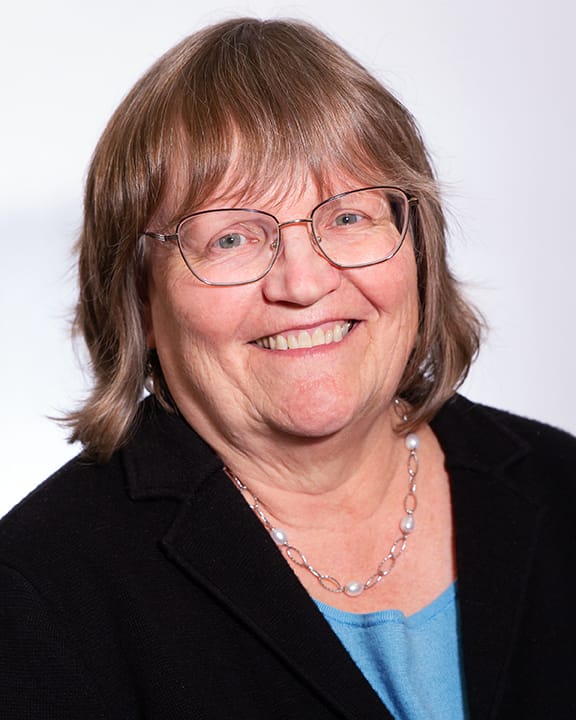
This summarized narrative was generated by AI from the transcript of the interview that aired on The Carrborean Radio Hour on WCOM 103.5 (wcomfm.org) February 17.
Tell us about your background and why you want to continue in your role as county commissioner.
She moved here in 1992 for autism services for her daughter, became active in schools, and served three terms on the school board. Concerned about school funding, she ran for commissioner in 2016 and narrowly lost, then won in 2018 when an incumbent stepped down. She enjoys the work, which includes social services, health, some zoning, arts, and especially school facilities and funding. She highlighted the goal of directing about 48% of the county operating budget to the two public school districts (Orange County and CHCCS) and her role in scrutinizing and deferring parts of the capital plan to balance needs with tax burdens.
A lot of county commissioners seem to have school backgrounds. Is that typical? How many commissioners are there?
When she joined, she was the only former school board member. Early efforts to add school funding failed to even get a second, so she helped recruit two more former school board members to run and win, which shifted the board’s approach to schools. There are now seven county commissioners (up from five in the early 2000s), and Orange is unique in its district configuration.
What is the role of county commissioners, especially in terms of how it affects the life of a Carrboro resident?
On a tax bill, residents pay county tax, a recycling fee, and town tax. County taxes fund 26 departments, including DSS, the Health Department, the Sheriff’s Office, judicial facilities in Hillsborough, and school funding (per‑pupil support and facilities). The board sets the county tax rate, the Chapel Hill–Carrboro special district school tax, per‑pupil allocations (equal across both districts), and many fees. She noted that during COVID, the county health director held key authority on masks and shutdowns, working closely with the towns and UNC partners. The county also does fair housing and housing programs, while Chapel Hill runs public housing, which can confuse residents about who to call. Her CPA background helps her analyze budgets and capital plans as inflation outpaces revenue.
What is the rural buffer, and why should Carrboro residents care about it?
The rural buffer and utilities service boundary date back to about 1987, in an agreement among Chapel Hill, Carrboro, Hillsborough, Orange County, and OWASA, defining where public water and sewer can extend. Inside the rural buffer, no public water/sewer expansion is planned. Today’s debate is whether to open parts of it for additional and possibly affordable housing or keep it as protected green space and watershed, and how to treat landowners fairly. She recently supported a boundary adjustment along 15‑501/501 toward Chatham to allow more housing along transit corridors. For Carrboro, transition areas and watershed constraints strongly shape where growth and water/sewer can go; more in‑town density can reduce vehicle miles traveled and support climate goals. She contrasted compact communities where neighbors know each other with sprawl like Northern Virginia and parts of North Raleigh, and noted Carrboro’s constrained land base contributes to higher town tax rates.
What do you mean by “joint planning”?
In the 1980s, the towns and the county entered joint planning agreements and created extra‑territorial jurisdictions (ETJs), where a town has planning authority outside its boundaries. She cited Heritage Hills (county voters under Chapel Hill planning) and the Greene Tract (owned by Carrboro, Chapel Hill, and the county but in Chapel Hill’s planning jurisdiction). The purpose is to coordinate where transit, housing, economic development, and environmental protection occur. She noted that overlapping responsibilities, especially around stormwater (e.g., flooding near University Lake and Weatherhill Pointe), create confusion about whether the town, county, OWASA, or NCDOT is responsible. She described past discoveries like the failing Lake Orange dam, which the county owned without initially realizing it, as examples of how unclear responsibilities can be.
She added that in the current land use plan update, they are proposing that all these joint planning and boundary agreements be revisited at least every 10 years by all the elected bodies because conditions, especially housing and climate needs, change.
What are your thoughts on the county tax assessment (revaluation) process?
By law, revaluation must happen at least every eight years; Orange County usually does it every four. After a 2021 reval, they tried to fix known inequities around UNC and historic Black neighborhoods by distinguishing student rentals from long‑time residents and creating smaller appraisal neighborhoods. But in the latest reval, average residential values rose about 52%, and advocacy work by Hudson Vaughan and others showed large inequities, including under‑valued commercial properties (based on income instead of recent high‑priced sales), costing the county revenue. A consultant found 1,026 appraisal “neighborhoods,” some with only one property, and flagged 171 for deeper review, leading her to conclude the base numbers, not just racial patterns, are wrong.
A work group with nonprofits, community members, three commissioners, and staff is examining the system and a new, broader study is being commissioned via RFP. She called fair valuation “foundational to democracy” and said it will require investment to fix. Meanwhile, the county expanded the Longtime Homeowners Assistance Program budget from about $250,000 to nearly $400,000 to help eligible owners (5+ years in their homes, within HUD income and value limits) with portions of their county and town tax bills. She acknowledged it doesn’t help renters, and that correcting commercial valuations and supporting renters remains unresolved. She also praised Judge Beverly Scarlett’s work teaching residents how to appeal and said they must also improve how the Board of Equalization and Review is chosen and how residents are informed about the assumptions in their appraisals.
What is the time commitment for a county commissioner, and what committees do you serve on?
The board usually meets two to three times a month for business meetings and work sessions, but from March through mid‑June (budget season) they meet twice a week. Committee assignments are done annually in December via a round‑robin based on seniority, with term limits of two years for internal county boards and four years for regional ones, to ensure more commissioners gain broad experience.
Her current major assignments include serving as a Durham Tech Community College trustee (with meetings, a retreat, and subcommittee work), the Orange County Partnership to End Homelessness, the Department of Social Services, and a rural Triangle transportation planning body (successor to TARP). Commissioners do not sit on the county’s many advisory boards to avoid influencing them. She personally cut her outside work to 30 hours a week; notes the commissioner role is demanding but can be done with a job and family if structured properly. Commissioners receive pay, are eligible for county health insurance while in office, and have access to about $25,000 in benefits that can help, for example, with childcare, so people shouldn’t assume they can’t afford to run.
How does school funding work and what is the county commissioners’ role versus the state and school boards?
Legally, the state is supposed to fund public schools, but the current General Assembly majority has left North Carolina near the bottom nationally (around 49th–50th) in teacher pay and per‑pupil funding and advanced private vouchers. Orange County residents value education and approved a $300 million school bond (split between Orange County Schools and Chapel Hill–Carrboro City Schools) in November 2024.
Chapel Hill–Carrboro has a long‑standing special district tax that the school board historically raised when new schools opened to fund staff (like social workers), but it has been increased twice more recently, and it depends on property values, not student numbers. COVID‑era federal funds (ARPA/ESSER) have ended, and both districts now face declining enrollment and inflationary costs, forcing painful consolidation and staffing decisions that are ultimately school board responsibilities.
She noted that fully funding the Leandro court plan would bring each Orange County district over $1 million more in state money, which is especially important for students who are learning English. The county supplements what the state provides, but cannot replace it entirely. Twice a year, both school boards and the county commissioners meet formally to discuss needs and funding.
As Carrboro residents think about how to vote, what should they care about in a county commissioner race?
She sees Carrboro residents as highly engaged and progressive, caring about social justice, the social safety net, environmental protection, climate action, and community assets like parks, trails, bikeways, greenways, and libraries. She mentioned the long effort to get a Carrboro branch library (now in the Drakeford building) and said Carrboro Elementary will be the first Chapel Hill–Carrboro school to be fully replaced with the new bond, with design underway. She believes her experience across schools, budgeting, and county services positions her to keep moving these priorities forward.
If you’re re‑elected, what specific initiatives do you want to prioritize?
Her top project is the planned Behavioral Health Diversion Facility in Hillsborough, in development for over seven years, with three main components:
- Behavioral Health Urgent Care – A walk‑in clinic (including for children 4–18, with a 24‑hour limit) that provides immediate mental health support without needing an appointment or proof of insurance and can quickly connect people to providers.
- Crisis Stabilization Unit – A separate entrance and space where EMS, law enforcement, family, or individuals can bring adults in crisis. Stays can range from hours to days, and for longer needs, the facility would coordinate transfer to a state psychiatric hospital with a “warm handoff” (medications, transportation, and an arranged follow‑up). It is sited next to the hospital’s emergency department to quickly rule out or address medical issues.
- Community Space and Peer Support – A place where organizations like NAMI can meet and where families waiting months for outpatient care (for example, after a pediatrician flags a serious concern) can get timely support and navigation help.
The goals are to divert people from the ER and from the detention center, where staff are not equipped for mental health crises, and to better support law enforcement and EMS. Land has been purchased; the next step is hiring a construction manager at risk and getting a detailed cost estimate. She acknowledged it won’t solve homelessness on its own but views it as an essential part of the safety net.
What are your favorite things to do in Carrboro?
She loves the Carrboro Farmers’ Market, describing it as both a place to shop and a social gathering where you walk around, sample, and chat. She enjoys going to the ceramics/pottery studio near the camera store with her artist granddaughter, as well as walking dogs, hiking, and family outings for pizza.
Is there anything else you want voters to know?
She thanked the hosts for helping explain what county commissioners do and emphasized concerns about election security. The county funds the Board of Elections and recently added a second fully trained full‑time position so there is backup to the director, especially heading into major elections. She stressed that Orange County uses multiple security protocols and continues to rely on paper ballots for backup, and she wants voters to be reassured that local elections are secure.